
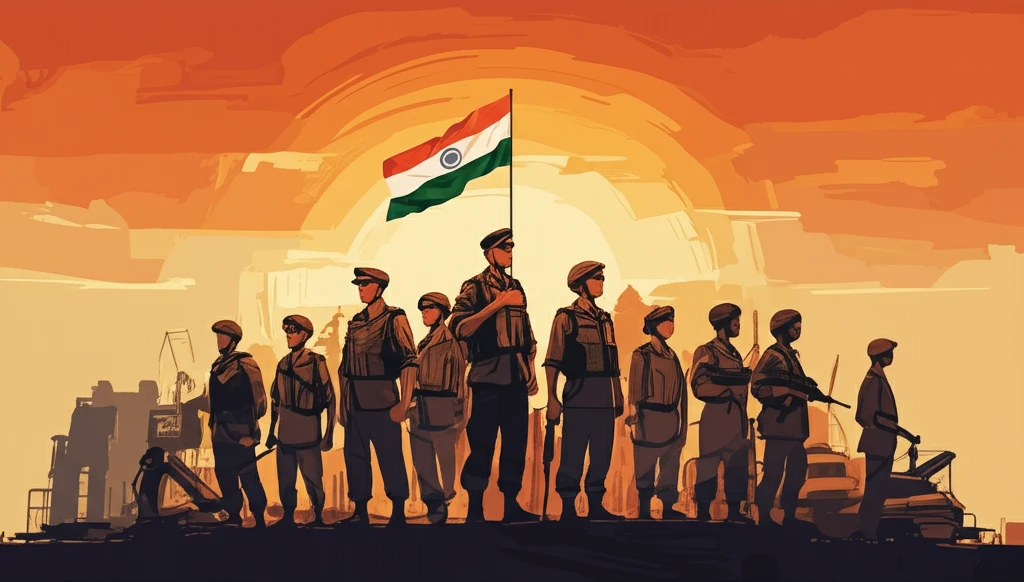
Breaking Barriers: How HR Policies are Shaping Gender Inclusion in the Indian Army

"Discover the transformative impact of HR policies on fostering gender equality within the Indian Army, paving the way for a more inclusive and diverse military force."
Inclusion, at its heart, is about creating a sense of belonging, where every individual feels valued, respected, and empowered to contribute their best. The modern workplace, including traditionally male-dominated environments like the military, is increasingly recognizing the significant benefits of a gender-inclusive and diverse workforce. This shift acknowledges that diverse teams enhance performance and bring a broader range of perspectives to problem-solving and innovation.
The Indian Army, a symbol of strength and tradition, is also evolving to embrace gender inclusion. This evolution requires a critical examination of existing Human Resources (HR) policies and their impact on integrating women into various roles. Understanding the linkages between these policies and gender inclusion is crucial for creating a truly equitable environment.
Recent research delves into these critical linkages, focusing on how HR policies shape gender inclusion within the Indian Army. By analyzing data collected from officers across different branches and reviewing existing literature, this study offers valuable insights for policymakers and those responsible for implementing change. The goal is to improve existing policies and develop new ones that foster effective gender inclusion.
Defining Gender
Gender refers to socially constructed characteristics, norms, behaviors, and roles associated with being a woman, man, girl, or boy, varying across societies and changing over time. It encompasses a range of social, psychological, cultural, and behavioral aspects beyond biological sex. Gender is hierarchical and produces inequalities that intersect with other social factors. The concept includes diverse identities beyond the binary, such as xenogenders that reference ideas outside conventional gender frameworks.
Sex vs Gender Distinction
Historically, gender roles were attributed to biological differences between men and women, but modern understanding recognizes they emerge from interactions between individuals, their environment, and cultural expectations based on sex. Society defines gender roles according to its beliefs about sex differences rather than biological determinism. This distinction between sex as biological and gender as socially constructed represents a fundamental shift in psychological and sociological frameworks.
Historical Foundations
The conceptual separation of gender from biological sex represents a relatively recent development in social science and policy discourse. Early frameworks often conflated the two, while contemporary understanding recognizes gender as a social construct with significant implications for institutional policy. Foundational research in gender studies has progressively challenged deterministic views of gender roles. These theoretical advances have laid groundwork for examining how organizations, including military institutions, can evolve their approaches to inclusion.
Why Gender Inclusion Matters: Boosting Performance and Morale in the Military
A gender-inclusive environment in the Indian Army is not just a matter of fairness; it's a strategic imperative. Research increasingly demonstrates that diverse teams lead to enhanced organizational performance. When women are fully included and given equal opportunities, they bring unique skills, perspectives, and approaches that can improve decision-making, problem-solving, and overall effectiveness.
- Enhanced Performance: Diverse teams are more innovative and effective.
- Improved Morale: Inclusion fosters a positive and supportive work environment.
- Stronger Cohesion: Shared values and respect build a more unified force.
- Better Decision-Making: Diverse perspectives lead to more informed choices.
- Increased Commitment: Valued individuals are more dedicated to the organization.
Contemporary Research Landscape
Current scholarship on gender inclusion in military contexts continues to evolve, with researchers examining how policy frameworks translate into lived experience. Studies increasingly focus on intersectional approaches that consider how gender interacts with other identity factors. Methodological advances allow for more nuanced assessment of institutional culture change. However, significant gaps remain in longitudinal data on policy implementation outcomes.
Implementation Challenges
Policy initiatives for gender inclusion often face resistance rooted in traditional institutional cultures and operational concerns. Critics argue that certain integration approaches may compromise unit cohesion or operational effectiveness. Implementation gaps frequently emerge between policy design and on-the-ground practice. Some well-intentioned reforms have produced unintended consequences or failed to address structural barriers.
Cross-National Perspectives
Different national militaries have adopted varied approaches to gender integration, ranging from gradual opening of roles to comprehensive policy overhauls. Comparative studies reveal that successful integration correlates with leadership commitment, clear accountability mechanisms, and sustained cultural change efforts. Contextual factors including threat environment, conscription models, and societal gender norms significantly shape outcomes. No single template has emerged as universally applicable.
The Path Forward: Creating a More Inclusive Military
The journey towards gender inclusion in the Indian Army is ongoing. By embracing evidence-based HR policies and fostering a culture of respect and equality, the military can unlock the full potential of its diverse workforce. This not only strengthens the organization but also sets a powerful example for society as a whole, demonstrating that true strength lies in inclusivity and equal opportunity for all.
Integrative Assessment
Expert consensus suggests that sustainable gender inclusion requires simultaneous attention to policy frameworks, institutional culture, and individual experiences. Tokenistic approaches that change rules without addressing underlying norms tend to produce limited results. Effective strategies combine structural reforms with deliberate cultural transformation initiatives. Ongoing evaluation and adaptive management are essential given the complexity of organizational change.
Emerging Directions
Future policy development will likely emphasize intersectional frameworks that address compounding barriers faced by diverse personnel. Technology and data analytics offer new tools for monitoring inclusion metrics and identifying systemic patterns. Evolving societal understandings of gender identity will necessitate policy adaptability beyond binary frameworks. Climate security and changing warfare domains may create new imperatives for diverse talent utilization.
Structural Considerations
Military gender inclusion exists within broader societal gender hierarchies that shape expectations and opportunities. Institutional change in the armed forces both reflects and influences civilian gender norms. Resource allocation, career progression systems, and family support structures all interact with gender equity outcomes. Addressing these interconnected factors requires whole-of-government and whole-of-society approaches.
Lived Experience
Behind policy debates are individual service members navigating identity, belonging, and professional aspiration within transforming institutions. Personal narratives reveal how abstract policies manifest in daily interactions, career trajectories, and sense of institutional legitimacy. The human impact of inclusion policies extends beyond the individual to families, communities, and organizational effectiveness. Centering these experiences remains essential for policies that achieve their stated aims.