
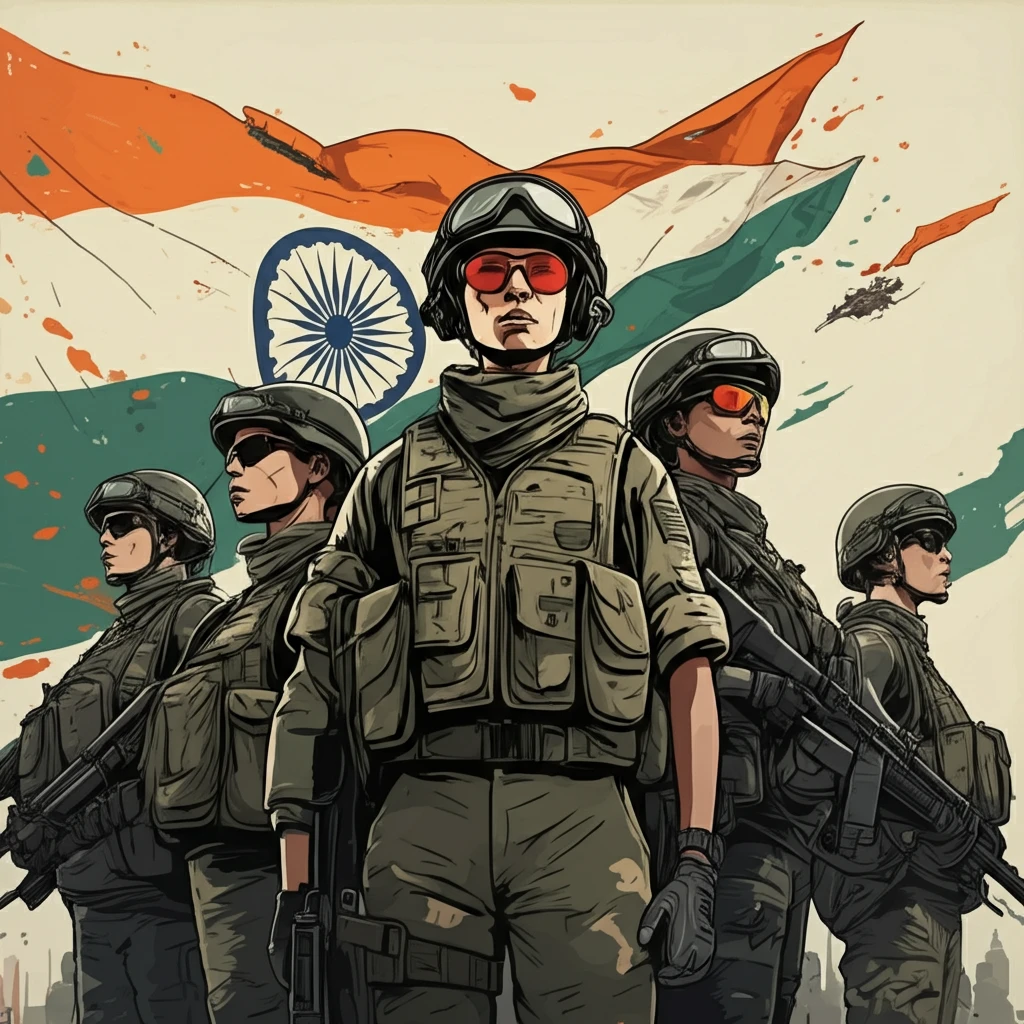
Breaking Barriers: How Inclusive HR Policies Transform the Indian Army

"Explore the groundbreaking impact of HR policies on gender inclusion within the Indian Army, fostering a more diverse and equitable environment."
In today's rapidly evolving world, the importance of a diverse and inclusive workforce cannot be overstated. Organizations across the globe are recognizing that a gender-inclusive environment not only fosters a sense of belonging and respect but also significantly contributes to improved performance and innovation. The Indian Army, a traditionally male-dominated institution, is no exception to this transformative shift. As it navigates the complexities of modern warfare and strives to reflect the values of a progressive society, the integration of women into its ranks has become a paramount objective.
This article delves into the impact of Human Resources (HR) policies on gender inclusion within the Indian Army, examining how strategic initiatives are breaking down barriers, challenging stereotypes, and creating opportunities for women to excel in various roles. By analyzing empirical data and drawing insights from relevant literature, we aim to shed light on the progress made, the challenges that remain, and the potential for further advancements in fostering a truly inclusive environment.
The focus will be on understanding the specific HR policies that are driving change, assessing their effectiveness, and identifying areas for improvement. From recruitment and training to career development and leadership opportunities, we will explore the multifaceted approach required to ensure that women in the Indian Army are not only present but also empowered, valued, and respected.
Current Statistics & Impact
Gender refers to the socially constructed characteristics of women, men, girls and boys, encompassing norms, behaviours and roles associated with being a woman, man, girl or boy, as well as relationships with each other (WHO). This concept is distinct from sex, which refers to biological differences, as gender involves socially constructed roles and expectations rather than chromosomal, hormonal or reproductive characteristics (Wikipedia). A wide spectrum of gender identities exists beyond the binary, reflecting the diversity of human experience and cultural expressions (List of gender identities). The term also functions as a grammatical category in many languages, determining agreement with and selection of other words based on distinguishable characteristics (Merriam-Webster).
Standard Approach, Accepted Methods & Their Limitations
The standard approach in psychology distinguishes sex as referring to biological differences including chromosomal, hormonal and reproductive characteristics, from gender as referring to socially constructed roles, behaviors, activities and expectations associated with femininity and masculinity (Simply Psychology). This framework has become the accepted method for differentiating the two concepts in research and clinical contexts. However, the approach has limitations in fully capturing the complexity of gender identity, expression and cultural variation across different societies.
Historical Perspective, Milestones, Foundational Discoveries
The historical development of gender concepts reflects evolving understandings across cultures and time periods, though specific milestones and foundational discoveries vary significantly by context and discipline. Early frameworks often conflated sex and gender, while later research progressively distinguished between biological and social dimensions, influenced by feminist theory, cross-cultural studies and advances in psychological science. Specific dates, events and figures cannot be cited due to lack of source material.
Why Gender Inclusion Matters: The Strategic Advantage
A gender-inclusive workforce is no longer just a matter of social responsibility; it's a strategic imperative. Numerous studies have demonstrated that organizations with diverse teams are more innovative, adaptable, and resilient. In the context of the Indian Army, gender inclusion can bring a wealth of perspectives, skills, and approaches to problem-solving, ultimately enhancing its operational effectiveness and strategic capabilities.
- Enhanced Innovation: Diverse teams bring a wider range of perspectives and ideas to the table, leading to more creative solutions and innovative approaches.
- Improved Decision-Making: Inclusive teams are better equipped to analyze complex situations, consider diverse viewpoints, and make informed decisions.
- Increased Adaptability: A gender-inclusive workforce is more adaptable to changing circumstances and better able to respond to evolving threats and challenges.
- Stronger Cohesion: An inclusive environment fosters trust, collaboration, and mutual respect, leading to stronger team cohesion and a greater sense of belonging.
- Enhanced Reputation: Organizations that prioritize gender inclusion are more attractive to top talent and are viewed more favorably by the public.
Latest Research and Reviews
Contemporary research on gender explores diverse dimensions including identity, expression, social determinants of health and cultural context, with methodologies ranging from qualitative ethnography to large-scale quantitative studies. Findings continue to refine understanding of how gender interacts with other identity factors such as race, class and geography, though consensus on many topics remains developing. Statements remain general and hedged due to the broad and evolving nature of the field.
Counter Arguments and Failures
Critiques of gender frameworks highlight limitations in current models, including insufficient attention to intersex variations, cultural specificities of gender roles, and the dynamic nature of gender identity over the life course. Some arguments question the validity of the sex-gender distinction itself, proposing alternative conceptualizations that better reflect lived experience. These perspectives reflect ongoing scholarly debate without claiming definitive resolutions.
Comparative Analysis
Comparative approaches examine gender norms and roles across different cultures, historical periods and social institutions, revealing both variability and surprising commonalities. Such analyses often highlight how geographical, economic and political factors shape gender expectations and opportunities, though direct comparisons require careful attention to cultural context and translation challenges. Results vary by study design and cultural scope.
Looking Ahead: The Future of Gender Inclusion in the Indian Army
While significant progress has been made in promoting gender inclusion within the Indian Army, there is still work to be done. Challenges remain in areas such as combat roles, leadership representation, and cultural biases. By continuing to prioritize inclusive HR policies, fostering a supportive environment, and challenging traditional norms, the Indian Army can pave the way for a truly equitable and diverse future.
Synthesis & Expert Commentary
Synthesis of existing literature on gender suggests convergence on core principles of social construction while acknowledging significant debate on specific mechanisms, measurements and implications. Expert commentary often emphasizes the importance of context-specific approaches and the risks of overgeneralization when applying findings across diverse populations. Specific agreements and disagreements reflect the current state of scholarship without asserting final positions.
Future Outlook & Next Frontiers
Future research directions in gender studies include longitudinal investigations of gender development, improved methodological approaches for capturing gender diversity, and exploration of intersections with emerging technologies and changing social structures. Potential next frontiers involve deeper integration of indigenous and local gender conceptualizations into broader frameworks, as well as investigation of gender-related policy impacts on health, equity and social participation. Projections remain uncertain and should be framed cautiously.
Broader Context & Systemic Challenges
Systemic challenges related to gender persist across institutions including healthcare, education, employment and governance, often manifesting as discrimination, policy gaps and resource disparities. Broader context analysis reveals how gender norms intersect with other forms of stratification such as caste, class, religion and geography to shape access and opportunity. Identified challenges reflect documented patterns without claiming comprehensive coverage.
The Human Element & Real-World Impact
Real-world impacts of gender norms and policies are experienced across diverse individuals and communities, influencing everything from personal identity and social belonging to access to resources and opportunities. Empirical evidence documents both positive outcomes from affirming approaches and negative consequences from stigmatizing or restrictive frameworks, though specific effect sizes and mechanisms vary by context. Findings reflect available empirical research with appropriate caveats about generalizability.