
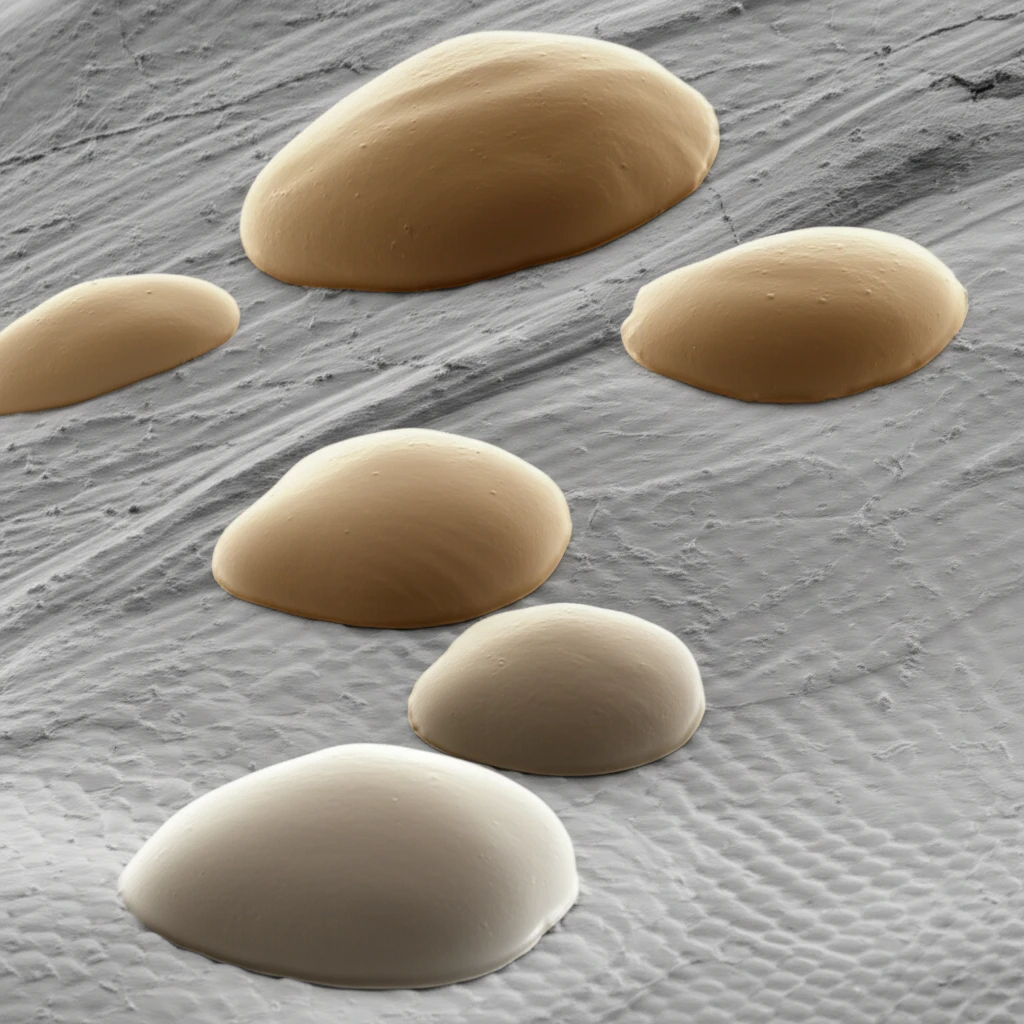
Microscopic view of bone cells interacting with a textured implant surface.

Bone Regeneration Breakthrough: How Surface Texture and Materials Impact Healing

"Discover how altering spacer materials and micro-topography can enhance bone regeneration in the Masquelet technique."


The Masquelet technique represents a significant advancement in reconstructive bone surgery, particularly for addressing substantial bone defects resulting from trauma, tumor resection, or osteomyelitis. This innovative two-stage procedure harnesses the body’s natural healing capabilities by first creating a vascularized foreign-body membrane, which acts as a nurturing environment for subsequent bone graft incorporation.

During the initial stage, a spacer—typically made of polymethyl methacrylate (PMMA), also known as bone cement—is implanted to stimulate membrane formation. This membrane serves not only as a physical barrier against soft tissue invasion but also as a reservoir of essential biochemical factors that promote bone regeneration. In the second stage, the spacer is removed, and the defect is filled with morselized bone graft, which then integrates within the protective and bioactive environment created by the membrane.

Recent studies have explored how modifying the surface characteristics of the implanted spacer can influence membrane development. These modifications, including variations in material composition and surface roughness, have shown promise in altering the mechanical and biochemical properties of the induced membrane. Understanding these effects is crucial for optimizing the Masquelet technique and enhancing bone regeneration outcomes.

Spacer Material and Surface Topography: Key Factors in Bone Regeneration

Microscopic view of bone cells interacting with a textured implant surface.

A recent study conducted by researchers at Saint Louis University School of Medicine delved into how different spacer materials and surface textures affect the biochemical environment of the induced membrane and, consequently, the process of bone regeneration. The study compared the effects of PMMA spacers with those made of titanium (TI), a material known for its biocompatibility and mechanical strength. Additionally, the spacers were prepared with either smooth or roughened surfaces to investigate the impact of micro-topography on membrane development and bone healing.

The researchers hypothesized that both material and surface texture would modulate the expression of factors commonly associated with bone regeneration. Specifically, they anticipated that using titanium as a spacer material and incorporating micro-roughening would enhance the expression of positive regulators of bone formation while reducing the presence of negative regulators. This, in turn, was expected to lead to superior bone regeneration outcomes.

  • PMMA (Polymethyl Methacrylate): Traditional spacer material, known as bone cement.
  • TI (Titanium): Experimental spacer material, explored for its biocompatibility.
  • TGFβ (Transforming Growth Factor Beta): Positive regenerative protein.
  • BMP2 (Bone Morphogenetic Protein 2): Positive regenerative protein, promotes osteogenic differentiation.
  • VEGF (Vascular Endothelial Growth Factor): Positive regenerative protein, promotes angiogenesis.
The study revealed that titanium spacers induced the formation of thicker membranes with a distinct bilayer structure. The inner layer of these membranes exhibited increased expression of key growth factors, including bone morphogenetic protein 2 (BMP2), transforming growth factor beta (TGFβ), interleukin 6 (IL6), and vascular endothelial growth factor (VEGF). Roughening the spacer surface further amplified the overall levels of IL6, an inflammatory factor involved in bone remodeling. Interestingly, while PMMA-smooth induced membranes demonstrated better support for bone regeneration (60% union), the other groups only showed 9–22% union rates. Micro computed tomography and dynamic histology showed no significant differences in outcome.

Implications for the Future of Bone Reconstruction

This research underscores that the induced membrane’s role in the Masquelet technique extends beyond mere physical support. Its biochemical environment plays a crucial part in orchestrating bone regeneration. Further studies are needed to fully elucidate the interplay between different spacer materials, surface textures, and the resulting cellular and molecular events within the membrane. By gaining a deeper understanding of these factors, clinicians can optimize the Masquelet technique to achieve more predictable and successful outcomes in bone reconstruction.

About this Article -

This article was crafted using a human-AI hybrid and collaborative approach. AI assisted our team with initial drafting, research insights, identifying key questions, and image generation. Our human editors guided topic selection, defined the angle, structured the content, ensured factual accuracy and relevance, refined the tone, and conducted thorough editing to deliver helpful, high-quality information.See our About page for more information.

This article is based on research published under:

DOI-LINK: 10.1007/s10439-018-02137-5, Alternate LINK

Title: Masquelet Technique: Effects Of Spacer Material And Micro-Topography On Factor Expression And Bone Regeneration

Subject: Biomedical Engineering

Journal: Annals of Biomedical Engineering

Publisher: Springer Science and Business Media LLC

Authors: Zacharie Toth, Matt Roi, Emily Evans, J. Tracy Watson, Daemeon Nicolaou, Sarah Mcbride-Gagyi

Published: 2018-09-26

Everything You Need To Know

1

What is the Masquelet technique, and why is it important in bone reconstruction?

The Masquelet technique is a two-stage procedure used in reconstructive bone surgery, particularly for significant bone defects caused by trauma, tumor resection, or osteomyelitis. It utilizes the body’s natural healing process. The first stage involves implanting a spacer, often made of PMMA, to create a vascularized membrane. This membrane acts as a nurturing environment for bone graft integration in the second stage. It's important because it addresses complex bone defects, offering a pathway for bone reconstruction when other methods may fail.

2

How do different spacer materials impact the Masquelet technique?

The choice of spacer material significantly influences the biochemical environment within the membrane formed during the Masquelet technique. The study compared PMMA and Titanium. Titanium spacers were found to induce thicker membranes with a distinct bilayer structure, leading to increased expression of key growth factors like BMP2, TGFβ, IL6, and VEGF, which are crucial for bone regeneration. PMMA, on the other hand, while demonstrating better initial bone union, may not offer the same long-term regenerative potential as materials like titanium, potentially due to its different interaction with the body's healing mechanisms.

3

What role does surface texture play in the Masquelet technique, and what were the specific findings related to this in the study?

Surface texture, or micro-topography, is a crucial factor influencing membrane development in the Masquelet technique. The study explored smooth versus roughened surfaces on spacers. Roughening the spacer surface amplified the levels of IL6, an inflammatory factor. Although roughening did not lead to increased bone union, the study indicates that the surface texture affects how the membrane interacts with the surrounding tissues and regulates the expression of factors involved in bone remodeling. The specific findings suggest that the interaction between surface roughness and the biochemical environment impacts the complex process of bone regeneration.

4

Can you explain the functions of the key growth factors, like BMP2, TGFβ, and VEGF, and how they relate to the Masquelet technique?

In the context of the Masquelet technique, these growth factors are crucial for successful bone regeneration within the induced membrane. BMP2 (Bone Morphogenetic Protein 2) promotes osteogenic differentiation, stimulating the formation of new bone cells. TGFβ (Transforming Growth Factor Beta) supports the formation and repair of bone tissue. VEGF (Vascular Endothelial Growth Factor) is essential for angiogenesis, the formation of new blood vessels, which is critical for delivering nutrients and cells to the bone graft site, thereby supporting the healing process. The membrane environment, as influenced by the spacer material and surface texture, regulates the expression of these factors, optimizing the conditions for bone regeneration.

5

What are the implications of these findings for the future of bone reconstruction using the Masquelet technique?

The research underscores the importance of the membrane’s biochemical environment in orchestrating bone regeneration within the Masquelet technique. By understanding the interplay between different spacer materials, surface textures, and the resulting cellular and molecular events within the membrane, clinicians can refine the technique. This includes optimizing spacer material selection and surface modifications to promote the expression of positive regulators like BMP2, TGFβ, and VEGF, and reducing the presence of negative regulators. Further studies are needed, but these findings suggest a move towards more tailored approaches to bone reconstruction, potentially improving outcomes for patients with substantial bone defects.

Newsletter Subscribe

Subscribe to get the latest articles and insights directly in your inbox.