
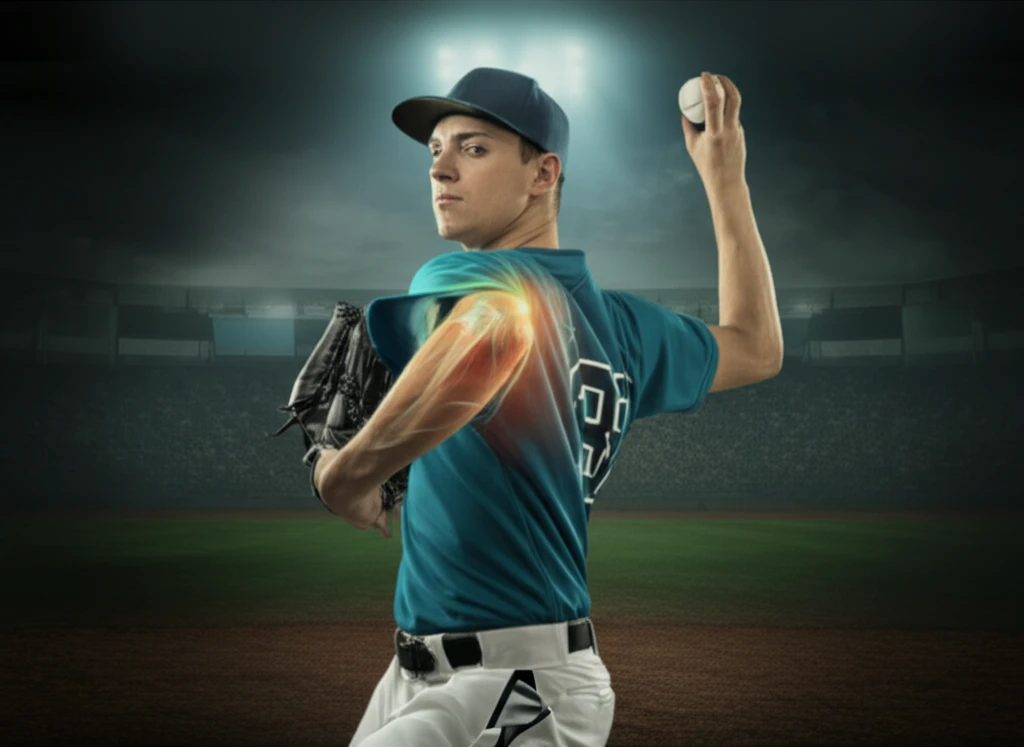
Surreal digital illustration of a baseball pitcher highlighting shoulder and arm movements.

Beyond the Game: How Shoulder Injuries in Baseball Pitchers Are Changing

"New research reveals that certain arm movements are bigger predictors of injury than previously thought."


The crack of the bat, the roar of the crowd, and the explosive power of a pitcher – baseball is a sport of skill, strategy, and sometimes, unfortunate injuries. For pitchers, the shoulder and elbow are their most valuable assets, and keeping them healthy is paramount. But what if we've been looking at the problem the wrong way? A recent study has turned conventional wisdom on its head, revealing new insights into the factors that predict shoulder and elbow injuries in professional baseball pitchers.

For years, the focus has been on Glenohumeral Internal Rotation Deficits (GIRD), a condition where the shoulder loses internal rotation. However, this new research suggests that other movements might be even more critical. The study examined 132 pitcher-seasons, offering a deep dive into the biomechanics of pitching and injury risk. This article breaks down the findings, explaining what they mean for pitchers at all levels, from little league to the pros.

This isn't just about baseball; it's about understanding the body and how it moves under stress. Whether you're a pitcher, a coach, or simply a sports enthusiast, these findings provide valuable knowledge about injury prevention and performance optimization. Let's step up to the plate and explore what this new research has to offer.

The Shoulder and Elbow: Understanding the Risks

Surreal digital illustration of a baseball pitcher highlighting shoulder and arm movements.

The study, published in the Orthopaedic Journal of Sports Medicine, looked at a range of motion (ROM) and deficits to determine the impact and predictability of shoulder and elbow injuries. The research team collected data from a comprehensive, preseason assessment of ROM on all pitchers in the study. These assessments included total range of motion (TROM) and specific deficits.

The results were striking. While GIRD has been a focal point for injury prevention, the study found that decreased shoulder external rotation and flexion were more significant predictors of injury. This means that pitchers who have limited ability to rotate their arm outward or bend their arm upward are at a higher risk.

  • Shoulder External Rotation Deficit: Pitchers with a deficit in shoulder external rotation were at a higher risk of elbow injuries.
  • Shoulder Flexion Deficit: Limited shoulder flexion also emerged as a significant risk factor.
  • Increased IR Deficit: While not as significant, increased internal rotation deficit also played a role.
  • Weight: Interestingly, the study also showed that heavier pitchers were at a higher risk of injury.
These findings suggest that a more holistic approach to injury prevention is necessary. It's not just about one specific movement; it's about the overall balance and functionality of the shoulder and elbow. This also highlights the need for comprehensive preseason assessments that include a variety of ROM measurements. These measurements help to identify potential weaknesses and tailor training programs to address them.

Taking Action: What This Means for Pitchers

The study's findings offer valuable insights for pitchers and those who work with them. Preseason assessments are more important than ever, helping to identify potential risk factors. Training programs should focus on improving shoulder external rotation and flexion. Monitoring a pitcher's weight and overall health is also key. By taking a proactive, informed approach, pitchers can reduce their risk of injury and stay in the game they love. This research not only changes how we think about shoulder injuries, but it also empowers pitchers with the knowledge they need to protect their careers and their well-being. This new understanding will pave the way for more effective injury prevention strategies, ensuring that pitchers can continue to perform at their best for years to come.

About this Article -

This article was crafted using a human-AI hybrid and collaborative approach. AI assisted our team with initial drafting, research insights, identifying key questions, and image generation. Our human editors guided topic selection, defined the angle, structured the content, ensured factual accuracy and relevance, refined the tone, and conducted thorough editing to deliver helpful, high-quality information.See our About page for more information.

This article is based on research published under:

DOI-LINK: 10.1177/2325967117s00221, Alternate LINK

Title: Decreased Shoulder External Rotation And Flexion Are Greater Predictors Of Injury Than Internal Rotation Deficits: Analysis Of 132 Pitcher-Seasons In Professional Baseball

Subject: Orthopedics and Sports Medicine

Journal: Orthopaedic Journal of Sports Medicine

Publisher: SAGE Publications

Authors: Christopher L. Camp, Alec Sinatro, Andrea Spiker, Brian C. Werner, David W. Altchek, Struan H. Coleman, Joshua S. Dines

Published: 2017-07-01

Everything You Need To Know

1

What is Glenohumeral Internal Rotation Deficit (GIRD), and why was it previously considered a primary focus in baseball pitcher injury prevention?

Glenohumeral Internal Rotation Deficit, or GIRD, is a condition where a pitcher's shoulder loses internal rotation. Previously, it was considered a primary factor in shoulder and elbow injuries due to the belief that a significant loss of internal rotation could lead to increased stress on the shoulder joint. However, recent research indicates that while GIRD does play a role, other range of motion deficits, such as decreased shoulder external rotation and flexion, may be more significant predictors of injury risk. Therefore, focusing solely on GIRD may not provide a comprehensive approach to injury prevention.

2

According to recent research, what specific shoulder movements are now considered more significant predictors of injury in baseball pitchers than previously thought?

Recent research indicates that decreased shoulder external rotation and shoulder flexion are more significant predictors of injury in baseball pitchers than previously believed. Specifically, pitchers with a deficit in shoulder external rotation are at a higher risk of elbow injuries, and limited shoulder flexion also emerges as a significant risk factor. While increased internal rotation deficit (GIRD) still plays a role, these other movements appear to have a more pronounced impact on injury occurrence.

3

How does a pitcher's weight influence their risk of injury, according to the study?

The study showed that heavier pitchers are at a higher risk of injury. While the exact reasons for this are not detailed in the text, it implies that increased body mass may place additional stress on the shoulder and elbow joints during the pitching motion. This could be due to increased forces generated or altered biomechanics. Therefore, monitoring a pitcher's weight and overall health is considered crucial in a comprehensive approach to injury prevention.

4

What are the practical implications of the study's findings for preseason assessments and training programs for baseball pitchers?

The study's findings highlight the need for more comprehensive preseason assessments that include a variety of Range of Motion (ROM) measurements, specifically focusing on shoulder external rotation and flexion, in addition to GIRD. Training programs should be tailored to address any identified deficits in these areas, aiming to improve shoulder external rotation and flexion. This holistic approach should help identify potential weaknesses and reduce the risk of injury by ensuring the overall balance and functionality of the shoulder and elbow.

5

Beyond range of motion, what other factors should be considered in a holistic approach to preventing shoulder and elbow injuries in baseball pitchers, based on the research findings?

Beyond range of motion deficits like decreased shoulder external rotation, decreased shoulder flexion, and increased internal rotation deficit (GIRD), a holistic approach should consider a pitcher's weight and overall health. The study indicates that heavier pitchers are at a higher risk. While not explicitly mentioned, this holistic approach might also include assessing pitching mechanics, monitoring workload, ensuring proper nutrition and recovery, and addressing any other underlying physical conditions that could contribute to injury risk. Combining these factors with targeted training programs and regular assessments can offer a more effective strategy for injury prevention.

Newsletter Subscribe

Subscribe to get the latest articles and insights directly in your inbox.