
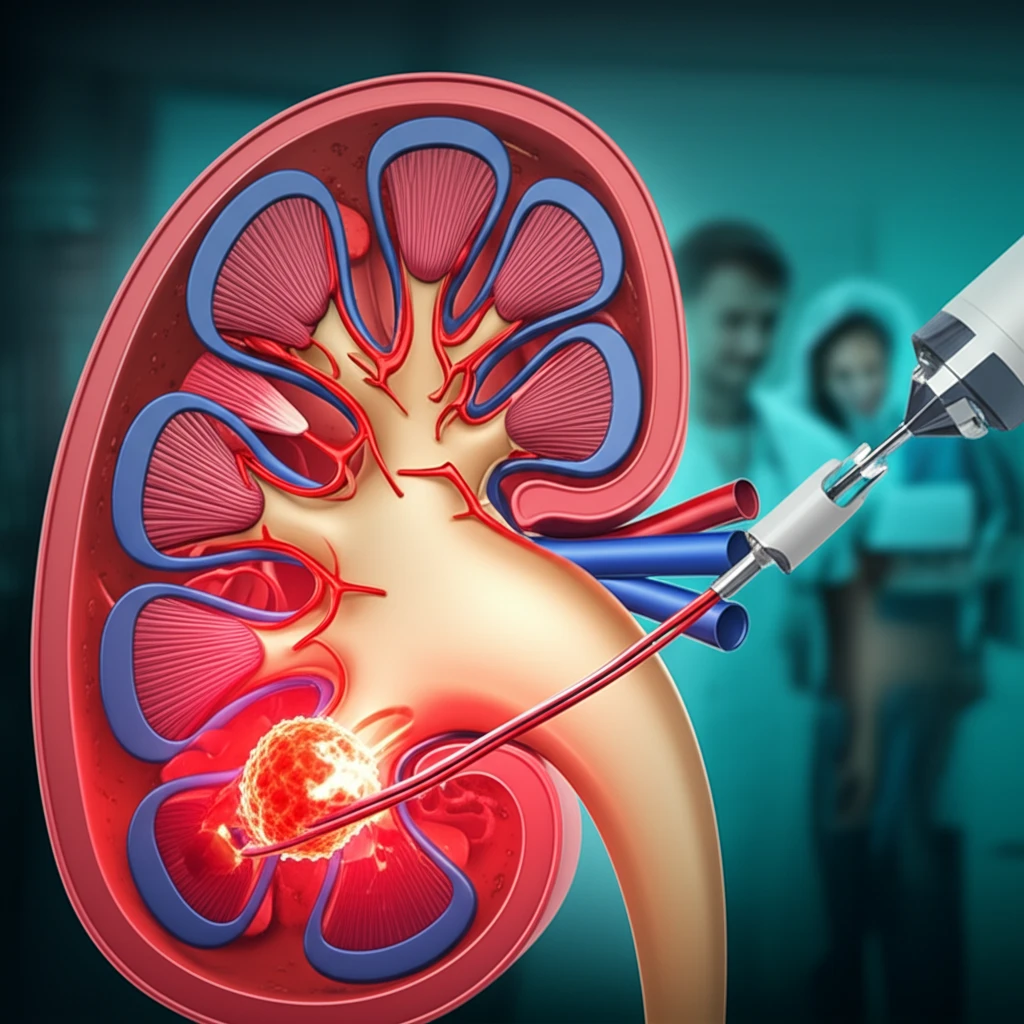
Illustration depicting the AngioJet device, a blood clot, and a kidney to represent the study's findings.

Beyond the Blood Clot: Unveiling the Hidden Risks of a Common Treatment

"New research reveals surprising dangers associated with a standard procedure for deep vein thrombosis."


Deep vein thrombosis (DVT), a condition where blood clots form in the deep veins, often in the legs, is a serious health concern. While treatments like percutaneous mechanical thrombectomy (PMT) using AngioJet have become standard practice, a recent study has revealed a concerning link between this procedure and an increased risk of acute kidney injury (AKI). This finding underscores the importance of understanding the potential downsides of even commonly used medical interventions.

The study, published in the Journal of Vascular Surgery: Venous and Lymphatic Disorders, compared outcomes of patients who underwent AngioJet-assisted PMT with those who received catheter-directed thrombolysis (CDT), another DVT treatment. The researchers focused on the incidence of AKI, a condition where the kidneys suddenly lose their ability to filter waste from the blood. The results were quite eye-opening, suggesting that the choice of treatment might significantly impact a patient's risk.

This article aims to break down the study's key findings, providing a clear, accessible explanation of the risks involved. We'll explore the reasons behind the increased AKI risk with AngioJet, discuss who is most vulnerable, and examine the implications for both patients and healthcare providers. This information is crucial for anyone affected by DVT and for those seeking to make informed decisions about their treatment options.

The AngioJet Dilemma: What the Research Reveals

Illustration depicting the AngioJet device, a blood clot, and a kidney to represent the study's findings.

The study found a significantly higher incidence of AKI in patients treated with AngioJet compared to those treated with CDT. Specifically, 22.8% of patients in the AngioJet group developed AKI, whereas only 9.2% of those in the CDT group experienced the same issue. This difference highlights a substantial disparity in the risk profile of these two treatment approaches. The study also identified key factors that contributed to this increased risk, helping to paint a clearer picture of the potential dangers.

One of the primary concerns associated with AngioJet is its potential to cause acute hemolysis, the destruction of red blood cells. The researchers found that the AngioJet group experienced more hemolysis than the CDT group. This hemolysis can lead to the release of substances that are toxic to the kidneys, potentially triggering AKI. The study also pointed to a history of major surgery within three months of the procedure and a significant drop in hematocrit (HCT, the percentage of red blood cells in the blood) as independent risk factors for AKI. This information is critical for doctors evaluating treatment options.

  • Increased AKI Risk: AngioJet was associated with a significantly higher rate of acute kidney injury compared to CDT.
  • Hemolysis Concerns: The AngioJet procedure was linked to a greater degree of hemolysis, which can damage the kidneys.
  • Risk Factors: A history of recent major surgery and a substantial drop in hematocrit were identified as independent risk factors for AKI.
The study's findings underscore the need for careful consideration when choosing a treatment for DVT. While AngioJet can be an effective way to remove clots, its potential to cause AKI demands a thorough evaluation of each patient's individual risk factors. The increased risk of complications should be weighed against the benefits, ensuring that the chosen approach is the safest and most appropriate option for the patient.

Making Informed Choices for DVT Treatment

The study's conclusions provide valuable insights for both patients and healthcare professionals. It highlights the importance of a personalized approach to DVT treatment, emphasizing that the best course of action depends on individual risk factors and medical history. Patients should discuss these findings with their doctors to ensure they are fully informed about the potential benefits and risks of each treatment option, making informed decisions that prioritize their kidney health and overall well-being.

About this Article -

This article was crafted using a human-AI hybrid and collaborative approach. AI assisted our team with initial drafting, research insights, identifying key questions, and image generation. Our human editors guided topic selection, defined the angle, structured the content, ensured factual accuracy and relevance, refined the tone, and conducted thorough editing to deliver helpful, high-quality information.See our About page for more information.

Everything You Need To Know

1

What is deep vein thrombosis (DVT), and why is it a health concern?

Deep vein thrombosis (DVT) is a condition characterized by the formation of blood clots in the deep veins, most commonly in the legs. It's a serious health concern because these clots can dislodge and travel to the lungs, causing a pulmonary embolism, which can be life-threatening. DVT requires careful management, and treatments such as percutaneous mechanical thrombectomy (PMT) using AngioJet or catheter-directed thrombolysis (CDT) are often employed to address it, although these treatments carry their own risks that need to be carefully considered.

2

How does percutaneous mechanical thrombectomy (PMT) using AngioJet work in treating DVT, and what are the potential risks?

Percutaneous mechanical thrombectomy (PMT) using AngioJet is a procedure used to remove blood clots in cases of deep vein thrombosis (DVT). It involves using a catheter with a mechanical device to break up and remove the clot. However, recent research indicates a potential risk of acute kidney injury (AKI) associated with AngioJet, primarily due to acute hemolysis (destruction of red blood cells), which can release substances toxic to the kidneys. This risk necessitates careful evaluation of patients before using AngioJet.

3

The study mentions catheter-directed thrombolysis (CDT) as another treatment for DVT. How does CDT compare to AngioJet in terms of the risk of acute kidney injury (AKI)?

Catheter-directed thrombolysis (CDT) is another treatment option for deep vein thrombosis (DVT). The research indicates that CDT is associated with a lower risk of acute kidney injury (AKI) compared to percutaneous mechanical thrombectomy (PMT) using AngioJet. Specifically, the study found a significantly lower incidence of AKI in patients treated with CDT (9.2%) compared to those treated with AngioJet (22.8%). This difference suggests that CDT may be a safer option for patients at higher risk of kidney complications.

4

What factors might make a patient more vulnerable to acute kidney injury (AKI) when undergoing percutaneous mechanical thrombectomy (PMT) using AngioJet for DVT?

Several factors can increase a patient's vulnerability to acute kidney injury (AKI) when undergoing percutaneous mechanical thrombectomy (PMT) using AngioJet for deep vein thrombosis (DVT). The study identified a history of major surgery within three months of the procedure and a significant drop in hematocrit (HCT) as independent risk factors. Additionally, the potential for acute hemolysis induced by AngioJet can contribute to kidney damage. Patients with pre-existing kidney issues or other risk factors should be carefully evaluated before considering AngioJet.

5

Given the risks associated with AngioJet, what steps should patients and healthcare providers take to ensure the safest and most effective treatment for DVT?

To ensure the safest and most effective treatment for deep vein thrombosis (DVT), both patients and healthcare providers should take several steps. Healthcare providers should conduct a thorough evaluation of each patient's individual risk factors, including a history of recent major surgery, hematocrit levels, and pre-existing kidney conditions. Patients should engage in open communication with their doctors, discussing the potential benefits and risks of percutaneous mechanical thrombectomy (PMT) using AngioJet versus catheter-directed thrombolysis (CDT). A personalized approach that considers the patient's specific circumstances is crucial in minimizing the risk of acute kidney injury (AKI) and optimizing overall well-being.

Newsletter Subscribe

Subscribe to get the latest articles and insights directly in your inbox.