
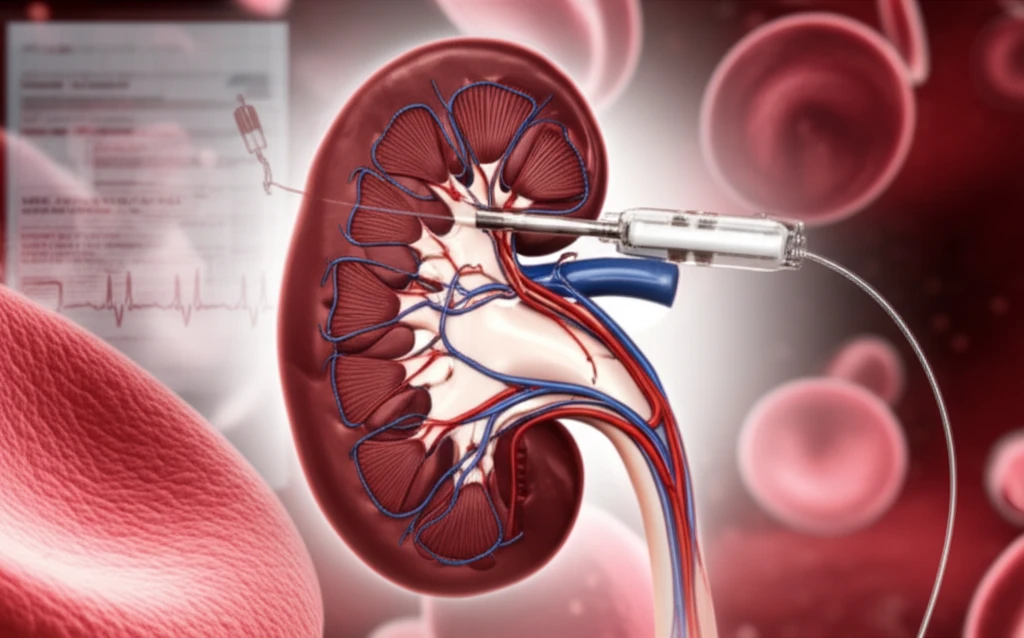
AngioJet Thrombectomy: Weighing the Risks of Kidney Injury in DVT Treatment

"A new study sheds light on the potential risks of acute kidney injury (AKI) associated with the AngioJet system compared to traditional methods for treating deep vein thrombosis."
Deep vein thrombosis (DVT), particularly in the iliofemoral region, is a serious condition that can lead to long-term complications such as post-thrombotic syndrome. To minimize these risks, percutaneous mechanical thrombectomy (PMT) and catheter-directed thrombolysis (CDT) are often employed to remove the blood clot and restore proper blood flow.
Among the PMT devices, the AngioJet system has gained popularity due to its ability to rapidly break down and remove clots. However, a recent study has raised concerns about a potential side effect: an increased risk of acute kidney injury (AKI) following the procedure.
This article delves into the findings of this study, comparing the risk of AKI between AngioJet PMT and CDT, and explores the factors that may contribute to this increased risk. Understanding these nuances is crucial for patients and healthcare providers alike in making informed decisions about DVT treatment.
DVT Burden and AngioJet Study Overview
Acute lower extremity deep vein thrombosis (DVT) poses a significant clinical burden due to its association with post-thrombotic syndrome (PTS) and pulmonary embolism (PE). A retrospective single-center study compared the efficacy and safety of AngioJet mechanical thrombectomy and catheter-directed thrombolysis (CDT) in 76 patients with acute lower limb DVT. The study assessed predictors of thrombus clearance, patient experience, and economic impact, while also evaluating short- to mid-term PTS incidence and patient satisfaction.
Conventional Treatment Modalities and Constraints
Catheter-directed thrombolysis (CDT) remains a standard approach for acute DVT, but it is associated with limitations such as prolonged infusion times, increased bleeding risk, and potential for incomplete thrombus resolution. Mechanical thrombectomy devices, including AngioJet, are employed as alternatives or adjuncts to address some of these constraints by physically removing clot material. However, each method carries distinct risk profiles and procedural considerations that influence clinical decision-making. Treatment selection often depends on thrombus characteristics, patient comorbidities, and institutional resources.
Evolution of AngioJet in DVT Management
Surgical thrombectomy has historically been recommended as a first-line approach for rapid thrombus removal in DVT. The AngioJet thrombectomy system has been utilized in complex cases, including managing DVT in conjunction with transplanted renal vein thrombosis, though literature on such applications remains limited. Studies have demonstrated the safety and feasibility of AngioJet rheolytic thrombectomy for treating subacute lower limb DVT, particularly when combined with CDT in patients without high bleeding risk. The development of specialized catheters, such as the AngioJet ZelanteDVT designed for large-diameter veins ≥6 mm, represents a milestone in device engineering for venous interventions.
AngioJet vs. CDT: Understanding the Kidney Injury Risk
The study, published in the Journal of Vascular Surgery: Venous and Lymphatic Disorders, retrospectively examined the medical records of 198 patients with acute iliofemoral DVT. These patients underwent either AngioJet PMT or CDT between January 2014 and September 2017. The researchers then compared the incidence of postoperative AKI between the two groups.
- Use of AngioJet PMT (odds ratio [OR], 2.82)
- History of major surgery within 3 months of endovascular intervention (OR, 8.51)
- Hematocrit (HCT) drop >14% (OR, 2.73)
Emerging Comparative Studies and Device Concerns
Recent research has focused on comparing the AngioJet rheolytic thrombectomy system with newer devices like the Zhongtian SWAM (Synchronized Wave Aspiration and Maceration) system. A prospective randomized trial evaluated the clinical efficacy and safety profile of these two systems in patients with acute lower extremity DVT. While AngioJet has established clinical utility, concerns persist regarding device-related hemolysis and embolic complications. The study aims to determine if alternative technologies can mitigate these specific risks while maintaining or improving thrombectomy outcomes.
Reported Limitations and Adverse Outcomes
Despite its clinical utility, AngioJet thrombectomy is associated with potential complications that warrant careful consideration. Device-related hemolysis and renal function injury are among the reported adverse effects that may limit its applicability in certain patient populations. Some comparative analyses suggest that alternative techniques, such as CDT alone or combined pharmacomechanical approaches, may offer different risk-benefit profiles. The occurrence of embolic complications during the procedure remains a concern that requires ongoing vigilance and technical refinement.
AngioJet Versus Alternative Thrombectomy Methods
Multiple comparative studies indicate that AngioJet thrombectomy provides a higher clot reduction rate with shorter thrombolytic time and lower thrombolytic drug dosage compared to suction thrombectomy and CDT alone. However, the device carries a potential risk of renal function injury that necessitates appropriate precautions. Prospective trials comparing AngioJet with the SWAM system aim to clarify differences in safety profiles, particularly regarding hemolysis and embolic events. Combined pharmacomechanical thrombolysis plus CDT has shown promise in improving outcomes for acute iliofemoral DVT compared to CDT alone.
Making Informed Decisions About DVT Treatment
The study highlights the importance of carefully weighing the risks and benefits of different DVT treatment options, especially considering individual patient factors. While AngioJet PMT can be a valuable tool for rapid clot removal, healthcare providers should be aware of the increased risk of AKI, particularly in patients with recent surgical history or those prone to significant hematocrit drops. By understanding these risks and taking appropriate precautions, clinicians can optimize patient outcomes and minimize potential complications.
Meta-Analysis Findings and Clinical Implications
A meta-analysis of clinical trials comparing AngioJet rheolytic thrombectomy versus catheter-directed thrombolysis for lower extremity deep vein thrombosis synthesized efficacy and safety data across multiple studies. The analysis aimed to provide a comprehensive assessment of treatment outcomes to inform clinical practice. Results suggest comparable efficacy between the two approaches but highlight differences in complication profiles that influence treatment selection. Expert commentary emphasizes the need for individualized patient assessment when considering mechanical thrombectomy versus pharmacological thrombolysis.
Research Directions and Technological Advances
Future research should prioritize large-scale, multi-center randomized controlled trials to establish definitive evidence on long-term outcomes and comparative effectiveness. Development of next-generation thrombectomy devices with enhanced safety profiles, particularly reduced hemolysis and renal injury risk, represents a key technological frontier. Integration of advanced imaging and real-time monitoring during procedures may improve precision and reduce complications. Comparative effectiveness research across diverse patient populations will help refine treatment algorithms and institutional protocols.
Healthcare System Considerations and Adoption Barriers
Widespread adoption of mechanical thrombectomy for DVT faces systemic challenges including high device costs, specialized training requirements, and variability in institutional protocols. Resource limitations in lower-income healthcare settings may restrict access to advanced thrombectomy technologies, creating disparities in treatment options. Development of standardized guidelines and competency frameworks could facilitate more consistent implementation. Health economic analyses comparing long-term cost-effectiveness of different thrombectomy approaches are needed to inform policy and reimbursement decisions.
Patient Experiences and Treatment Personalization
Patient experiences with AngioJet thrombectomy vary considerably, with some individuals benefiting from rapid symptom relief and thrombus removal while others face procedure-related complications. Shared decision-making that incorporates patient preferences, risk tolerance, and individual clinical profiles is essential for optimal treatment selection. The psychological impact of DVT and its treatment, including anxiety about recurrence or complications, requires attention within comprehensive care models. Real-world clinical practice often necessitates balancing procedural efficacy with patient-centered considerations such as recovery time and quality of life outcomes.