
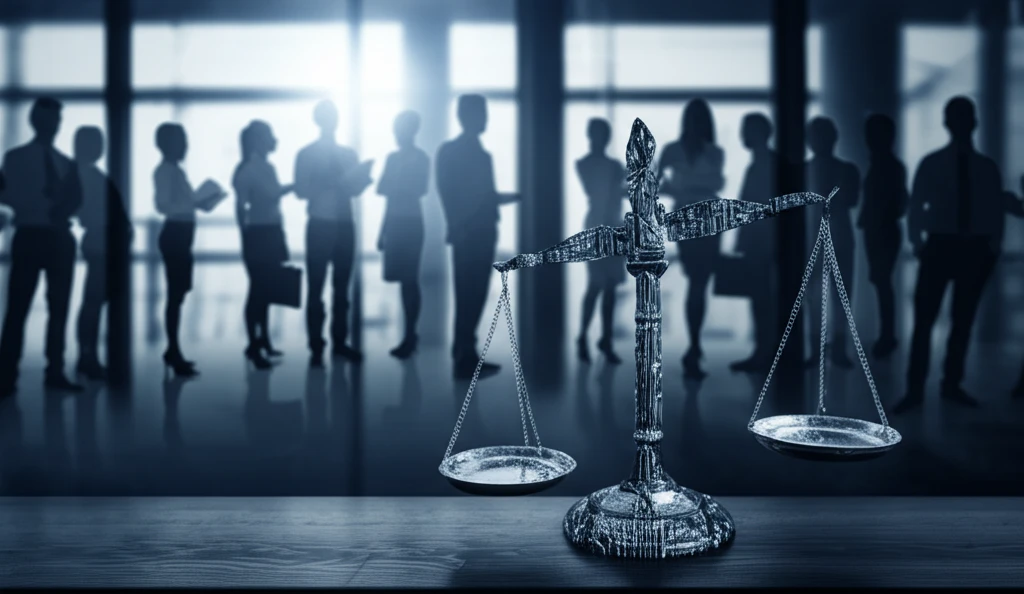
AI Bias: An unbalanced scale representing algorithmic discrimination in the workplace.

AI's Hidden Bias: How Algorithms Judge You Before You Apply

"Uncover the surprising ways AI in hiring can perpetuate workplace inequality and what you can do about it."


For decades, companies have strived to create workplaces that offer equal opportunities to all. Despite these efforts, significant gaps persist, particularly for women and racial/ethnic minorities. Traditional hiring processes, often influenced by human biases, have been identified as a major culprit behind these disparities.

Enter Artificial Intelligence (AI), promising a new era of objectivity in decision-making. As Large Language Models (LLMs) become increasingly popular, many hope that AI can eliminate human biases and level the playing field. However, a recent study reveals a more complex reality: AI, too, can harbor biases, potentially perpetuating or even exacerbating existing inequalities.

This article dives into groundbreaking research that uncovers how AI algorithms, specifically those used in resume screening, can unintentionally discriminate against certain job candidates. We'll explore the nuances of these biases, understand their potential impact on your job search, and discuss what steps can be taken to ensure a fairer future for everyone.

AI Bias in Action: How the Algorithm Judges

AI Bias: An unbalanced scale representing algorithmic discrimination in the workplace.

Researchers at the University of Hong Kong conducted an experiment to assess gender and racial biases in OpenAI's GPT, a widely used LLM. They instructed GPT to score approximately 361,000 resumes, each randomized with various work experiences, educational backgrounds, and skill sets. Crucially, each resume was also assigned a gender and racially distinctive name.

The results were eye-opening. The study found that GPT tended to award higher assessment scores to female candidates with similar qualifications. Conversely, black male candidates received lower scores compared to their white male counterparts. These biases could lead to a 1-2 percentage-point difference in hiring probabilities for otherwise identical candidates.

  • Pro-Female Bias: Female candidates, regardless of race, generally received higher scores.
  • Anti-Black-Male Bias: Black male candidates consistently scored lower than their white male counterparts.
  • State-Level Differences: The "pro-female" bias was more pronounced in democratic states, while the "anti-black-male" bias appeared weaker.
These findings highlight that AI's seemingly objective assessment can be influenced by underlying patterns in the data it's trained on, reflecting societal biases that exist in the real world. This is particularly concerning as AI becomes increasingly integrated into HR processes, potentially amplifying inequalities if left unchecked.

The Path Forward: Towards Fairer AI in Hiring

The study underscores the urgent need for greater awareness and proactive measures to mitigate AI bias in hiring. While AI offers the potential to streamline processes and reduce human error, it is not a silver bullet for achieving workplace equality. To ensure AI promotes fairness rather than perpetuating inequality, several steps are crucial:<ul><li><b>Data Auditing:</b> Thoroughly examine the data used to train AI algorithms, identifying and addressing potential sources of bias.</li><li><b>Algorithm Transparency:</b> Promote transparency in AI decision-making processes, allowing for scrutiny and accountability.</li><li><b>Continuous Monitoring:</b> Regularly monitor AI performance, evaluating its impact on different demographic groups and making adjustments as needed.</li><li><b>Human Oversight:</b> Maintain human oversight in AI-driven processes, ensuring that algorithms are not the sole arbiters of hiring decisions.</li><li><b>Education and Awareness:</b> Educate HR professionals and hiring managers about the potential for AI bias, empowering them to make informed decisions and advocate for fair practices.</li></ul>By embracing these strategies, we can harness the power of AI while safeguarding against its potential to perpetuate inequality, creating a more equitable and inclusive future for all job seekers.

About this Article -

This article was crafted using a human-AI hybrid and collaborative approach. AI assisted our team with initial drafting, research insights, identifying key questions, and image generation. Our human editors guided topic selection, defined the angle, structured the content, ensured factual accuracy and relevance, refined the tone, and conducted thorough editing to deliver helpful, high-quality information.See our About page for more information.

Everything You Need To Know

1

How can AI algorithms used in resume screening unintentionally discriminate against job candidates?

AI algorithms, particularly Large Language Models (LLMs) like OpenAI's GPT, can unintentionally discriminate due to biases present in the data they are trained on. A study showed that GPT tended to score female candidates higher and black male candidates lower, even with similar qualifications. These biases reflect societal inequalities and can lead to skewed hiring probabilities. If these biases are not addressed, integrating AI into HR processes may amplify existing inequalities. Data auditing, algorithm transparency, and continuous monitoring are essential to mitigate such biases.

2

What did the University of Hong Kong's experiment reveal about AI bias in resume screening using OpenAI's GPT?

The experiment revealed that OpenAI's GPT exhibited both pro-female and anti-black-male biases when scoring resumes. Female candidates generally received higher scores regardless of race, while black male candidates consistently scored lower compared to their white male counterparts. These biases could result in a 1-2 percentage-point difference in hiring probabilities. The 'pro-female' bias was more noticeable in democratic states, while the 'anti-black-male' bias showed less strength in the same regions. This highlights how AI algorithms can reflect and even amplify societal biases present in their training data.

3

What steps can be taken to ensure fairer AI in hiring processes and mitigate potential biases?

Several proactive measures are crucial to mitigate AI bias in hiring. Data auditing involves thoroughly examining the data used to train AI algorithms to identify and address potential sources of bias. Algorithm transparency is essential, promoting openness in AI decision-making processes to allow for scrutiny and accountability. Continuous monitoring involves regularly evaluating AI performance, assessing its impact on different demographic groups, and making necessary adjustments. Human oversight is also vital, ensuring that algorithms are not the sole arbiters of hiring decisions. Finally, education and awareness are key, educating HR professionals and hiring managers about the potential for AI bias to empower them to make informed decisions and advocate for fair practices. Combining these strategies can harness the power of AI while safeguarding against its potential to perpetuate inequality.

4

Why is it important to maintain human oversight in AI-driven hiring processes, even if AI is meant to reduce human error?

While AI offers the potential to reduce human error and streamline processes, it is not a perfect solution for achieving workplace equality. AI algorithms can reflect biases present in their training data, potentially leading to discriminatory outcomes. Human oversight is crucial to ensure that algorithms are not the sole arbiters of hiring decisions and that potential biases are identified and addressed. Human judgment can provide a counterbalance to the limitations of AI, promoting fairness and equity in the hiring process. The integration of data auditing, algorithm transparency and continuous monitoring will also help.

5

How does the 'pro-female' bias in AI algorithms manifest, and why was it more pronounced in democratic states according to the study?

The 'pro-female' bias in AI algorithms, as observed in the University of Hong Kong study using OpenAI's GPT, manifests as a tendency to award higher assessment scores to female candidates, regardless of their race, compared to male candidates with similar qualifications. The study noted that this bias was more pronounced in democratic states, although the exact reasons for this correlation remain speculative. One potential explanation is that democratic states may have different representation within the training data. The societal values and norms prevalent in these states may also influence the patterns learned by the AI, leading to a more pronounced 'pro-female' bias. Further research is needed to fully understand the underlying causes of this state-level difference.

Newsletter Subscribe

Subscribe to get the latest articles and insights directly in your inbox.