
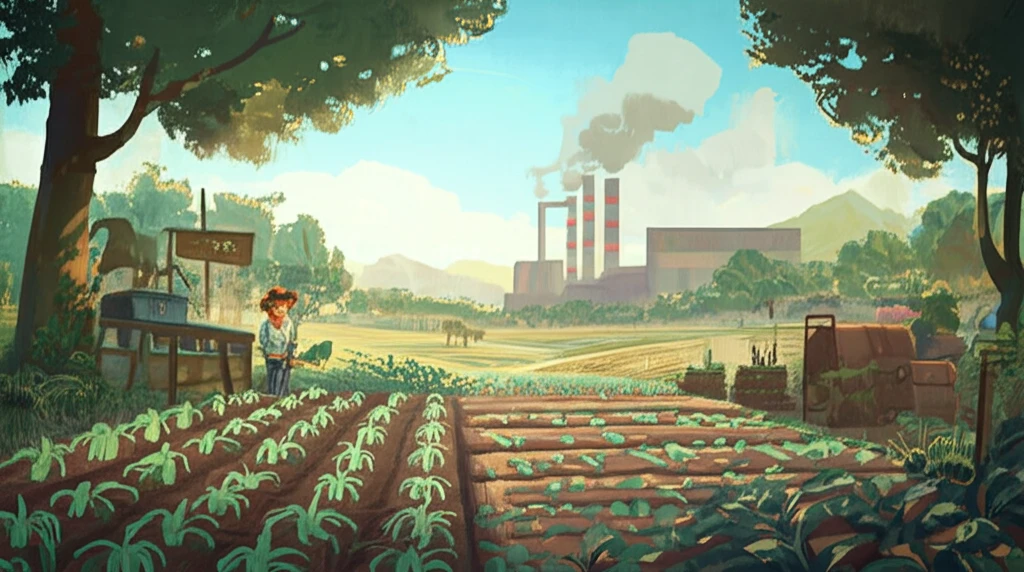
A vibrant agroecological farm in Brazil contrasts with sterile industrial agriculture, symbolizing sustainable food systems.

Agroecology: Building a Resilient Food System for the Future

"Discover how Brazil's agroecological movement is challenging industrial agriculture and promoting sustainable practices."


The global food system is under increasing scrutiny as concerns about sustainability, equity, and resilience grow. Industrial agriculture, while highly productive, faces criticism for its environmental impact, social consequences, and dependence on external inputs. In response, alternative approaches are gaining traction, with agroecology emerging as a leading contender for a more sustainable food future.

Agroecology integrates ecological principles into agricultural practices, aiming to create farming systems that mimic natural ecosystems. It emphasizes biodiversity, soil health, and closed-loop systems, reducing reliance on synthetic fertilizers and pesticides. Beyond environmental benefits, agroecology often prioritizes social justice, community empowerment, and local food systems.

In Brazil, agroecology has evolved into a powerful social movement, challenging the dominant agribusiness model and advocating for a more equitable and sustainable agricultural landscape. This movement seeks to reconstruct different aspects of social reality by promoting community-led initiatives, knowledge sharing, and resistance to the industrialization of agriculture. This article delves into Brazil's agroecological movement, exploring its strategies, challenges, and potential for transforming the food system.

What is Agroecology and How Does it Challenge Agribusiness?

A vibrant agroecological farm in Brazil contrasts with sterile industrial agriculture, symbolizing sustainable food systems.

Agroecology is more than just a set of farming techniques; it's a holistic approach that views agriculture as an integrated part of social and ecological systems. It stands in direct contrast to agribusiness, which prioritizes maximizing production and profit through industrial-scale monocultures, heavy reliance on synthetic inputs, and globalized supply chains.

The agroecological movement resists the industrial model by focusing on:

  • Ecological Sustainability: Promoting biodiversity, soil health, and water conservation to create resilient farming systems.
  • Social Justice: Empowering smallholder farmers, promoting fair labor practices, and supporting local food economies.
  • Knowledge Sovereignty: Valuing traditional knowledge, fostering farmer-to-farmer learning, and challenging the dominance of corporate-controlled technologies.
  • Food Sovereignty: Emphasizing local food production, reducing dependence on global markets, and ensuring access to healthy, culturally appropriate food for all.
By embracing these principles, agroecology seeks to create food systems that are not only environmentally sound but also socially just and economically viable for local communities.

Toward a Resilient and Equitable Food Future

Brazil's agroecological movement offers a compelling vision for a more sustainable and equitable food future. By challenging the dominant agribusiness model and promoting community-led initiatives, it demonstrates the potential to create resilient food systems that benefit both people and the planet. While challenges remain, the movement's successes highlight the importance of agroecology as a key strategy for building a more just and sustainable world. Further research and support for agroecological practices are crucial to realizing its full potential and transforming the global food system.

About this Article -

This article was crafted using a human-AI hybrid and collaborative approach. AI assisted our team with initial drafting, research insights, identifying key questions, and image generation. Our human editors guided topic selection, defined the angle, structured the content, ensured factual accuracy and relevance, refined the tone, and conducted thorough editing to deliver helpful, high-quality information.See our About page for more information.

Everything You Need To Know

1

What is agroecology, and how does it differ from industrial agriculture or agribusiness?

Agroecology is a holistic approach that integrates ecological principles into agricultural practices, creating farming systems that mimic natural ecosystems. It emphasizes biodiversity, soil health, and closed-loop systems to reduce reliance on synthetic inputs. Unlike agribusiness, which prioritizes maximizing production and profit through industrial-scale monocultures and globalized supply chains, agroecology focuses on ecological sustainability, social justice, knowledge sovereignty, and food sovereignty. Agroecology also values traditional knowledge and community-led initiatives, fostering resilient and equitable food systems, which contrasts with agribusiness's dependence on external inputs and corporate-controlled technologies.

2

How has agroecology evolved in Brazil, and what role does it play as a social movement?

In Brazil, agroecology has evolved into a powerful social movement that challenges the dominant agribusiness model and advocates for a more equitable and sustainable agricultural landscape. It promotes community-led initiatives, knowledge sharing, and resistance to the industrialization of agriculture. This movement seeks to reconstruct social reality by empowering smallholder farmers, supporting local food economies, and ensuring access to healthy, culturally appropriate food. Brazil's agroecological movement resists the environmental and social impacts of agribusiness, offering an alternative vision for a resilient and just food system.

3

What are the main principles that guide the agroecological movement's resistance to the industrial agricultural model?

The agroecological movement resists the industrial agricultural model through several core principles. These include ecological sustainability, which focuses on promoting biodiversity, soil health, and water conservation. Social justice is another key principle, emphasizing the empowerment of smallholder farmers and fair labor practices. Knowledge sovereignty values traditional knowledge and farmer-to-farmer learning, challenging corporate-controlled technologies. Finally, food sovereignty emphasizes local food production and access to healthy, culturally appropriate food, reducing dependence on global markets. These principles collectively aim to create food systems that are environmentally sound, socially just, and economically viable for local communities, providing a direct contrast to the industrial model's prioritization of profit and large-scale production.

4

What is 'food sovereignty,' and why is it a critical goal within agroecology?

Food sovereignty is the right of peoples to healthy and culturally appropriate food produced through ecologically sound and sustainable methods, and their right to define their own food and agriculture systems. It is a critical goal within agroecology because it emphasizes local food production, reduces dependence on global markets, and ensures that communities have control over their food systems. By prioritizing food sovereignty, agroecology aims to create more resilient and equitable food systems that are not controlled by corporations or subject to the volatility of global markets. This principle ensures that communities have access to healthy, culturally appropriate food while supporting local economies and promoting ecological sustainability, standing in direct contrast to the agribusiness model.

5

What are the potential long-term implications of adopting agroecological practices on a broader scale, and what challenges might hinder its widespread implementation?

Adopting agroecological practices on a broader scale could lead to more sustainable and resilient food systems that benefit both people and the planet. Long-term implications include reduced environmental impact, increased biodiversity, improved soil health, and enhanced social equity. By prioritizing local food production and community empowerment, agroecology can also strengthen food security and promote healthier diets. However, challenges to its widespread implementation include resistance from established agribusiness interests, lack of supportive policies and infrastructure, and the need for further research and knowledge sharing. Overcoming these challenges requires a concerted effort to promote agroecological practices, support smallholder farmers, and create policies that prioritize sustainability and social justice over short-term economic gains. Addressing these aspects is crucial for realizing the full potential of agroecology and transforming the global food system.

Newsletter Subscribe

Subscribe to get the latest articles and insights directly in your inbox.