
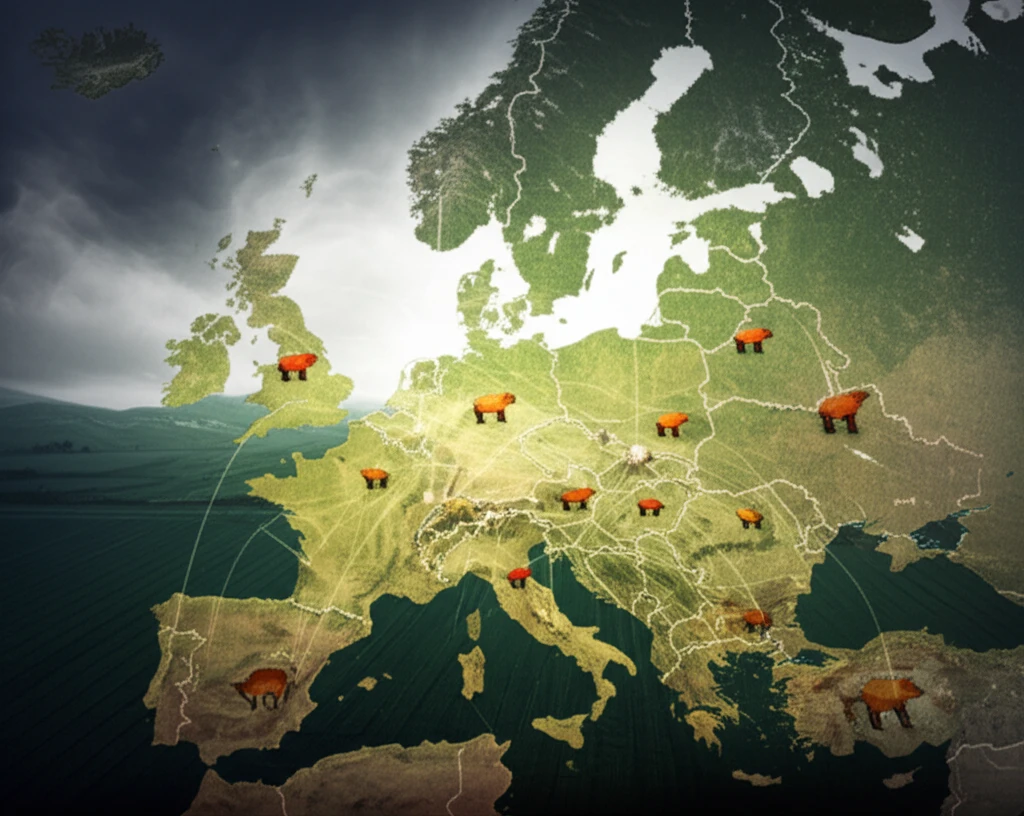
African Swine Fever Outbreak: What It Means for Europe's Farms

"Tracing the virus's path and understanding its impact on the global pork industry."
African swine fever (ASF) is a highly contagious and deadly viral disease affecting domestic and wild pigs. It poses a significant threat to the pork industry and has caused considerable economic damage in affected regions.
In September 2018, ASF was detected in wild boars in Belgium, marking a westward expansion of the virus within Europe. This discovery raised concerns about the potential spread of the disease to other countries and the subsequent impact on pig farms and related industries.
A recent study investigated the genetic characteristics of the ASF virus found in Belgium to determine its origin and track its potential spread. By analyzing the virus's genetic code, researchers aimed to understand the transmission pathways and inform strategies for controlling the outbreak.
Unraveling the Origin: Genetic Fingerprints of the ASF Virus
The study revealed that the ASF virus strain found in Belgium belongs to genotype II, a group that includes viruses circulating in both Eurasia and Southern Africa. Further genetic analysis pinpointed the virus's closest relatives to strains previously isolated in Ukraine, Belarus, Estonia, and European Russia.
- Genotype II: The ASF virus found in Belgium belongs to a widespread and concerning group.
- Eastern European Connection: The virus shares genetic similarities with strains from Ukraine, Belarus, Estonia, and Russia.
- Genetic Marker: A specific insertion in the virus's genetic code links it to a potential origin in Eastern Europe.
Implications and Future Directions
The emergence of ASF in Belgium highlights the ongoing threat posed by this virus to the European pork industry. The study's findings underscore the importance of strict biosecurity measures and surveillance programs to prevent further spread.
Understanding the virus's transmission pathways is crucial for implementing effective control strategies. This includes monitoring wild boar populations, controlling animal movement, and ensuring proper hygiene practices on pig farms.
Future research should focus on whole-genome sequencing to gain a more detailed understanding of the virus's evolution and transmission dynamics. This information will be critical for developing targeted interventions and mitigating the impact of future outbreaks.