
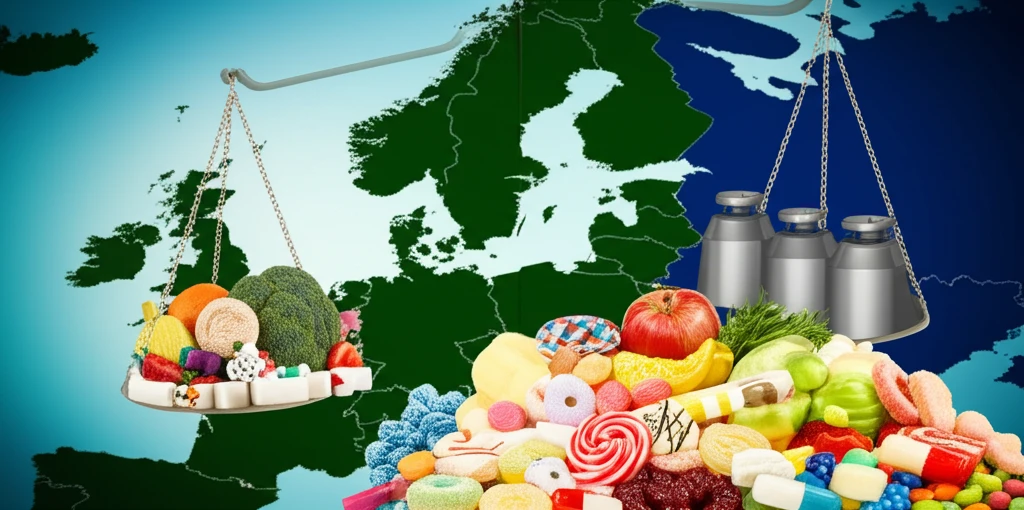
Decoding the Obesity Epidemic: How Policy Changes Can Slim Down the Curve

"A European study reveals surprising gender differences in the impact of NCD control policies on BMI and diabetes."
The global rise in obesity and diabetes presents a significant challenge to public health systems worldwide. As these non-communicable diseases (NCDs) continue to spread, understanding the effectiveness of different intervention strategies becomes increasingly crucial. Public health policies, aimed at promoting healthier lifestyles and preventing chronic diseases, are at the forefront of efforts to reverse this trend. However, the impact of these policies can vary greatly depending on the specific context and population.
A recent study published in the European Journal of Public Health sheds light on the effectiveness of Non-Communicable Disease (NCD) policies in the WHO European region. The research investigates how these policies correlate with changes in body mass index (BMI) and diabetes prevalence across different European countries. This analysis is particularly important given the diverse approaches to public health across Europe, offering valuable insights into what works and what doesn't in the fight against obesity and diabetes.
The study, led by Belgin Unal and colleagues, examines data from 2000 to 2014, a period marked by increasing awareness and policy interventions related to NCDs. By analyzing trends in BMI and diabetes prevalence in conjunction with the implementation of NCD policies, the researchers aim to provide evidence-based recommendations for improving public health strategies. Understanding the nuances of these relationships is essential for policymakers and healthcare professionals striving to create healthier communities.
The Global Scale of Obesity
Obesity has become one of the most pressing global health challenges, affecting adults across every region of the world. Data from the World Health Organization, as compiled by multiple tracking bodies, shows that obesity rates vary widely between countries but have risen steadily over recent decades. The World Obesity Federation has been collating obesity data for over 20 years, underscoring the longevity and persistence of this trend. According to Statista, the number of overweight or obese adults worldwide was measured in the billions as of 2020, with forecasts projecting further increases through 2035.
BMI and the Challenge of Measurement
Body mass index (BMI) remains the most commonly used tool for assessing obesity, with Class III obesity defined as a BMI of 40 kg/m² or higher. However, BMI is not without limitations as a diagnostic measure, and experts have called for standardizing data collection methods to improve reliability and comparability across different settings. A systems-thinking approach is increasingly recommended to account for the complexity of obesity, which is now recognized as a chronic condition requiring lifelong treatment and follow-up. Research published in BMC Medicine also highlights that malnutrition and obesity are interdependent pathologies along the same spectrum, complicating straightforward measurement and intervention.
From Humors to Hormones: Obesity's Scientific History
Historically, extra body weight was often considered an indication of good health, wealth, and prosperity rather than a medical concern. In ancient frameworks, obesity was defined as a surplus of humors, and it was not until relatively recently that it became classified as a disease by multiple medical organizations. The development of current standard definitions of overweight and obesity has its own research history, with BMI serving as the dominant classification tool. A landmark milestone came with the identification of GLP-1's role in treating obesity, recognized with the 2024 Lasker-DeBakey Clinical Medical Research Award.
Key Findings: Gender Matters in Policy Impact
The study's methodology involved analyzing sex-specific estimates of mean BMI and diabetes prevalence in various European countries. Data were sourced from the NCD Risk Factor Collaboration (NCD-RisC), a reliable source of information on global health trends. To assess the strength of NCD policies, the researchers developed an NCD policy score (NCDPS) based on the 2010 WHO Global NCD Country Capacity Survey (CCS) and the Global Tobacco Epidemic Report 2011 results. This score provided a standardized measure of policy implementation across different nations.
- BMI and diabetes rates increased in almost all countries within the WHO European region during the study period.
- NCD policy effectiveness varied significantly, showing a stronger impact on women compared to men.
- The NCD policy score explained a notable portion of the variability in BMI (24%) and diabetes prevalence (43%) changes in women.
- Tailoring public health policies to specific gender needs could enhance their effectiveness.
Pharmacotherapy, Cancer Links, and Gut Microbiota
Modern obesity research is increasingly focused on pharmacotherapy, with injectable incretin-based therapies generating significant headlines for their clinical impact. Nature has published reviews discussing epidemiological trends linking excess adiposity to cancer development, summarizing the biological mechanisms that connect the two conditions. Researchers at the University of Toronto have called for deeper investigation into the relationship between obesity, gut bacteria, and metabolic conditions that arise in childhood and adolescence, with implications for curbing the global rise of type 2 diabetes. Meanwhile, Springer's journals continue to publish pioneering work on childhood obesity management and energy balance strategies.
The Obesity Paradox and Competing Narratives
One of the most provocative counterarguments in obesity research is the so-called obesity paradox, the finding that some studies show lower mortality rates for overweight or obese individuals within certain subpopulations, particularly those with cardiovascular disease and cancer. This paradox challenges simplistic assumptions that excess weight uniformly leads to worse health outcomes. Critical obesity studies as a field have emerged to interrogate prevailing narratives, bringing breadth and depth of critical thinking to how obesity is framed and addressed. The complexity of the issue is further highlighted by experts who argue that the real causes of the obesity epidemic are often obscured by surface-level discussions.
Dietary Strategies and Behavioral Drivers
Research comparing dietary approaches to weight loss has examined whether alternate-day energy restriction or daily caloric restriction is more effective, with systematic reviews and meta-analyses published to guide clinical decision-making. Timing of physical activity has also been studied, with research comparing morning versus evening exercise over multi-week periods to assess differential effects on obesity outcomes. Beyond diet and exercise, behavioral factors play a significant role; studies have shown that the reinforcing value of food depends on the alternatives available, and that individuals who are motivated to eat and discount future consequences are more susceptible to weight gain. These findings suggest that obesity interventions must address both physiological and psychological dimensions.
Implications and Future Directions
This study underscores the importance of considering gender-specific factors when designing and implementing public health policies. While NCD policies appear to be effective in curbing obesity and diabetes among women, the lack of a similar impact on men suggests that different strategies may be needed to address men's health. Further research is needed to identify the specific barriers that prevent men from benefiting from current policies and to develop interventions that are more tailored to their needs. By taking a more nuanced approach to public health, policymakers can create more effective strategies for combating the obesity epidemic and improving the health of all populations.
Expert Views on Scope and Treatment Frontiers
Obesity experts have noted that the condition has tripled globally since 1975, with at least 2.8 million people dying annually as a result, making it a problem growing larger by the day. Meta-analyses examining L-carnitine supplementation have provided quantitative statistical analyses of its effects on body weight, waist circumference, and BMI, contributing to the evidence base for nutritional interventions. Expert opinion panels have also reviewed the utility of telemedicine in obesity care, particularly in regions where in-person access to specialists is limited. Additionally, microbiota research has yielded expert opinions on the gut-obesity connection, including findings from longitudinal follow-up studies tracking outcomes related to allergies and obesity risk in children.
Market Projections and Predictive Indicators
The commercial landscape of obesity treatment is expanding rapidly, with the Wegovy market projected to reach USD 24.02 billion by 2035, growing at a compound annual growth rate of 25.92%. The UK's Foresight programme produced a comprehensive obesity system map identifying the interconnected roles of environment and individual factors, a framework that continues to inform policy discussions. Rates of overweight and obesity among adults have increased for both men, from 29% to 37%, and women, from 30% to 38%, over the course of a major global study. An innovative Cornell study has even found that food-related words trending in major newspapers can predict a country's obesity level approximately three years in advance.
Economic Costs and Clinical Complexities
The economic burden of obesity is staggering; in the United States alone, obesity is estimated to cost between $147 billion and $210 billion per year in healthcare spending when factoring in obesity-related chronic disease. In the United Kingdom, the overall cost of obesity to wider society has been estimated at £27 billion. The obesity paradox further complicates the picture, as obesity clearly contributes to heart disease yet the relationship between weight and health outcomes is more nuanced than a simple linear model suggests. Advances in incretin-based therapies such as semaglutide and tirzepatide show durability during continued treatment, but research raises concern about weight regain after withdrawal, highlighting the chronic nature of the condition.
Biological, Psychological, and Social Dimensions
Obesity is far more than excess weight sitting on the body; it is biologically active tissue that shifts internal chemistry, affecting blood pressure, insulin signaling, and the physical structure of organs including the heart and liver. The psychological impact is equally significant, with research linking obesity to depression, particularly among women; an Australian study compared data from more than 48,000 people with depression against nearly 300,000 without it to explore these connections. Obesity is recognized as a multifactorial disease caused by a combination of biological, genetic, social, environmental, and behavioral determinants. Experts emphasize that long-term success requires sustained lifestyle changes rather than short-term diets, as obesity's impact extends well beyond appearance to affect both physical and mental health.