
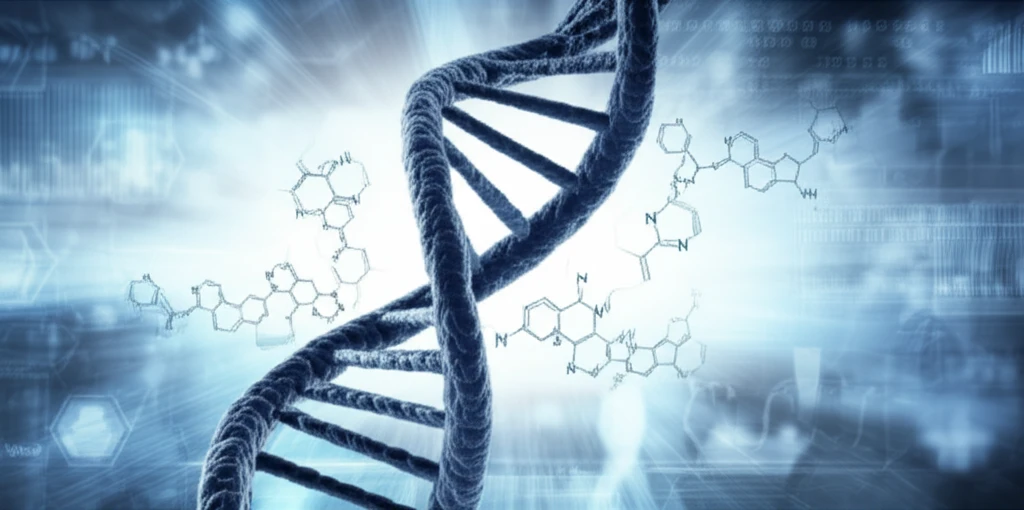
Radiation activated DNA double helix.

X-Ray Vision for Molecules: How Radiation Unlocks New DNA Functions

"Unlocking the Secrets of Modified DNA: Harnessing X-rays to Control DNA Behavior for Advanced Applications"


Imagine having the power to control the very building blocks of life with a simple flash of radiation. Scientists are making strides in the development of modified oligodeoxynucleotides (ODNs) – think of them as tiny, programmable DNA snippets – that respond to external cues. These "intelligent ODNs" hold immense promise for the future of gene-based diagnostics and therapies, offering a level of precision and control previously thought impossible.

The key lies in their ability to change their behavior – their shape, how they bind to other molecules – in response to specific triggers. While chemical modifications and external stimuli like light and metal ions have been used to manipulate DNA, high-energy ionizing radiation, particularly X-rays, offers a unique advantage. X-rays can penetrate deep into the body, allowing for spatially and temporally controlled activation of these modified DNAs without the need for additional chemicals.

This article delves into the exciting world of radiation-activated ODNs, focusing on how the strategic addition of 2-oxoalkyl groups or disulfide bonds can make these molecules incredibly responsive to X-ray irradiation. We'll explore how this technology is being applied to control DNA hybridization, activate DNA enzymes, regulate polymerase reactions, and even create decoy molecules to block unwanted protein interactions.

X-Ray Controlled DNA: How It Works

Radiation activated DNA double helix.

The magic behind radiation-activated ODNs lies in their carefully designed modifications. Researchers have found that attaching specific chemical groups, such as 2-oxoalkyl groups or disulfide bonds, makes DNA molecules highly sensitive to X-ray radiation. When X-rays strike these modified ODNs in a water solution, a cascade of events occurs:

Water molecules absorb the energy, producing highly reactive particles like hydrated electrons and hydrogen atoms.

  • These particles then interact with the 2-oxoalkyl groups or disulfide bonds, triggering specific chemical reactions.
  • In the case of 2-oxoalkyl groups, hydrated electrons cause their removal, restoring the DNA's original structure and function.
  • For disulfide bonds, radiation leads to their reduction, breaking the bonds and altering the DNA's overall conformation.
By carefully controlling these modifications, scientists can fine-tune the ODN's response to radiation, dictating when and how it changes its behavior. This level of control is crucial for various applications, from activating drugs at a specific tumor site to manipulating gene expression with pinpoint accuracy.

The Future is Bright: Applications and Beyond

The ability to control DNA function with radiation opens up a plethora of exciting possibilities. Imagine:

<ul><li>Targeted Drug Delivery: Activating anti-cancer drugs only within a tumor, minimizing side effects on healthy tissue.</li><li>Precision Gene Therapy: Switching genes on or off at specific locations and times to correct genetic defects.</li><li>Advanced Diagnostics: Creating biosensors that respond to radiation, allowing for real-time monitoring of biological processes.</li></ul>

While the field is still in its early stages, the potential of radiation-activated ODNs is undeniable. As researchers continue to refine these technologies and develop more sensitive and specific systems, we can expect to see even more groundbreaking applications emerge in the years to come. The future of medicine may very well be written in the language of X-rays and intelligently designed DNA.

About this Article -

This article was crafted using a human-AI hybrid and collaborative approach. AI assisted our team with initial drafting, research insights, identifying key questions, and image generation. Our human editors guided topic selection, defined the angle, structured the content, ensured factual accuracy and relevance, refined the tone, and conducted thorough editing to deliver helpful, high-quality information.See our About page for more information.

This article is based on research published under:

DOI-LINK: 10.4061/2011/816207, Alternate LINK

Title: Radiolytic Reduction Characteristics Of Artificial Oligodeoxynucleotides Possessing 2-Oxoalkyl Group Or Disulfide Bonds

Subject: Molecular Biology

Journal: Journal of Nucleic Acids

Publisher: Hindawi Limited

Authors: Kazuhito Tanabe, Takeo Ito, Sei-Ichi Nishimoto

Published: 2011-01-01

Everything You Need To Know

1

What are modified oligodeoxynucleotides (ODNs) and how do they work?

Modified oligodeoxynucleotides (ODNs) are essentially programmable DNA snippets designed to respond to external triggers. They can change their shape or how they interact with other molecules. The strategic addition of specific chemical groups, like 2-oxoalkyl groups or disulfide bonds, makes these ODNs highly sensitive to X-ray radiation. This allows scientists to control their behavior, offering precision in applications such as gene therapies and diagnostics.

2

Why are X-rays important in the context of controlling DNA behavior?

X-rays are significant because they can penetrate deep into the body, enabling spatially and temporally controlled activation of modified ODNs. Unlike other methods that use chemicals, light, or metal ions, X-rays don't require additional chemicals. They offer a unique advantage by allowing precise control over when and where the ODNs are activated, crucial for applications like targeted drug delivery and gene expression manipulation.

3

How do 2-oxoalkyl groups and disulfide bonds affect the response of ODNs to radiation?

The chemical groups, such as 2-oxoalkyl groups or disulfide bonds, are strategically added to modified ODNs to make them responsive to X-ray irradiation. When exposed to X-rays, these groups undergo specific chemical reactions. For 2-oxoalkyl groups, hydrated electrons cause their removal, restoring the DNA's original structure and function. For disulfide bonds, radiation leads to their reduction, breaking the bonds and altering the DNA's overall conformation. These changes allow scientists to control the ODN's behavior.

4

What are the implications of using radiation-activated ODNs?

The implications of radiation-activated ODNs are vast. They open doors to innovative gene therapies and diagnostics, offering a level of precision and control previously unattainable. Imagine being able to activate drugs at a specific tumor site or manipulate gene expression with pinpoint accuracy. This technology can potentially revolutionize medical treatments, leading to more effective and targeted therapies with fewer side effects.

5

What are some potential applications of this technology?

Researchers are exploring several applications. These include controlling DNA hybridization, activating DNA enzymes, regulating polymerase reactions, and creating decoy molecules to block unwanted protein interactions. For instance, by controlling DNA hybridization, scientists can influence how DNA strands bind together. Activating DNA enzymes with radiation can trigger specific biological processes. The ability to regulate polymerase reactions offers precise control over DNA replication, and the creation of decoy molecules can disrupt harmful protein interactions, paving the way for advanced medical treatments.

Newsletter Subscribe

Subscribe to get the latest articles and insights directly in your inbox.