
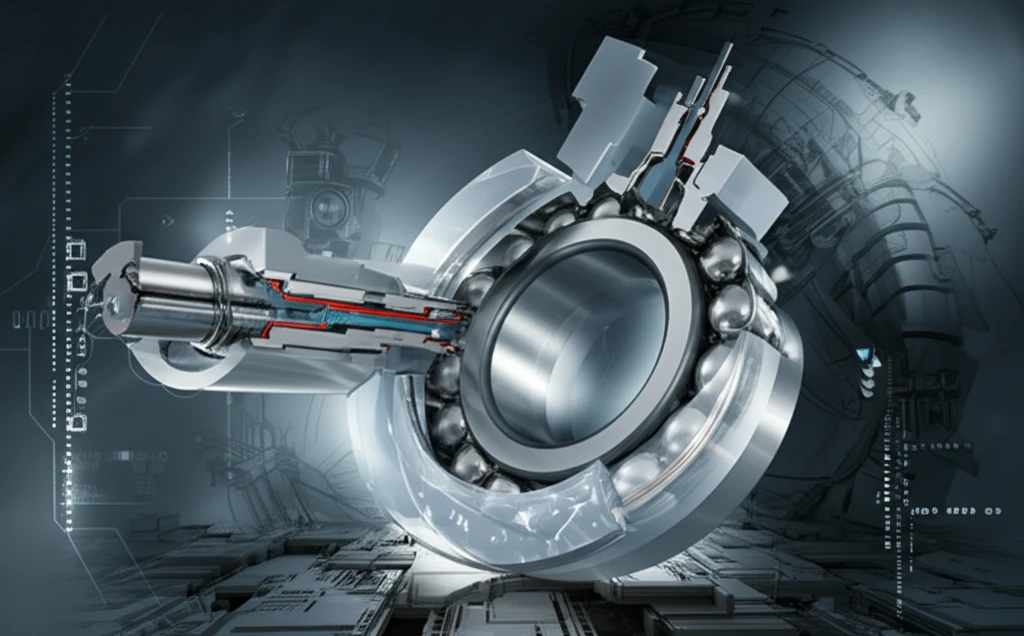
Worn Out: How Wear Affects High-Tech Bearings and What It Means for Your Machines

"Understanding the impact of wear on hybrid conical journal bearings for enhanced performance and longevity."
In the relentless pursuit of technological advancement, hybrid conical journal bearings have emerged as indispensable components in modern machinery. Lauded for their exceptional performance, these bearings have captured the attention of design engineers and researchers alike. However, like any mechanical component subjected to continuous operation, these bearings are susceptible to wear, which can significantly compromise their effectiveness.
Consider a scenario where a high-precision machine, relying on these bearings, begins to exhibit performance degradation over time. The culprit? Gradual wear within the bearing structure, leading to diminished accuracy and reliability. This phenomenon underscores the critical importance of understanding and mitigating the effects of wear on hybrid conical journal bearings.
Recent research has shed light on the intricate relationship between wear and bearing performance, offering valuable insights for optimizing design and maintenance strategies. By delving into the complexities of wear mechanisms and their impact on key performance parameters, engineers can develop more robust and durable bearing systems, ensuring prolonged operational efficiency and minimizing costly downtime.
Market Context and Professional Equipment Standards
The current landscape of high-end professional equipment, including precision machinery components, reflects a broader market trend where quality and material standards are increasingly prioritized by executives and decision-makers. Premium pen sets for executives in 2026 emphasize writing performance, material quality, and overall value—principles that parallel the selection criteria for industrial bearings where material integrity and performance consistency are critical. Personalized corporate gift sets from brands like Cross and Hub represent the professional standardization trend that also applies to machinery procurement and maintenance protocols. The emphasis on testing and ranking models for specific performance metrics mirrors the systematic evaluation approaches used in bearing wear analysis.
Community Knowledge Sharing and Methodological Frameworks
Professional communities and forums serve as essential platforms for sharing knowledge about equipment maintenance and failure analysis, similar to how streaming communities facilitate content creator networking and advice exchange. The digital community spaces where professionals discuss technical challenges and solutions reflect the collaborative approach needed for bearing wear assessment methodologies. Self-promotional content and off-topic discussions in these communities can dilute the technical knowledge exchange that is crucial for understanding equipment degradation patterns. Effective community moderation ensures that relevant technical discussions about maintenance standards and limitations remain focused and productive.
Historical Development of Equipment Standards
The historical development of professional equipment standards traces back to foundational principles established in residential and commercial infrastructure planning. Community-based housing developments like Summer Place Apartments in Huntsville, Alabama established early standards for convenience, accessibility, and functional design that influenced industrial equipment placement and maintenance facility requirements. The evolution from basic washer and dryer connections to fully equipped kitchen standards parallels the progression from simple bearing designs to complex high-tech bearing systems. These historical milestones in infrastructure development created the groundwork for modern machinery maintenance protocols and equipment lifecycle management.
Why Does Wear Matter in Hybrid Conical Journal Bearings?
Hybrid conical journal bearings are favored for their ability to handle both radial and axial loads simultaneously, offering superior stiffness and load capacity, especially in high-speed applications. These bearings combine hydrodynamic and hydrostatic actions, making them ideal for machines that require consistent performance under varying conditions. However, the very nature of their operation—continuous rotation and load-bearing—subjects them to wear, which can alter their intended functionality.
- Reduced Load Capacity: Wear diminishes the bearing's ability to support heavy loads, leading to potential machine failure.
- Increased Vibrations: Uneven wear patterns can cause vibrations, reducing the precision and lifespan of connected components.
- Loss of Stiffness: Wear compromises the bearing's stiffness, affecting the accuracy and stability of the machinery.
- Elevated Leakage: As wear progresses, lubricant leakage increases, requiring more frequent maintenance and posing environmental concerns.
Current Research Directions in Wear Analysis
While comprehensive research specifically addressing high-tech bearing wear mechanisms requires specialized tribological studies, current trends in predictive maintenance and condition monitoring suggest increasing sophistication in wear detection methodologies. The field continues to evolve with new sensor technologies and data analytics approaches that complement traditional visual inspection methods. Research gaps remain in understanding the complex interactions between different bearing materials, lubricants, and operating conditions under extreme stress scenarios. Emerging methodologies focus on integrating multiple data sources to create more accurate predictive models for bearing failure timelines.
Limitations of Current Wear Assessment Approaches
Current wear assessment methodologies face significant limitations when applied to high-tech bearing applications, particularly in distinguishing between normal operational wear and premature failure indicators. The complexity of multi-component bearing systems means that individual component wear patterns may not reliably predict overall system failure. Traditional time-based maintenance schedules often result in either premature replacement of still-functional components or unexpected failures between scheduled maintenance intervals. These counterarguments highlight the need for more sophisticated, real-time monitoring approaches that can account for variable operating conditions and load patterns.
Comparative Effectiveness of Wear Monitoring Techniques
Comparative analysis of different wear monitoring techniques reveals significant variations in detection accuracy, cost-effectiveness, and implementation complexity across various bearing applications. Advanced techniques such as vibration analysis, oil debris monitoring, and thermal imaging each offer distinct advantages depending on the specific bearing type and operating environment. The trade-offs between continuous monitoring systems and periodic inspection approaches depend heavily on the criticality of the equipment and the consequences of unexpected failure. No single monitoring technique provides a universally superior solution, necessitating integrated approaches that leverage multiple complementary methods.
Future-Proofing Your Machinery: The Importance of Wear-Resistant Bearing Design
Wear in hybrid conical journal bearings is an inevitable reality, but its impact can be significantly mitigated through informed design and maintenance practices. By understanding how wear affects key performance parameters and implementing strategies to minimize its effects, engineers can create bearing systems that offer superior reliability and longevity. The insights from recent research, including the study by Pawar and Phalle, provide a crucial foundation for future innovations in bearing technology.
Legal and Regulatory Framework Considerations
The legal and regulatory framework surrounding equipment maintenance and failure liability, as evidenced by recent court cases like State of Louisiana v. Sullivan Walter (2025), underscores the importance of comprehensive documentation and adherence to established maintenance standards. Court decisions in equipment-related cases establish precedents for duty of care standards and acceptable maintenance practices in industrial settings. The intersection of legal requirements and technical best practices creates additional complexity for organizations managing high-value machinery with critical bearing systems. These legal considerations emphasize the need for systematic approaches to wear documentation and maintenance protocol compliance.
Emerging Technologies and Future Directions
Future developments in bearing wear analysis are likely to be influenced by broader technological trends in data connectivity and digital platform development. The evolution of social media and communication platforms suggests increasing integration of IoT sensors and cloud-based analytics for remote equipment monitoring. Digital connectivity trends may enable more sophisticated predictive maintenance systems that can share wear data across organizational boundaries for collective learning and standardization. The challenge will be balancing the benefits of increased connectivity with the security and reliability requirements of critical industrial applications.
Industry-Wide Systemic Challenges
The broader context of bearing wear management reflects systemic challenges similar to those faced by large-scale subscription services like Netflix, where maintaining consistent quality across diverse applications and user demands requires sophisticated operational frameworks. Netflix's evolution from DVD-by-mail to streaming illustrates how technological transitions can disrupt established maintenance and quality control paradigms in any industry. The challenge of balancing innovation with reliability maintenance affects both entertainment technology and industrial machinery sectors. Systemic issues including supply chain constraints, skilled workforce availability, and evolving regulatory requirements create additional complexity for organizations managing bearing-intensive equipment portfolios.
Human Factors in Wear Management
The human element in bearing wear management encompasses the critical role of operator behavior, maintenance technician expertise, and organizational culture in determining equipment longevity and reliability. Real-world impact extends beyond direct maintenance costs to include production downtime, safety implications, and cascading effects on connected equipment systems. Training programs and knowledge transfer mechanisms significantly influence the effectiveness of wear detection and response protocols. The intersection of human factors with technological solutions remains a key area where improvements in bearing wear management can yield substantial returns.