
Wind Turbine Blade Design: What's the Best Way to Model Impact?

"Discover how different modeling techniques affect the accuracy and efficiency of wind turbine blade impact simulations."
Wind turbines stand as a cornerstone of renewable energy, converting the kinetic power of the wind into electricity. Yet, these massive structures face constant risks, from everyday wear and tear to sudden, forceful impacts. That’s where advanced engineering and numerical modeling come into play, helping to ensure these blades can withstand whatever nature throws their way.
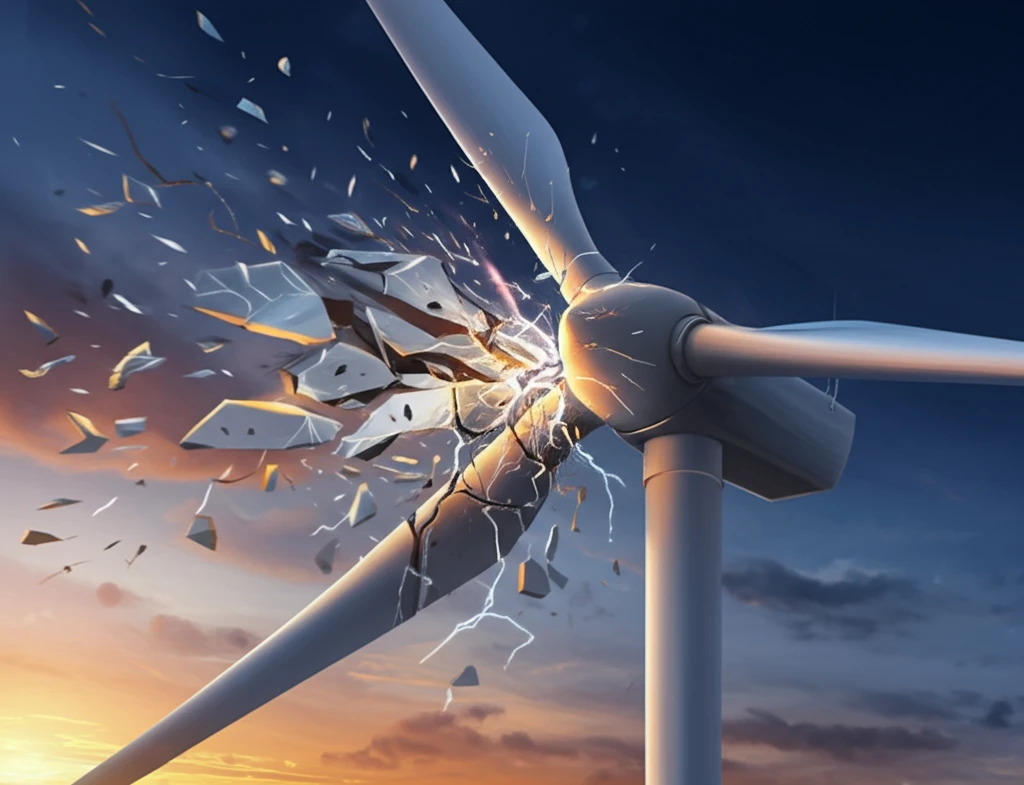
The blades are particularly vulnerable, exposed to bird strikes, hail, and even collisions during transportation or installation. These impacts, often hard to detect visually, can compromise the structural integrity of the blades, reducing their efficiency and lifespan. Assessing this damage is crucial, but it's a computationally intensive task, especially when analyzing the complex composite materials these blades are made of.
To address this challenge, engineers and researchers are constantly refining numerical modeling techniques to simulate impact scenarios. These models help predict how a blade will respond to different forces, identify potential weak points, and optimize designs for maximum resilience. This article dives into some of these cutting-edge techniques, comparing their strengths and weaknesses in the quest for safer, more durable wind turbine blades.
Wind Energy's Growing Role
Wind energy has become one of the fastest-growing renewable energy sources globally, with installed capacity expanding rapidly over the past two decades. Modern wind turbines have grown significantly in size and power output, with offshore installations now reaching capacities of 15 MW per unit. The sector continues to play a critical role in the global transition away from fossil fuels toward cleaner energy systems, though precise figures vary by region and reporting year.
Modeling Approaches and Their Constraints
Traditional wind turbine modeling has relied on empirical and physics-based approaches that provide approximate predictions of power generation based on wind speed, yet these methods often fail to capture the complex, non-linear relationships between other critical input variables and system performance. Researchers are now developing nonlinear extended wind turbine models that account for coupled responses between subsystems such as the generator and overall turbine dynamics. However, as with any mathematical model of a dynamic system, there are inherent limitations in applicability, prompting the integration of physics-based and data-driven approaches to improve early fault detection and operational optimization.
A Century of Wind Power Development
The use of wind power has waxed and waned throughout history, from centuries-old windmills to modern high-tech turbines on wind farms today. With the development of electric power in the 20th century, wind power found new applications in lighting buildings remote from centrally generated power, with parallel paths developing small wind stations suitable for farms and residences. The Energy Policy Act marked a significant legislative milestone by authorizing a production tax credit of 1.5 cents per kilowatt hour of wind-generated electricity, while state governments established minimum requirements for renewable electricity generation.
Decoding Impact Modeling: Shell vs. Solid Elements
When it comes to simulating impact on wind turbine blades, two primary approaches dominate: shell-element-based models and multiscale-modeling-based global-local approaches. Each offers a unique balance of computational cost and accuracy, making them suitable for different stages of the design process.
- Pure Shell: The entire blade is modeled using shell elements. Quick to compute, but less accurate for detailed damage analysis.
- Shell-to-Solid Coupling: Combines shell elements for the overall structure with solid elements in critical impact zones. Offers a balance between speed and accuracy.
- Submodeling: Uses a coarser global model (often shell-based) to define boundary conditions for a high-fidelity local solid model of the impact area. Most accurate but computationally intensive.
Cutting-Edge Wind Energy Research
Recent research highlights the challenge of aerodynamic wake interactions between wind turbines, which reduce the total energy produced by wind farms and require sophisticated flow-physics models to predict and mitigate these negative effects through optimized control strategies. The integration of renewable energy sources into hybrid AC-DC grids has become increasingly prominent, with studies focusing on modelling, stability assessment, and the converter-interfaced dynamics of modern power systems. A comprehensive assessment of wind turbine technology now encompasses the repowering of ageing turbines, end-of-life management, and the environmental and climatic impacts that will shape future research and development in the sector.
Reliability Challenges and Failure Modes
Despite the promise of wind energy, turbines remain susceptible to complex and premature failures that compromise system reliability, increase maintenance costs, and lead to significant energy losses. Extreme weather events can severely affect wind farm operation and power generation, threatening the stability and safety of grids with high renewable energy penetration. Research into the reliability of major components—including gearboxes, bearings, blades, towers, and flange joints—reveals persistent challenges in failure prevention and highlights the need for advanced monitoring strategies to ensure long-term operational viability.
Offshore vs. Onshore Performance
Comparative analyses of offshore and onshore wind turbines reveal significant differences in efficiency, design requirements, and environmental impacts. Offshore turbines benefit from higher and more consistent wind speeds, typically around 9 meters per second at hub height, enabling capacity factors that exceed 50% with individual outputs reaching up to 15 MW. These distinctions extend to regulatory frameworks and environmental considerations, making the choice between onshore and offshore installations a complex decision that depends on regional wind resources, grid infrastructure, and policy environments.
The Future of Blade Design: Balancing Accuracy and Efficiency
The quest for safer, more durable wind turbine blades is an ongoing process, driven by advancements in numerical modeling and experimental validation. As computational power continues to increase, engineers will be able to leverage even more sophisticated techniques to simulate complex impact scenarios and optimize blade designs for maximum resilience. The insights gained from these simulations will pave the way for a new generation of wind turbines capable of withstanding the rigors of the environment and delivering clean, reliable energy for years to come.
The Interdisciplinary Nature of Wind Engineering
Wind engineering research continues to evolve rapidly, with recent publications in leading journals reflecting the field's multifaceted nature. Studies increasingly focus on comparative analyses of offshore and onshore turbine configurations, the application of SCADA data for condition and performance monitoring, and the integration of advanced data-driven techniques. This breadth of inquiry underscores the growing recognition that wind turbine optimization requires interdisciplinary collaboration across aerodynamics, data science, and systems engineering.
Emerging Directions in Blade Design
Looking ahead, wind turbine blade design is likely to benefit from continued advances in computational modelling, materials science, and artificial intelligence-driven optimization. Emerging research directions suggest that hybrid approaches combining physics-based simulations with machine learning could accelerate the development of more resilient and efficient blade structures. As the industry scales toward larger offshore installations, the demands on blade modeling will intensify, pushing researchers toward more integrated and predictive frameworks.
Grid Integration and Policy Barriers
The expansion of wind energy presents systemic challenges that extend beyond turbine engineering, including grid integration, supply chain sustainability, and the need for supportive policy frameworks. As wind penetration increases, grid operators face growing complexity in balancing supply and demand, requiring new approaches to energy storage and transmission infrastructure. These broader systemic issues will shape the pace and direction of wind energy deployment for decades to come.
Community and Ecological Considerations
The development of wind energy carries significant implications for both communities and ecosystems, with landscape visual impact emerging as a critical factor driving local opposition to onshore wind projects. Researchers have proposed landscape visual impact evaluation models to better assess and mitigate these concerns during project planning. Beyond visual effects, broader social impact assessments combining life-cycle analysis and social impact assessment methodologies reveal that wind power development affects communities in multifaceted ways, while biodiversity assessments highlight the need to carefully evaluate the ecological consequences of both onshore and offshore installations.