
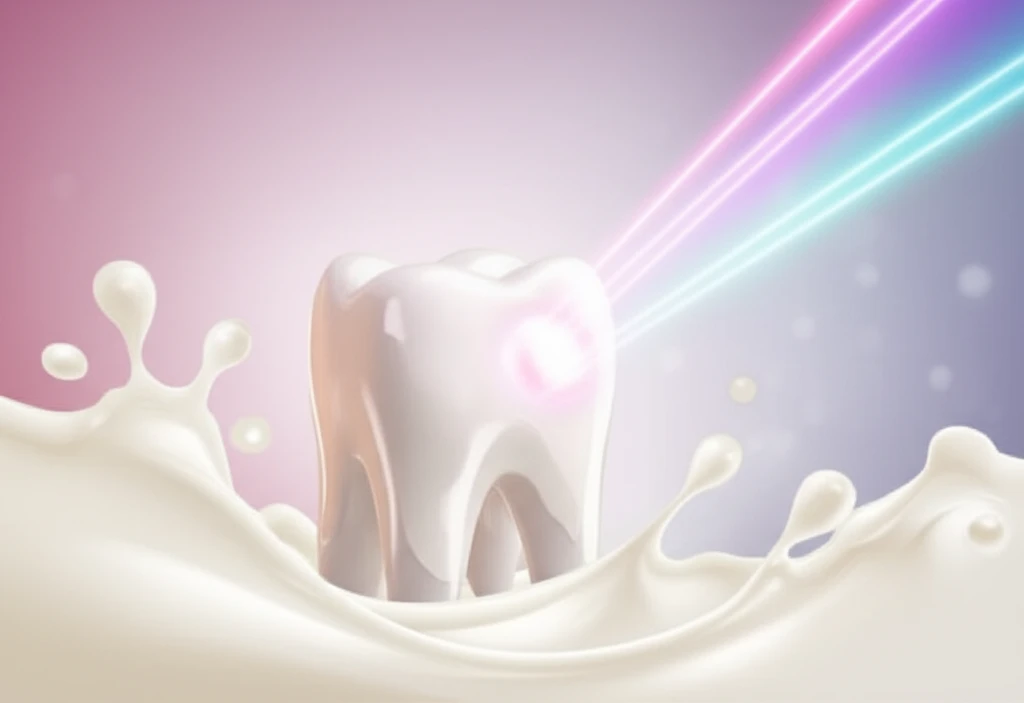
White Spots on Primary Teeth? Laser and Casein May Be the Answer

"A new study explores how laser treatment combined with casein phosphopeptide can effectively remineralize early enamel lesions in children's teeth."
Dental caries, or tooth decay, is a common issue, especially in young children. Maintaining a balance between demineralization and remineralization is key to preventing cavities. While fluoride has long been a primary defense, concerns about fluorosis have led to the exploration of alternative and complementary methods.
One such method gaining attention is laser treatment. Laser irradiation can alter the enamel's structure, making it more resistant to acid attacks. Another promising approach involves casein phosphopeptide-amorphous calcium phosphate (CPP-ACP), a milk-derived product known for its remineralizing properties.
A recent study investigated the combined effect of laser irradiation and CPP-ACP on artificial white spot lesions, which are early indicators of enamel demineralization, in primary teeth. The study aimed to determine if this combined approach could enhance calcium and phosphate concentration and improve the surface microhardness of the enamel.
Laser + Casein: A Powerful Remineralization Duo?
The study, conducted by researchers at Tabriz University of Medical Sciences, involved eighty primary teeth with artificial white spot lesions. The teeth were divided into four groups:
- Group A: A control group treated with distilled and deionized water.
- Group B: Treated with Nd:YAG laser.
- Group C: Treated with CPP-ACP crème.
- Group D: Treated with both CPP-ACP crème and Nd:YAG laser.
What Does This Mean for Your Child's Dental Care?
The study suggests that combining Nd:YAG laser treatment with CPP-ACP crème may be an effective preventive modality for remineralizing white spot lesions in primary teeth. This approach could offer a promising alternative or complement to traditional fluoride treatments, particularly for young children.
The researchers propose that laser irradiation enhances the penetration of calcium and phosphate into the enamel, while CPP-ACP provides a readily available source of these minerals. This synergistic effect leads to the formation of new hydroxyapatite crystals and a more resistant enamel surface.
While these findings are encouraging, further research is needed to confirm these results and optimize the treatment protocol. Consulting with a pediatric dentist is crucial to determine the best approach for your child's specific dental needs. They can assess the risk of caries and recommend appropriate preventive measures.