
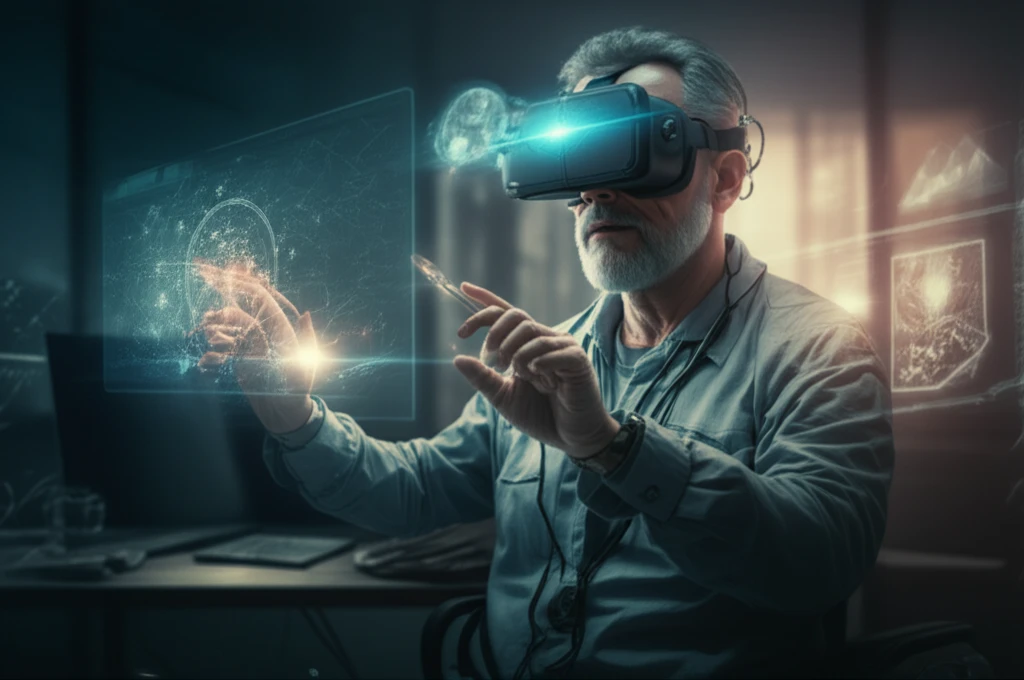
VR rehabilitation for stroke patients.

Virtual Reality Rehab: Can Gaming Consoles Help Stroke Recovery?

"Explore how virtual environments and gaming consoles are transforming post-stroke rehabilitation, enhancing motivation, and improving patient outcomes."


A stroke, or cerebrovascular accident (AVE), is a serious neurological event with far-reaching consequences. One of the primary challenges stroke survivors face is impaired postural control, which significantly reduces their independence and quality of life. Effective rehabilitation programs are essential to help these individuals regain function and improve their motor skills.

Traditional rehabilitation methods often require intense dedication and can sometimes be monotonous, leading to reduced patient motivation. Finding innovative and engaging techniques is crucial to ensure patients remain committed to their recovery process. Virtual Reality (VR) offers a promising solution by creating interactive and immersive environments that can make rehabilitation more appealing and effective.

This article delves into a case study exploring the use of VR, specifically through gaming consoles, as an interface in post-stroke rehabilitation. We examine how this technology can enhance postural control and contribute to improved outcomes for stroke survivors.

How Can Virtual Reality Improve Post-Stroke Rehabilitation?

VR rehabilitation for stroke patients.

Virtual Reality (VR) is emerging as a powerful tool in post-stroke rehabilitation, offering a unique way to engage patients and improve their motor skills. By creating a simulated environment, VR can provide a safe and motivating space for individuals to practice and regain control over their movements. The key lies in VR’s ability to adapt to each patient's specific needs and functional level, making the rehabilitation process both challenging and rewarding.

The integration of gaming consoles like Nintendo Wii into rehabilitation programs has shown promising results. These consoles use interactive games and motion-tracking technology to encourage patients to perform exercises that improve balance, coordination, and strength. The immersive nature of these games can significantly increase patient motivation, leading to better adherence to the therapy and improved outcomes.

  • Increased Motivation: VR games provide an engaging and enjoyable way for patients to participate in rehabilitation exercises.
  • Adaptive Therapy: VR systems can be adjusted to match the patient's current functional level, ensuring the therapy is neither too easy nor too difficult.
  • Real-Time Feedback: VR provides immediate feedback on the patient's movements, helping them to correct their posture and improve their motor skills.
  • Enhanced Neuroplasticity: The repetitive and interactive nature of VR exercises can promote neuroplasticity, the brain's ability to reorganize itself by forming new neural connections.
In a case study, a 46-year-old male stroke survivor participated in a 12-week rehabilitation program using the Nintendo Wii Fit. The program consisted of three weekly sessions, each lasting 30 minutes, where the patient engaged in various balance-oriented games. Before and after the program, the patient's postural control was assessed using a force platform to measure variables related to the center of pressure (COP).

The Future of VR in Stroke Rehabilitation

Virtual Reality offers an exciting avenue for enhancing stroke rehabilitation. By providing engaging, adaptive, and motivating therapies, VR can help stroke survivors improve their postural control, motor skills, and overall quality of life. As technology advances, VR is poised to become an even more integral part of rehabilitation programs, offering new hope and possibilities for those recovering from stroke.

About this Article -

This article was crafted using a human-AI hybrid and collaborative approach. AI assisted our team with initial drafting, research insights, identifying key questions, and image generation. Our human editors guided topic selection, defined the angle, structured the content, ensured factual accuracy and relevance, refined the tone, and conducted thorough editing to deliver helpful, high-quality information.See our About page for more information.

Everything You Need To Know

1

How does Virtual Reality help with rehabilitation after a stroke?

Virtual Reality (VR) creates simulated environments that allow individuals to practice and regain control over their movements in a safe and motivating space. This is significant because traditional rehabilitation methods can be monotonous, leading to reduced motivation. VR addresses this by adapting to each patient's specific needs, making the process engaging and effective. The immersive experience can significantly improve adherence to therapy, which can lead to improved outcomes. VR enhances neuroplasticity, the brain's ability to reorganize itself by forming new neural connections through repetitive exercises.

2

Why are gaming consoles like Nintendo Wii being used in stroke rehabilitation?

Gaming consoles, like the Nintendo Wii, are integrated into rehabilitation programs because they use interactive games and motion-tracking technology to encourage patients to perform exercises that improve balance, coordination, and strength. The immersive nature of these games can significantly increase patient motivation, leading to better adherence to the therapy. This matters because motivation is a key factor in the success of rehabilitation. The feedback provided is key to correcting posture and honing motor skills. It is important to measure variables related to the center of pressure (COP).

3

What is postural control and why is it important to improve it after a stroke?

Postural control refers to the ability to maintain balance and stability, which is often impaired after a cerebrovascular accident (AVE). Improving postural control is important because it significantly impacts a person's independence and quality of life. When postural control is compromised, it can lead to difficulties with everyday tasks and an increased risk of falls. Rehabilitation programs that focus on enhancing postural control aim to help individuals regain their motor skills and improve their overall function.

4

What is neuroplasticity and why is it important in stroke recovery?

Neuroplasticity is the brain's ability to reorganize itself by forming new neural connections throughout life. In the context of stroke rehabilitation, neuroplasticity is crucial because it allows the brain to compensate for damaged areas by rerouting neural pathways. The repetitive and interactive nature of Virtual Reality (VR) exercises can promote neuroplasticity, enhancing the recovery of motor skills and postural control. This ability is fundamental to regaining lost function and improving overall outcomes after a stroke.

5

How does Virtual Reality adapt to each person's specific needs during rehabilitation?

VR systems can be adjusted to match a patient's current functional level, making the therapy neither too easy nor too difficult. This adaptive therapy ensures that patients are challenged appropriately, maximizing their potential for improvement. It’s significant because one size does not fit all in rehabilitation; personalized approaches are essential. This enhances patient motivation and adherence to the therapy, leading to better outcomes. Additionally, real-time feedback during VR exercises helps patients correct their posture and improve their motor skills, further optimizing the rehabilitation process.

Newsletter Subscribe

Subscribe to get the latest articles and insights directly in your inbox.