
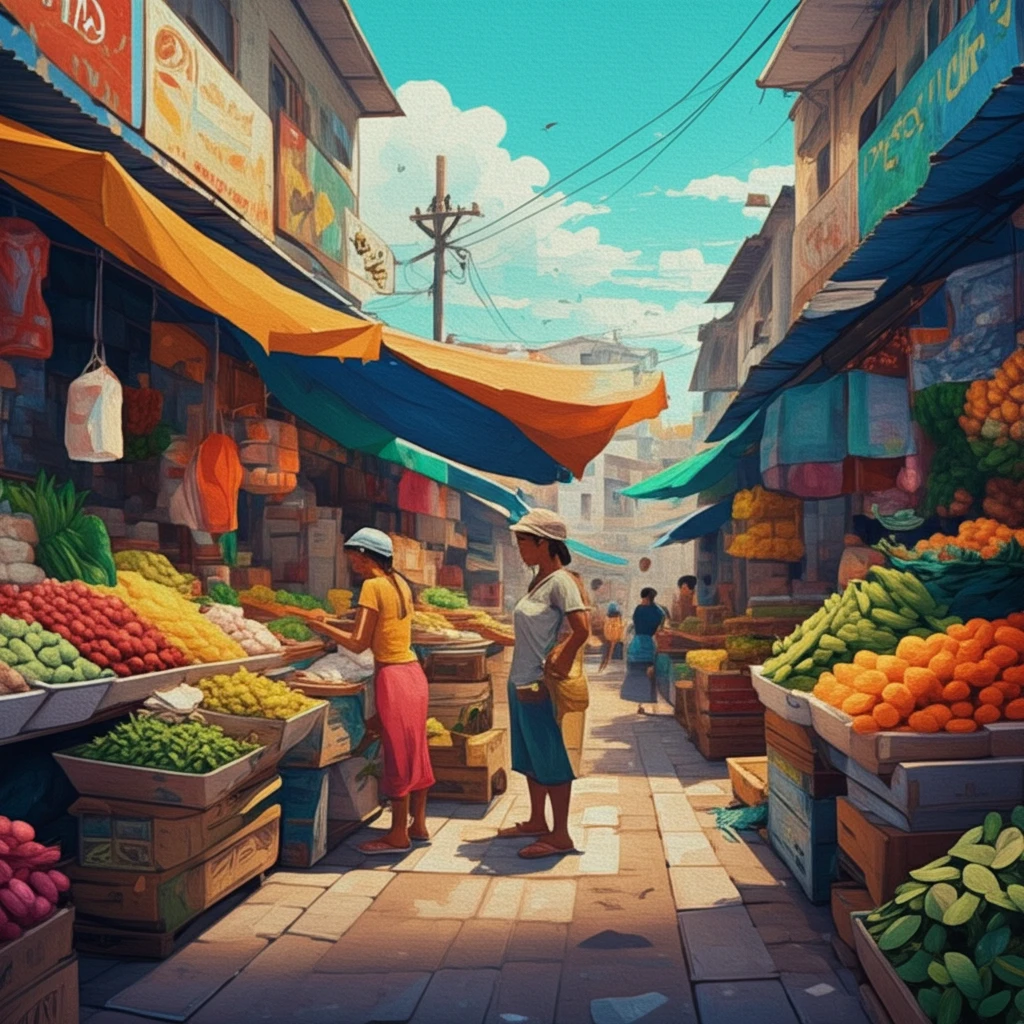
A vibrant Brazilian marketplace symbolizing economic integration between Venezuelan refugees and local vendors.

Venezuelan Refugees: How the Crisis is Reshaping Brazil's Labor Market

"A deep dive into how the influx of Venezuelan refugees has unexpectedly boosted wages for some Brazilian workers, challenging common fears about immigration's impact on local economies."


The Venezuelan refugee crisis, triggered by economic collapse and political instability, has led to a significant migration flow into neighboring Brazil, particularly concentrated in the border state of Roraima. This influx has presented both challenges and unexpected opportunities for the Brazilian labor market, stirring debates about immigration, economic integration, and workforce dynamics.

Conventional wisdom often suggests that an increase in the labor supply due to immigration leads to depressed wages and increased competition for jobs. However, recent research focusing on the Brazilian experience is uncovering more nuanced effects. By examining the labor market in Roraima, studies reveal how the integration of Venezuelan refugees is prompting shifts in employment patterns and, surprisingly, contributing to wage growth in certain sectors.

This article delves into the complexities of this situation, exploring how Venezuelan refugees are reshaping the Brazilian labor market. It challenges traditional assumptions and highlights the adaptive capacity of local economies in the face of large-scale migration, offering valuable insights for policymakers and communities worldwide dealing with similar crises.

The Surprising Wage Boost: How Venezuelan Refugees are Helping Some Brazilian Workers

A vibrant Brazilian marketplace symbolizing economic integration between Venezuelan refugees and local vendors.

A recent study utilizing administrative panel data on Brazilian formal workers has revealed an intriguing trend: the monthly wages of Brazilians in Roraima have increased by approximately 2% following the influx of Venezuelan refugees. This increase is primarily observed among workers in sectors and occupations with minimal refugee involvement, suggesting a complementary rather than competitive dynamic.

Contrary to fears of job displacement, the study found negligible evidence of Brazilians losing their jobs due to the refugee crisis. Instead, there's an indication that native workers are transitioning to different occupations, potentially filling roles that are indirectly boosted by the increased economic activity spurred by the refugee population.

  • Complementary Effects: Venezuelans often fill labor shortages in sectors Brazilians are moving away from.
  • Increased Demand: The refugee population creates additional demand for goods and services, boosting the local economy.
  • Informal Sector Dynamics: Many refugees find work in the informal sector, driving down costs for businesses and freeing up formal sector jobs.
The research also sheds light on the role of the informal market, where many Venezuelan refugees find employment. This sector appears to offset potential substitution effects in the formal market, acting as a buffer that allows native Brazilian workers to benefit from increased economic activity without direct wage competition. This delicate balance highlights the importance of considering both formal and informal economies when assessing the impact of immigration.

Turning Crisis into Opportunity: Lessons for the Future

The Brazilian experience underscores the need for nuanced approaches to immigration policy, emphasizing integration and economic complementarity. Rather than focusing solely on potential threats, policymakers should explore strategies to leverage the skills and entrepreneurial spirit of refugees, fostering inclusive labor markets that benefit both newcomers and host communities. By supporting initiatives that facilitate the integration of refugees into the workforce, governments can unlock new avenues for economic growth and create more resilient, dynamic societies. This proactive approach not only addresses the immediate needs of refugees but also transforms a crisis into an opportunity for long-term prosperity.

About this Article -

This article was crafted using a human-AI hybrid and collaborative approach. AI assisted our team with initial drafting, research insights, identifying key questions, and image generation. Our human editors guided topic selection, defined the angle, structured the content, ensured factual accuracy and relevance, refined the tone, and conducted thorough editing to deliver helpful, high-quality information.See our About page for more information.

Everything You Need To Know

1

How has the influx of Venezuelan refugees affected wages for Brazilian workers?

The arrival of Venezuelan refugees in Roraima has surprisingly led to a wage increase of approximately 2% for Brazilian workers. This increase is primarily seen in sectors and occupations where there's minimal involvement from the Venezuelan refugees themselves, suggesting a complementary effect rather than direct competition for jobs. This demonstrates that the refugees are filling labor shortages in different areas, which then indirectly boosts wages in other sectors.

2

What role does the informal sector play in the economic impact of Venezuelan refugees in Brazil?

The informal sector acts as a crucial buffer in the Brazilian labor market. Many Venezuelan refugees find employment there. This reduces the pressure on the formal job market, where native Brazilian workers are employed. This informal sector involvement helps prevent direct wage competition and allows native Brazilian workers to benefit from the increased economic activity stimulated by the refugee population, without necessarily experiencing a decrease in wages.

3

What are the primary mechanisms by which Venezuelan refugees are reshaping the Brazilian labor market?

The Venezuelan refugees are reshaping the Brazilian labor market through several key mechanisms: Firstly, they often fill labor shortages in sectors where Brazilian workers are moving away from. Secondly, the influx of refugees increases the demand for goods and services, thereby boosting the local economy. Finally, a significant number of refugees find employment in the informal sector, which helps to offset potential competition in the formal job market, allowing native Brazilian workers to benefit from the increased economic activity.

4

How does the experience in Roraima challenge conventional views on immigration and its effects on wages?

The situation in Roraima challenges the common belief that immigration invariably leads to wage depression and increased job competition. Contrary to this, the study found a wage increase for native Brazilian workers in certain sectors. This suggests a more complex interplay where the skills and needs of the newcomers complement those of the existing workforce, leading to positive economic outcomes. It shows that immigration can lead to shifts in employment patterns and stimulate economic growth, rather than solely creating negative impacts.

5

What lessons can policymakers draw from Brazil's experience with Venezuelan refugees to foster inclusive labor markets?

Policymakers can learn that a nuanced approach to immigration is crucial, emphasizing integration and economic complementarity. It is important to focus on leveraging the skills and entrepreneurial spirit of refugees rather than focusing solely on potential threats. Supporting initiatives that facilitate the integration of Venezuelan refugees into the workforce can unlock new avenues for economic growth. This proactive approach can transform a crisis into an opportunity for long-term prosperity, creating more resilient and dynamic societies within Brazil.

Newsletter Subscribe

Subscribe to get the latest articles and insights directly in your inbox.