
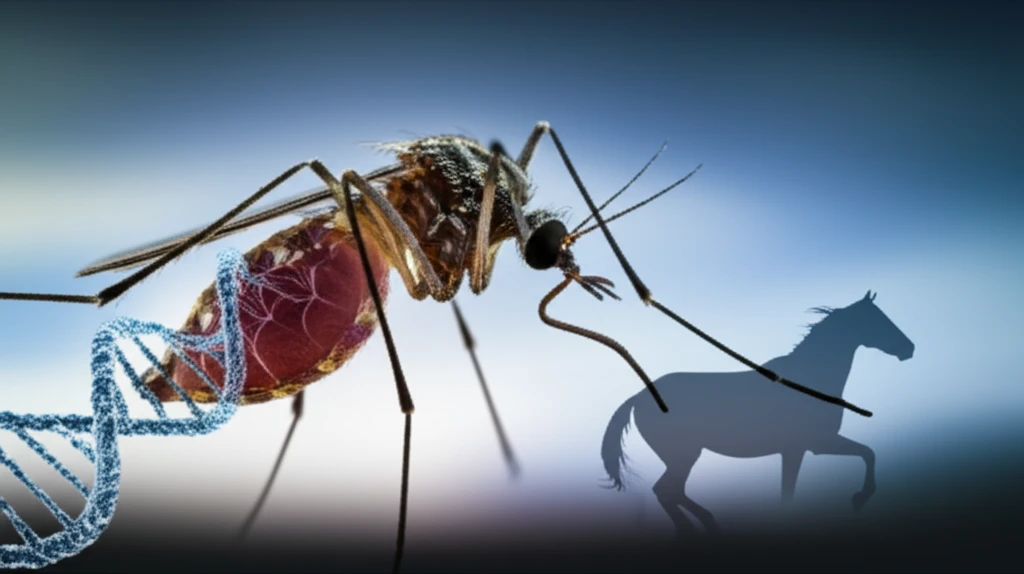
Venezuelan Equine Encephalitis: Why Vigilance is Key for Global Health Security

"A Deep Dive into VEE: Understanding the Risks, Prevention, and the Need for Proactive Measures"
Venezuelan Equine Encephalitis (VEE) is a disease primarily affecting horses and humans, caused by the VEE virus (VEEV). While not currently present in the European Union, its potential to cause significant outbreaks and epidemics in regions with susceptible animals and competent mosquito vectors necessitates vigilant monitoring and proactive prevention strategies.
The VEE virus, belonging to the Togaviridae family, has several subtypes, with certain variants like IAB and IC being particularly virulent, capable of causing major equine epizootics and human epidemics. Understanding the transmission dynamics, the role of different animal species, and the availability of diagnostic and control tools are crucial for effective management.
This analysis delves into the key aspects of VEE, drawing on the latest scientific assessments and regulatory frameworks, particularly the Animal Health Law (AHL) Regulation (EU) No 2016/429. By examining the disease profile, potential impacts, and existing control measures, this article underscores the importance of preparedness and international cooperation in safeguarding animal and human health.
What Makes Venezuelan Equine Encephalitis a Global Health Concern?
VEE presents a unique challenge due to its complex transmission cycles and potential for rapid spread. The virus is maintained in nature through enzootic cycles involving rodents and mosquitoes, while epizootic strains can emerge, affecting horses and humans. The role of various animal species in these cycles is critical to understanding the potential for outbreaks.
- Broad Host Range: The virus can affect multiple species, including horses, humans, and potentially other mammals and birds.
- Zoonotic Potential: VEEV is zoonotic, meaning it can transmit from animals to humans, causing illness ranging from mild flu-like symptoms to severe neurological complications.
- High Morbidity and Mortality: In horses, VEE can lead to high morbidity (illness rates) and significant mortality (death rates), while in humans, severe cases can result in long-term neurological damage and fatalities, particularly in children and the elderly.
- Bioterrorism Potential: VEEV has been classified as a potential bioterrorism agent due to its ease of production in aerosol form and its historical development as a biological weapon.
Staying Ahead of the Curve: The Path Forward
While Venezuelan Equine Encephalitis poses a real threat, proactive measures, international collaboration, and ongoing research offer hope. By staying informed, supporting preventative measures, and advocating for robust surveillance systems, individuals and communities can contribute to a world better protected against VEE and other emerging infectious diseases.