
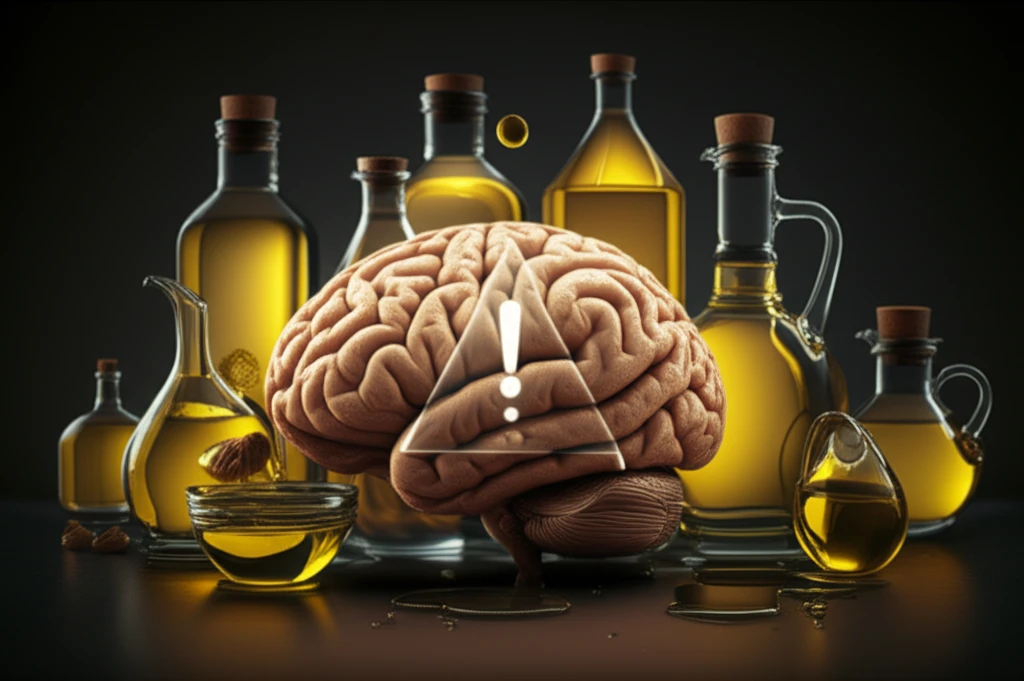
Warning symbol over vegetable oils impacting a brain, symbolizing Alzheimer's risk.

Vegetable Oil: The Silent Culprit Behind Alzheimer's?

"New research reveals a concerning link between commonly used vegetable oils and the increased risk of Alzheimer's disease. Learn how to protect your brain health."


Alzheimer's disease, a form of dementia, significantly impacts daily life and communication. With the global aging population, the prevalence of Alzheimer's is expected to rise, costing the world billions annually. While current treatments offer limited relief, they often fall short of altering the disease's progression, emphasizing the need for preventative strategies.

For decades, the accumulation of amyloid-beta protein in the brain has been considered a primary cause of Alzheimer's. However, this hypothesis has faced increasing scrutiny. Studies visualizing amyloid-beta in living brains have revealed inconsistencies, with some individuals showing extensive accumulation without signs of dementia, and vice versa, challenging the long-held belief.

Emerging research points to a new culprit: hydroxynonenal, a toxic substance generated from the consumption of vegetable oils. This article explores this connection, revealing how seemingly harmless dietary choices may be contributing to the development of Alzheimer's disease and what you can do to protect your brain.

The Hidden Danger: How Vegetable Oils Impact Your Brain

Warning symbol over vegetable oils impacting a brain, symbolizing Alzheimer's risk.

Research indicates that hydroxynonenal, a byproduct of vegetable oil consumption, accumulates in the brain and is linked to neuronal death. Hydroxynonenal induces a specific oxidation called carbonylation, poisoning not only neurons but also cells throughout the body. This can contribute to a range of health issues beyond dementia, including type 2 diabetes and arteriosclerosis.

Vegetable oils are prevalent in everyday foods, with polyunsaturated fatty acids (PUFA) as their major component. When vegetable oils high in w-6 PUFA, such as soybean, corn, and rapeseed oil, are heated to high temperatures during cooking, hydroxynonenal is formed. This silent killer gradually accumulates in the body, acting as a long-standing oxidative stressor.

  • Avoidance is Key: Minimize vegetable oil intake to prevent hydroxynonenal formation.
  • Cooking Methods Matter: Be mindful of cooking temperatures, especially when deep-frying.
  • Read Labels: Be aware of the PUFA content in different vegetable oils.
Oxidative stress from various sources, like UV rays and pollution, can further oxidize PUFAs, leading to chronic toxicity. Over time, this can impair short-term memory and concentration, eventually leading to dementia. The hippocampus and parietal lobe, crucial for cognitive function, are particularly vulnerable to reduced blood flow and neuronal damage.

Protecting Your Brain: Practical Steps for a Healthier Future

While there is no cure for Alzheimer's, proactive measures, like dietary adjustments, can significantly reduce your risk. Monitoring and improving your diet are essential for safeguarding cognitive function. Early detection and management of conditions like diabetes, stroke risk, and obesity can also contribute to Alzheimer's prevention.

Researchers are exploring the potential of targeting hydroxynonenal, Hsp70.1, and GPR40 for developing preventive and therapeutic strategies for Alzheimer's disease. These efforts offer hope for future interventions that can effectively combat this devastating condition.

The "calpain-cathepsin hypothesis" provides a framework for understanding the complexities of Alzheimer's disease and the role of vegetable oils. By making informed choices and adopting a brain-healthy lifestyle, you can take control of your cognitive well-being and reduce your risk of developing Alzheimer's.

About this Article -

This article was crafted using a human-AI hybrid and collaborative approach. AI assisted our team with initial drafting, research insights, identifying key questions, and image generation. Our human editors guided topic selection, defined the angle, structured the content, ensured factual accuracy and relevance, refined the tone, and conducted thorough editing to deliver helpful, high-quality information.See our About page for more information.

This article is based on research published under:

DOI-LINK: 10.4172/2161-0460.1000410, Alternate LINK

Title: Vegetable Oil: The Real Culprit Behind Alzheimer’S Disease

Subject: General Medicine

Journal: Journal of Alzheimer’s Disease & Parkinsonism

Publisher: OMICS Publishing Group

Authors: Tetsumori Yamashima

Published: 2017-01-01

Everything You Need To Know

1

What is the new potential cause of Alzheimer's disease being researched, and how does it differ from previous beliefs?

Emerging research suggests that hydroxynonenal, a toxic substance produced when vegetable oils are heated, may be a significant contributor to the development of Alzheimer's disease. This contrasts with the long-held belief that amyloid-beta protein accumulation is the primary cause, which has been challenged by recent studies showing inconsistencies between amyloid-beta levels and the presence of dementia.

2

How do vegetable oils contribute to the formation of toxic substances in the brain, and what specific oils should I be aware of?

Vegetable oils, especially those high in w-6 polyunsaturated fatty acids (PUFA) like soybean, corn, and rapeseed oil, produce hydroxynonenal when heated to high temperatures during cooking. This substance induces carbonylation, poisoning neurons and other cells. This process can contribute to various health problems, including type 2 diabetes and arteriosclerosis, beyond just dementia.

3

What practical steps can I take to protect myself from the potential dangers associated with vegetable oil consumption and the formation of hydroxynonenal?

To minimize your exposure to hydroxynonenal, reduce your intake of vegetable oils and be mindful of cooking temperatures. Deep-frying, in particular, can generate high levels of this toxic substance. Additionally, read labels to be aware of the PUFA content in different oils and choose alternatives when possible. Consider incorporating cooking methods that require lower temperatures.

4

How does oxidative stress relate to the impact of polyunsaturated fatty acids (PUFAs) and the risk of developing dementia?

Oxidative stress, whether from internal metabolic processes or external sources like UV rays and pollution, can oxidize polyunsaturated fatty acids (PUFAs), exacerbating the formation of hydroxynonenal. This oxidative stress can impair cognitive functions like short-term memory and concentration, ultimately increasing the risk of dementia. The hippocampus and parietal lobe, critical for cognitive function, are particularly vulnerable to this damage.

5

What are some proactive measures, besides dietary changes, that I can take to reduce my risk of developing Alzheimer's disease?

While there is no cure for Alzheimer's disease, you can significantly reduce your risk through proactive measures, particularly dietary adjustments. Early detection and management of conditions like diabetes, stroke risk, and obesity can also help prevent Alzheimer's. Monitoring and improving your diet to minimize exposure to compounds like hydroxynonenal, combined with a healthy lifestyle, are essential for safeguarding cognitive function.

Newsletter Subscribe

Subscribe to get the latest articles and insights directly in your inbox.