
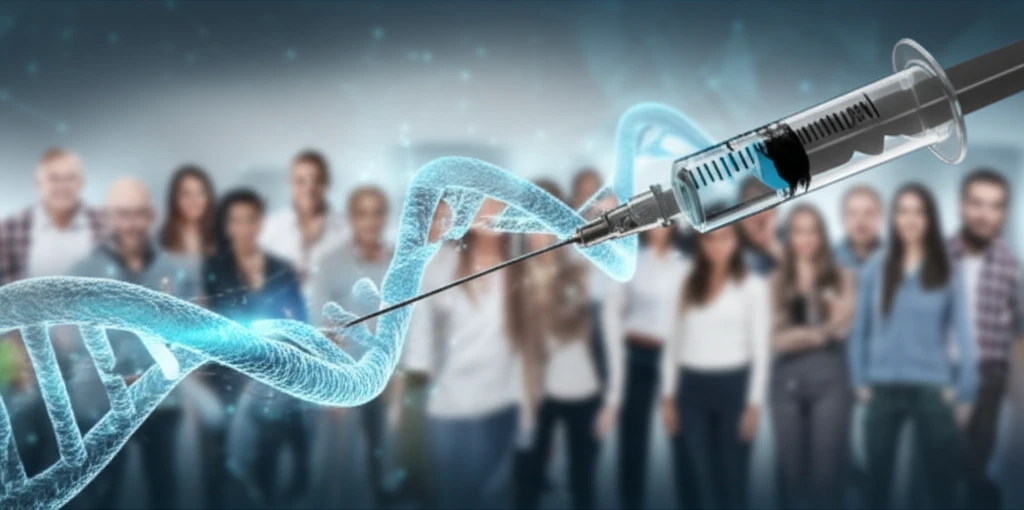
DNA strand intertwined with a vaccine syringe, symbolizing personalized medicine.

Vaccines in the Age of Personalization: How Genetics are Changing the Game

"Discover how cutting-edge genetic research is paving the way for personalized vaccines, offering more effective and targeted protection against diseases."


For over a century, vaccines have stood as a bulwark against infectious diseases, dramatically reducing the global burden of illnesses like polio and smallpox. Traditionally, vaccines work by stimulating the body's immune system to recognize and combat specific pathogens, offering broad protection across populations.

However, the effectiveness of these conventional vaccines isn't uniform. Factors such as age, overall health, and genetics can significantly influence how an individual responds to a vaccine. This variability has spurred scientists to explore a new frontier: personalized vaccines tailored to an individual's unique genetic profile.

This article delves into the exciting world of "vaccinomics," examining how genetic research is revolutionizing vaccine development. We'll explore the genetic factors that influence vaccine response, discuss the potential of personalized vaccines, and consider the ethical and practical implications of this cutting-edge approach to disease prevention.

Decoding the Genetic Blueprint of Vaccine Response

DNA strand intertwined with a vaccine syringe, symbolizing personalized medicine.

The human immune system is a complex network, and our genes play a significant role in shaping how it responds to vaccines. Certain genes, particularly those within the Major Histocompatibility Complex (MHC) region, also known as the Human Leukocyte Antigen (HLA) region, are critical. HLA genes help the body distinguish between its own cells and foreign invaders, influencing the strength and type of immune response mounted after vaccination.

Variations in these genes, known as polymorphisms, can lead to differences in vaccine effectiveness. For example, research has shown that specific HLA alleles are associated with varying levels of antibody production after measles, mumps, and rubella (MMR) vaccination. Understanding these genetic links is the first step toward creating vaccines that work better for everyone.

  • HLA Genes: Influence antigen presentation and T-cell activation.
  • Cytokine Genes: Affect the intensity and duration of the immune response.
  • TLR Genes: Impact the initial recognition of pathogens.
  • Non-HLA Genes: All impact over health of immune system.
Beyond HLA genes, other genetic factors also contribute to vaccine response. Genes involved in producing cytokines (signaling molecules that regulate the immune system) and Toll-like receptors (TLRs, which recognize pathogens) can also influence vaccine effectiveness. By studying these genes, researchers hope to develop a comprehensive understanding of the genetic factors that determine how well a vaccine works.

The Future of Vaccinomics: A Personalized Shield Against Disease

Personalized vaccines hold immense potential to revolutionize disease prevention. By tailoring vaccines to an individual's genetic makeup, we can potentially overcome the limitations of one-size-fits-all approaches and achieve more effective and durable immunity. While challenges remain, the field of vaccinomics is rapidly advancing, bringing us closer to a future where vaccines are personalized to provide optimal protection for everyone.

About this Article -

This article was crafted using a human-AI hybrid and collaborative approach. AI assisted our team with initial drafting, research insights, identifying key questions, and image generation. Our human editors guided topic selection, defined the angle, structured the content, ensured factual accuracy and relevance, refined the tone, and conducted thorough editing to deliver helpful, high-quality information.See our About page for more information.

Everything You Need To Know

1

What is vaccinomics and how does it relate to vaccines?

Vaccinomics is a groundbreaking field that studies how an individual's genetic makeup influences their response to vaccines. It uses genetic research to develop personalized vaccines, aiming to improve vaccine effectiveness by tailoring them to an individual's unique genetic profile. This approach moves beyond traditional, one-size-fits-all vaccines to provide more targeted protection.

2

How do HLA genes affect vaccine effectiveness?

HLA genes, specifically those within the Major Histocompatibility Complex (MHC) region, are crucial in distinguishing between the body's cells and foreign invaders. Variations in HLA genes, known as polymorphisms, can influence how well a vaccine works. For instance, different HLA alleles can lead to varied levels of antibody production after MMR vaccination. This understanding is critical for creating vaccines that are more effective for everyone.

3

Besides HLA genes, what other genetic factors influence vaccine response?

Besides HLA genes, several other genetic factors influence vaccine response. These include genes involved in producing cytokines, which regulate the immune response, and Toll-like receptors (TLRs), which recognize pathogens. Studying these genes helps researchers gain a comprehensive understanding of how genetics affect vaccine effectiveness.

4

What are the key benefits of personalized vaccines compared to conventional vaccines?

Personalized vaccines offer several advantages over conventional vaccines. They are tailored to an individual's unique genetic profile, potentially overcoming the limitations of one-size-fits-all approaches. This personalization can lead to more effective and durable immunity. By understanding an individual's genetic makeup, vaccinomics aims to improve the protection provided by vaccines, ensuring that they work optimally for each person.

5

What are the potential ethical and practical implications of personalized vaccines?

While the article highlights the future promise of personalized vaccines, the ethical and practical implications are also important considerations. Ethical implications may include questions of access and equity, ensuring that personalized vaccines are available to all populations. Practical implications include the challenges of large-scale genetic testing, the development of tailored vaccine manufacturing processes, and the need for robust data privacy measures. The integration of personalized vaccines into public health systems presents exciting, but also complex, challenges.

Newsletter Subscribe

Subscribe to get the latest articles and insights directly in your inbox.