
Unlocking Immunity: How Complement Proteins and Neutrophils Team Up Against Meningitis

"New research sheds light on the critical partnership between complement system activation and neutrophil function in combating Neisseria meningitidis infections."
Meningitis, an inflammation of the membranes surrounding the brain and spinal cord, remains a significant global health threat. Bacterial meningitis, often caused by Neisseria meningitidis, can lead to severe complications, including brain damage, hearing loss, and even death. Understanding how our immune system combats this infection is crucial for developing effective treatments and preventive strategies.
The human body has two primary defense mechanisms, one of which is the innate immune system. This system is the first responder, offering immediate protection against invading pathogens. The innate immune system relies on various components, including complement proteins and neutrophils, to recognize and neutralize threats.
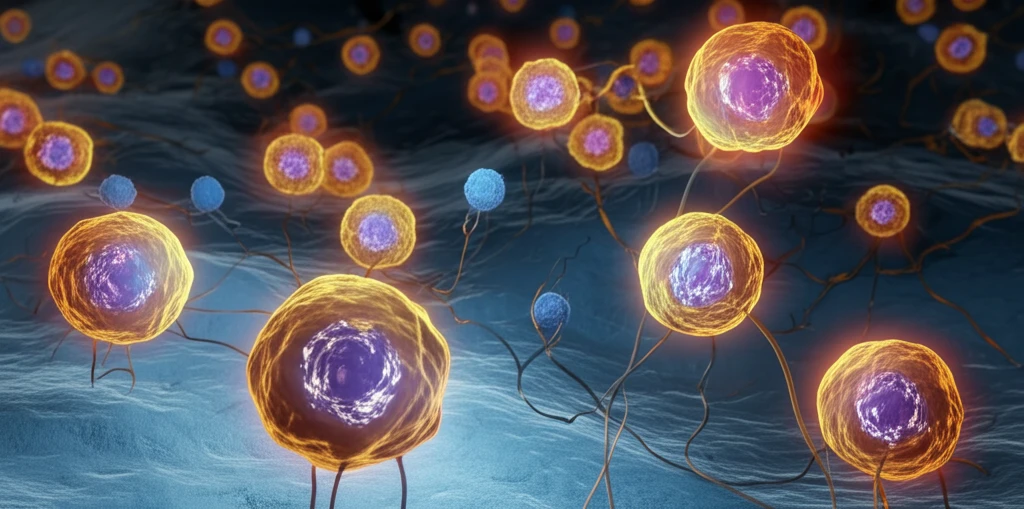
Recent research has highlighted the intricate interplay between these two key players, with scientists discovering that neutrophils, a type of white blood cell, rely heavily on complement system activation to mount a full and effective response against N. meningitidis. This collaboration unlocks potent antimicrobial mechanisms, offering new insights into fighting this deadly infection.
Meningitis by the Numbers
Meningitis is a serious infection of the meninges—the membranes covering the brain and spinal cord—and remains a major public health challenge worldwide. Bacterial meningitis is rare but deadly, with an untreated case-fatality rate of 10–15%, which early antibiotic treatment can reduce to 5–10%. Survival statistics differ significantly depending on whether the meningitis is bacterial or viral. Fast treatment and widespread vaccination are critical tools in reducing both deaths and long-term harm.
Current Standards of Care
Meningitis is caused by a wide range of organisms, including bacteria, viruses, fungi, and parasites, making accurate diagnosis and targeted treatment essential. Bacterial meningitis is particularly dangerous because it can be fatal and frequently results in serious long-term health consequences. Many organisms can cause meningitis, and the challenge lies in distinguishing among them quickly enough to administer the correct therapy. Despite advances, meningitis remains a major global public health challenge with significant gaps in prevention and management.
A Brief History of Meningitis
While meningococcal meningitis may have affected people for thousands of years, the disease was not formally described until 1805, when Swiss general practitioner Gaspard Vieusseaux documented it for the first time. Since that milestone, understanding of the disease has evolved considerably through ongoing research and clinical experience. The Meningitis Progress Tracker now serves as the official dashboard for the WHO Global Roadmap to Defeat Meningitis by 2030, marking a significant modern milestone in the fight against the disease. These historical foundations continue to shape current approaches to prevention and treatment.
The Complement System and Neutrophils: A Dynamic Duo Against Meningitis
The study, conducted by researchers at the Institute for Hygiene and Microbiology, University of Würzburg, Germany, delves into the differential influences of complement on neutrophil responses to N. meningitidis. The researchers sought to understand how these two components of the innate immune system interact to protect against invasive meningococcal disease (IMD).
- Neutrophils are capable of non-opsonic uptake and killing of different N. meningitidis strains.
- In the presence of immune serum with active complement, N. meningitidis association with neutrophils is strongly increased.
- Blocking complement activation at the C3 level significantly reduces bacterial uptake by neutrophils.
- Complement activation is essential for neutrophils to mount a full oxidative burst response against N. meningitidis.
Cutting-Edge Meningitis Research
Researchers at Karolinska Institutet in Sweden have identified a mechanism by which meningitis-causing bacteria can evade the immune system, opening new avenues for therapeutic intervention. A research team at the University of Waterloo has developed a novel monitoring system designed to save lives and reduce healthcare costs through early detection of infections in intensive care settings. The systemic immune inflammation index is being studied for its predictive value in identifying infections in hospitalized patients. These advances collectively represent the front line of current meningitis research and its clinical translation.
Challenges in Diagnosis and Prevention
Timely diagnosis and treatment of meningitis—especially bacterial meningitis—are absolutely critical, as the disease can be deadly within hours if left unaddressed. One of the greatest challenges is the unpredictability of meningococcal meningitis, which can develop in anyone, at any age, anywhere, at any time, even in settings where incidence is low. Outbreaks remain unpredictable and difficult to anticipate, complicating prevention efforts even in well-resourced health systems. These limitations underscore the need for continued vigilance and investment in both early detection and broad vaccination strategies.
Meningitis vs. Encephalitis
Meningitis and encephalitis are often confused, but they target different structures within the nervous system. Meningitis primarily affects the meninges—the protective membranes covering the brain and spinal cord—while encephalitis targets the brain tissue itself. Both conditions require urgent medical attention, and diagnosis involves a combination of physical examination, medical history evaluation, and laboratory tests. Understanding this distinction is critical for ensuring appropriate and timely treatment, as the conditions differ in both prognosis and management.
Implications and Future Directions
This research underscores the importance of complement activation in enabling neutrophils to effectively combat N. meningitidis infections. These findings have implications for understanding IMD in individuals with complement deficiencies and those undergoing complement therapy. Further research is needed to explore how vaccination and early stages of complement activation can optimize cellular responses against N. meningitidis, leading to improved prevention and treatment strategies for this life-threatening disease.
Expert Consensus on Treatment
Expert opinion consistently emphasizes that prompt treatment of bacterial meningitis with an appropriate antibiotic is essential to prevent severe outcomes. Streptococcus pneumoniae remains the leading cause of bacterial meningitis across all age groups after infancy, shaping treatment protocols and vaccine development. Effective management depends on accurately identifying the causative organism—whether bacterial, viral, fungal, or parasitic—and administering the correct targeted therapy. These expert recommendations form the backbone of current clinical practice guidelines for meningitis care.
The Road Ahead for Meningitis Control
The meningitis diagnosis and treatment market is experiencing significant growth, driven by technological advancements and increased global awareness of the disease. Ongoing research into novel vaccines and therapeutics presents substantial opportunities for expanding prevention and treatment options. Advancements in diagnostic technologies are enhancing both the accuracy and speed of meningitis detection, which is critical for reducing mortality. Rising investments in meningitis test kits and vaccine development signal a strong future trajectory for the field.
A Global Health Emergency in Waiting
Bacterial meningitis is particularly unpredictable—it can lead to death within 24 hours and can leave one in five patients with lifelong disability after infection. The disease can trigger epidemics and cause havoc and disruption to communities and health systems worldwide. Bacterial meningitis tends to have a rapid, fulminant course with a significant risk of death or serious neurological complications without prompt therapy. Up to 50% of bacterial meningitis cases present with sudden onset illness within 24 hours of symptom onset, often accompanied by systemic signs of sepsis.
Fighting for Every Child
The Meningitis Research Foundation campaigned alongside Meningitis Now to secure free vaccination for under-one children, reflecting the deep personal toll meningitis takes on families and communities. The UK's immunisation programme provided a critical test of real-world vaccine effectiveness, with the outcome closely watched by global health advocates. Real-world outbreaks continue to generate fear and community disruption, as seen in recent investigations of meningitis clusters in the UK. These human stories underscore the urgency of translating scientific progress into accessible, equitable prevention worldwide.