
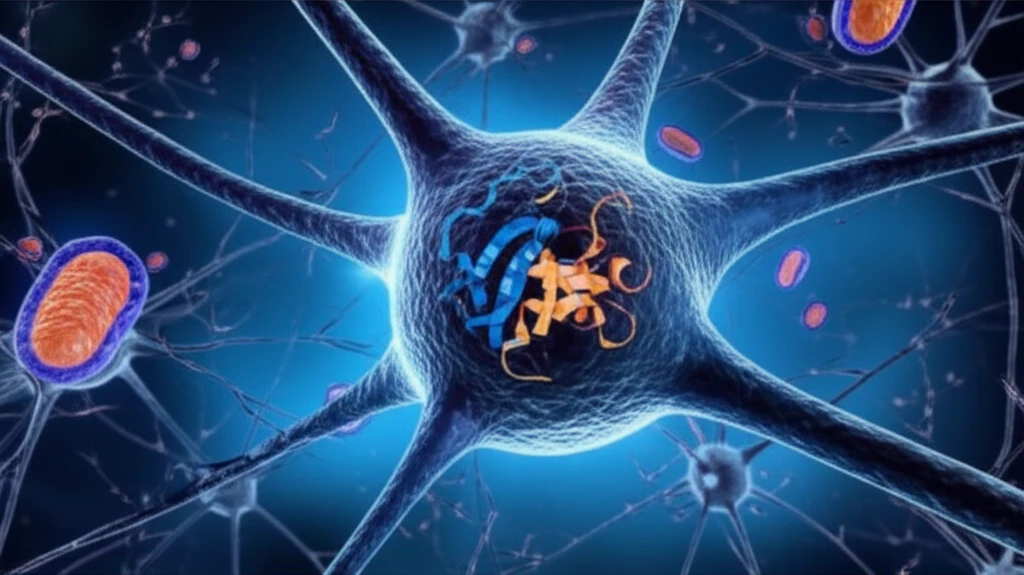
Illustration of alpha-synuclein protein surrounded by dysfunctional mitochondria and protein aggregates in a damaged neuron.

Unraveling Alpha-Synuclein: How This Protein Impacts Brain Health and Parkinson's

"A deep dive into alpha-synuclein's role in neurodegeneration, mitochondrial dysfunction, and potential therapeutic avenues."


Parkinson's disease (PD), a neurodegenerative disorder, is characterized by the accumulation of insoluble protein clusters containing alpha-synuclein in the brain. While the presence of these clusters, known as Lewy bodies, has long been recognized, the precise mechanisms by which alpha-synuclein contributes to the disease remain a subject of intense research. This has led scientists to investigate how alpha-synuclein interacts with various cellular components and processes, ultimately leading to neuronal dysfunction.

Recent studies suggest that alpha-synuclein toxicity can impair the function of mitochondria (the cell's powerhouses), the endoplasmic reticulum (ER) (involved in protein synthesis and folding), and autophagy (the cell's waste disposal system). This toxicity is also associated with elevated levels of reactive oxygen species (ROS), harmful molecules that can damage cells. Understanding how alpha-synuclein disrupts these essential cellular functions is crucial for developing effective treatments for Parkinson's disease.

This article explores the intricate relationship between alpha-synuclein dysfunction and cellular stress, focusing on how it impairs mitochondria, the endoplasmic reticulum, and autophagy, ultimately leading to the dopaminergic depletion characteristic of Parkinson's disease. We'll delve into the latest research and discuss potential therapeutic strategies targeting alpha-synuclein to protect brain health.

What is Alpha-Synuclein and Why Is It Important?

Illustration of alpha-synuclein protein surrounded by dysfunctional mitochondria and protein aggregates in a damaged neuron.

Alpha-synuclein is a small, acidic protein primarily found in neurons, especially at synapses, the points of communication between nerve cells. It plays a critical role in synaptic function, including the recycling of vesicles that store and release neurotransmitters. Think of it as a key player in the efficient communication system within your brain. It consists of three main domains: the N-terminus, the non-amyloid component (NAC), and the C-terminus. Each of these domains has specific functions, such as the N-terminus binding to lipid membranes and the C-terminus preventing protein aggregation.

However, when alpha-synuclein misfolds or aggregates, it can become toxic. This aggregation disrupts normal cellular processes and is a hallmark of Parkinson's disease. Researchers are actively investigating ways to prevent or reverse this aggregation to protect neurons from damage.

  • Normal Function: Alpha-synuclein aids in synaptic vesicle recycling and neurotransmitter release.
  • Dysfunction: Misfolding and aggregation lead to cellular toxicity.
  • Location: Primarily found in neurons, with high concentrations at synapses.
Several factors can contribute to alpha-synuclein misfolding and aggregation, including genetic mutations, oxidative stress, and impaired protein degradation pathways. Let's take a closer look at how this happens and what it means for brain health.

The Future of Alpha-Synuclein Research: Towards Effective Treatments

The death of dopamine-producing neurons in Parkinson's disease is a complex process, but targeting alpha-synuclein offers a promising avenue for developing effective treatments. Ongoing research focuses on understanding the precise mechanisms of alpha-synuclein toxicity, identifying ways to prevent its misfolding and aggregation, and developing therapies that can protect vulnerable neurons from damage. This includes exploring strategies to enhance protein degradation pathways, reduce oxidative stress, and improve mitochondrial function. By unraveling the complexities of alpha-synuclein's role in Parkinson's disease, scientists hope to pave the way for new and innovative therapies that can improve the lives of those affected by this debilitating condition. Future research promises to shine even more light on the topic, and lead to even more innovative therapies for those affected with Parkinson's.

About this Article -

This article was crafted using a human-AI hybrid and collaborative approach. AI assisted our team with initial drafting, research insights, identifying key questions, and image generation. Our human editors guided topic selection, defined the angle, structured the content, ensured factual accuracy and relevance, refined the tone, and conducted thorough editing to deliver helpful, high-quality information.See our About page for more information.

Everything You Need To Know

1

What is alpha-synuclein, and what role does it play in brain function?

Alpha-synuclein is a small protein primarily found in neurons, particularly at synapses. It is crucial for synaptic function, specifically the recycling of vesicles involved in neurotransmitter release. This protein has three main domains, the N-terminus, the non-amyloid component (NAC), and the C-terminus, each contributing to its function. Its normal function involves aiding in synaptic vesicle recycling and neurotransmitter release, ensuring efficient communication between nerve cells.

2

How does alpha-synuclein contribute to the development of Parkinson's disease?

In Parkinson's disease, alpha-synuclein misfolds and aggregates, forming insoluble protein clusters known as Lewy bodies. This aggregation is toxic, disrupting normal cellular processes. These aggregates interfere with essential cellular functions, including the function of mitochondria, the endoplasmic reticulum, and autophagy. This disruption ultimately leads to neuronal dysfunction and the characteristic dopaminergic depletion observed in Parkinson's disease.

3

What cellular processes are disrupted by the dysfunction of alpha-synuclein?

Alpha-synuclein dysfunction disrupts several critical cellular processes. It impairs the function of mitochondria, which are the cell's powerhouses, leading to energy deficits. It also affects the endoplasmic reticulum (ER), involved in protein synthesis and folding, causing further cellular stress. Additionally, it interferes with autophagy, the cell's waste disposal system, leading to the accumulation of damaged proteins and cellular debris. The dysfunction is also associated with elevated levels of reactive oxygen species (ROS), harmful molecules that can damage cells.

4

What are the potential therapeutic strategies for targeting alpha-synuclein in Parkinson's disease?

Potential therapeutic strategies focus on several approaches. Researchers are investigating methods to prevent the misfolding and aggregation of alpha-synuclein. Enhancing protein degradation pathways, such as improving autophagy, is another key area. Reducing oxidative stress, which contributes to alpha-synuclein toxicity, is also being explored. Furthermore, improving mitochondrial function to support neuronal health is a critical therapeutic goal. These strategies aim to protect vulnerable neurons from damage and slow or halt the progression of Parkinson's disease.

5

Besides aggregation, what other factors contribute to alpha-synuclein toxicity?

Besides aggregation, several factors contribute to alpha-synuclein toxicity. These include genetic mutations that can predispose the protein to misfold. Oxidative stress, caused by an imbalance of free radicals, damages cells and promotes protein aggregation. Impaired protein degradation pathways, such as dysfunction in the autophagy process, prevent the clearance of misfolded alpha-synuclein. Addressing these factors is critical for developing comprehensive therapies to combat alpha-synuclein's toxic effects.

Newsletter Subscribe

Subscribe to get the latest articles and insights directly in your inbox.