
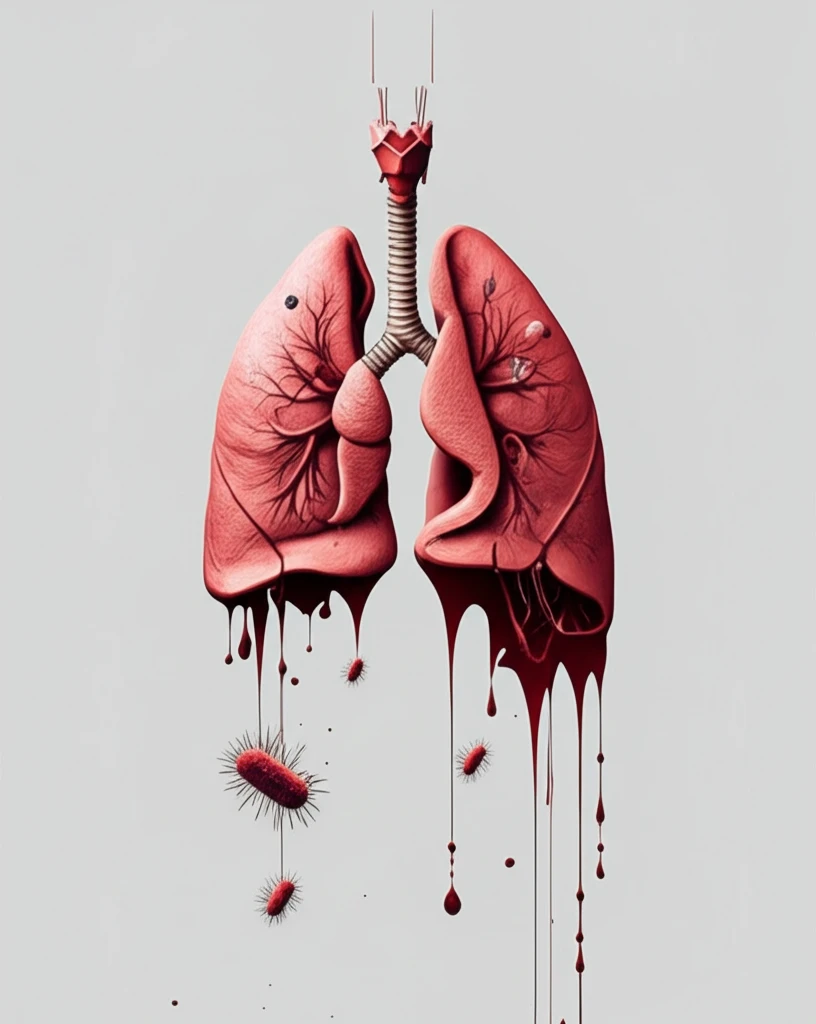
Unmasking Serratia Pneumonia: A Hemoptysis Case Study in Sarcoidosis Patients

"Learn about a rare pneumonia case in sarcoidosis patients, its diagnosis, treatment, and implications for immunocompromised individuals."
Serratia marcescens is a Gram-negative bacillus known for its vibrant red pigment at room temperature. This bacterium, part of the Enterobacteriaceae family, thrives in various environments, including soil, water, and even our intestines. While it's often associated with hospital-acquired infections, community-acquired cases are rare, making each instance a critical study for understanding its behavior.
A recent case report sheds light on an unusual presentation of Serratia pneumonia, marked by hemoptysis (coughing up blood) in a 37-year-old male. What makes this case particularly intriguing is the patient's underlying sarcoidosis, a condition known to compromise the immune system. This intersection of a rare infection and an existing immune disorder provides valuable insights into diagnostic and therapeutic approaches.
The case underscores the importance of considering atypical infections in immunocompromised individuals and highlights the challenges in differentiating Serratia-related symptoms from those of other respiratory conditions. By delving into the specifics of this case, we can gain a deeper understanding of the complexities involved in diagnosing and managing such rare presentations.
A Clinically Significant Opportunistic Pathogen
Serratia marcescens is an opportunistic gram-negative bacillus with both intrinsic and acquired resistance mechanisms, making it a challenging pathogen in immunocompromised individuals. Infectious disease clinicians today regard it as an important clinical pathogen in human medicine. Though recognized historically as a curiosity, the organism was first described in 1819 by Venetian pharmacist Bartolomeo Bizio in Padua, Italy, who named the genus after Serafino Serrati. Its relevance has grown as a cause of difficult-to-treat infections, particularly in vulnerable patient populations.
Recognition of a Nosocomial Pathogen
Serratia marcescens is an opportunistic, gram-negative, nosocomial pathogen belonging to the family Enterobacteriaceae, and it was originally considered an innocuous, non-pathogenic saprophytic water organism. It is a facultative anaerobe that produces a red pigment at room temperature and occurs naturally in soil, water, and the intestines. Risk factors for infection have made it a recognized cause of hospital-acquired disease rather than a benign environmental organism. A surveillance study at Al-Noor Specialist Hospital isolated 81 Serratia marcescens strains from 61 patients between November 2012 and November 2013, illustrating the organism's measurable burden within a single hospital system.
From Rare Cardiac Disease to Broad Clinical Impact
Serratia marcescens is an opportunistic gram-negative pathogen that causes pneumonia, bloodstream infections, and urinary tract infections, particularly in individuals who are immunocompromised. Historically, its cardiac involvement was considered extremely rare, accounting for only 14 out of 10,000 endocarditis cases, with an estimated 85% mortality rate. A Rutgers case presentation nonetheless described a complicated Serratia marcescens pneumonia and infective endocarditis that ended with a good prognosis, a notable milestone in managing this high-risk infection. The case underscores how an organism once regarded as uncommon can present through multiple organ systems simultaneously.
Case Presentation: A Diagnostic Puzzle
In this case, the 37-year-old patient presented with a constellation of symptoms, including productive cough with blood-tinged sputum, intermittent fever, and shortness of breath, which had persisted for approximately 20 days. Notably, he had no history of smoking and was currently unemployed, with instances of homelessness. His medical history was significant only for arterial hypertension, which was being managed with atenolol.
- Elevated white blood cell count (10,900 cells/µL).
- Elevated serum creatinine (2.52 mg/dL) and urea (57 mg/dL).
- Slightly elevated serum angiotensin-converting enzyme (57 IU/mL).
- Consolidation in the anterior segment of the right lower lobe observed via CT scan.
Emerging Reports of Multisystem Disease
Recent reviews describe Serratia marcescens as an opportunistic gram-negative pathogen that causes pneumonia, bloodstream infections, and urinary tract infections, particularly in individuals who are immunocompromised. A published case report details a 50-year-old patient who presented with Serratia marcescens pneumonia and infective endocarditis and ultimately achieved a good prognosis. The pairing of pneumonia with endocarditis highlights how a single organism can drive multisystem disease in a single patient. These reports reinforce the need to look beyond the respiratory tract when Serratia marcescens is recovered from lung specimens.
When Infections Defy the Nosocomial Pattern
Serratia marcescens is widely distributed in water, soil, and plants and is best known for causing a variety of hospital-acquired infections. It has a thin peptidoglycan layer, so it does not retain the crystal violet dye during Gram staining, distinguishing it among gram-negative organisms. However, not every case fits the classic nosocomial picture: a published report describes fatal Serratia marcescens necrotizing fasciitis in an immunocompetent man. The same report noted pneumonia with positive cultures for S. marcescens in the setting of steroid and nabumetone use, suggesting that even supposedly low-risk patients can experience severe, and sometimes fatal, disease.
Shared Microbiology, Distinct Virulence Mechanisms
Serratia marcescens is widely distributed in water, soil, and plants, and it is classified as a gram-negative bacillus within the Enterobacteriaceae group, naturally occurring in soil, water, and the intestine. While these references agree on its environmental distribution and gram-negative character, experimental work points to a distinct path of disease: in a murine model of hemorrhagic pneumonia, mice were inoculated by forced aspiration with wild-type S. marcescens, and investigators demonstrated that the bacterial cytolysin is required for the hemorrhagic pneumonia to develop. This contrasts with the more routine hospital-acquired infections emphasized in clinical reference material. The finding suggests that specific virulence factors, not just host vulnerability, drive the most severe pulmonary presentations.
Conclusion: A Call for Vigilance
This case underscores the critical importance of maintaining a high index of suspicion for unusual infections in individuals with underlying immunocompromising conditions, such as sarcoidosis. While rare, Serratia pneumonia can present with atypical symptoms like pseudohemoptysis, making accurate and timely diagnosis essential for effective management and improved patient outcomes. Further research and case studies are needed to better understand the interplay between sarcoidosis and opportunistic infections, ultimately guiding clinical practice and enhancing patient care.
Beyond the Hospital: Patient-Facing Encounters
Discussion of Serratia marcescens is not confined to hospital wards, as the organism also surfaces in academic commentary and on patient-facing medical Q&A platforms. On one such Russian medical Q&A site, a patient reported a throat smear showing Serratia marcescens at a count of 10 to the fourth power, accompanied by throat redness and periodic soreness, with an ENT diagnosis of reflux-associated tonsillopharyngitis. Such reports illustrate the interpretive challenge patients face when an environmental and hospital-associated organism appears in their test results. Clinicians should be aware that lay summaries of these findings, as reflected in commentary sites and blogs, may not fully capture the clinical significance of the organism.
Long-Term Surveillance and Antimicrobial Stewardship
A seven-year surveillance study in a tertiary hospital in China was designed to explore trends in the detection and antimicrobial resistance of Serratia marcescens across different infection types. The investigators aim to provide a reference for future studies on the control of S. marcescens infections and for the rational selection of antibiotics. Multi-year surveillance of this kind is expected to clarify how detection rates and resistance profiles evolve over time. Such data will be important for guiding empiric therapy as Serratia marcescens continues to present treatment challenges.
Resistance, Spread, and Beyond the Lungs
Serratia marcescens is a member of the carbapenem-resistant Enterobacteriaceae and is an important emerging pathogen that causes a wide variety of nosocomial infections, spreads rapidly within hospitals, and carries a systemic mortality rate of up to 41%. Its reach extends beyond the respiratory tract: a case report describes bacterial meningitis due to S. marcescens, with the isolate sensitive to fosfomycin and tigecycline but only intermediate to meropenem. MRI in that case revealed communicating hydrocephalus, debris in the ventricle, and meningeal enhancement. These findings illustrate the systemic consequences of infection and the narrowing antibiotic options for treating resistant strains.
Living with a Rare Infection
For patients, a Serratia marcescens infection can be a frightening and isolating experience, particularly when it occurs against the backdrop of an underlying chronic condition such as sarcoidosis. Symptoms such as hemoptysis, breathlessness, and repeated hospital stays can take a heavy toll on daily life and emotional well-being. Individual experiences vary widely, and outcomes depend heavily on the severity of the infection and the patient's overall health. Further research and greater clinician awareness are needed to improve both treatment outcomes and quality of life for those affected.