
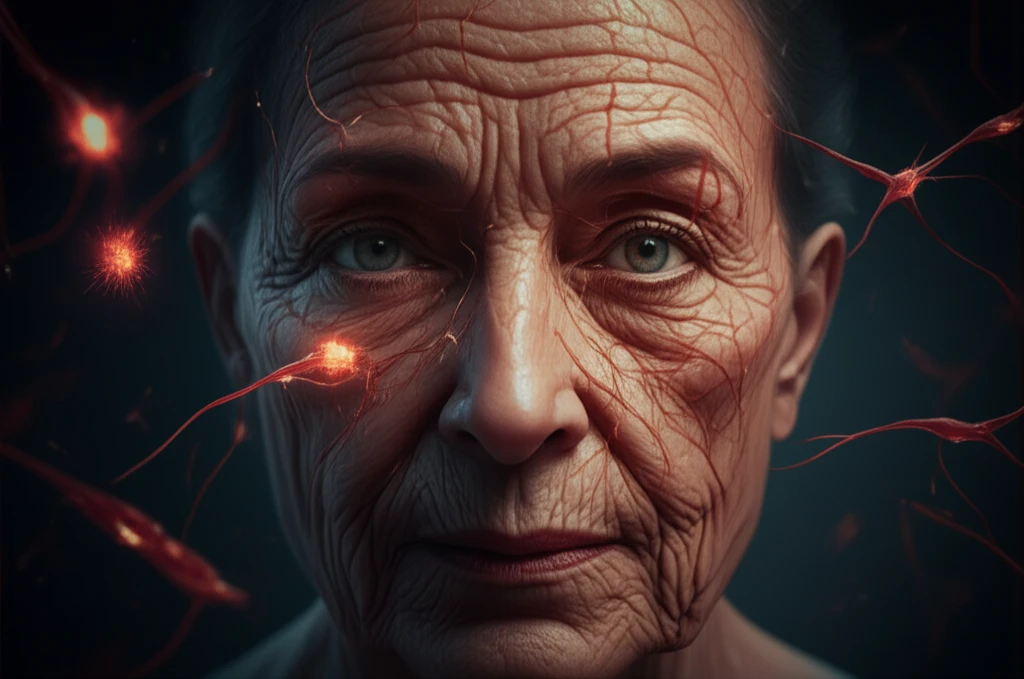
Unlocking Youthful Skin: How SRPK1 Impacts Aging in Your Dermis

"Discover the age-related changes in Serine-Arginine Protein Kinase 1 (SRPK1) and its surprising effects on skin health, from wrinkles to vascular changes."
As we age, our skin undergoes a multitude of changes, from the appearance of fine lines and wrinkles to alterations in texture and elasticity. While many factors contribute to these changes, a specific protein kinase called Serine-Arginine Protein Kinase 1, or SRPK1, is emerging as a critical player in the aging process of the skin's dermis. This article explores the role of SRPK1 based on the findings of a research study.
Proteins containing serine- and arginine-rich fragments, known as RS sequences, are essential components of human and animal cells. These fragments can be phosphorylated by various protein kinases, influencing RNA splicing and, consequently, the synthesis of diverse protein molecules. SRPK1 is the enzyme responsible for mediating SRSF1 phosphorylation, a process that affects cell division, differentiation, and apoptosis.
The study we're diving into sought to understand how SRPK1 levels change in human dermis across different ages, from fetal development to old age. By examining skin samples and using immunohistochemical detection methods, researchers uncovered some intriguing connections between SRPK1 levels, skin cell activity, and the visible signs of aging.
How Does SRPK1 Influence Skin Aging?
The study revealed a fascinating pattern: SRPK1 content in dermal fibroblasts (the cells responsible for collagen production and skin support) increases from the antenatal period up to around 20 years of age. After this point, SRPK1 levels begin to decline uniformly until advanced age (61-85 years). This decline coincides with a reduction in both the number and proliferative activity of fibroblasts. Meaning, the cells are less active and there are fewer of them.
- Fibroblasts: SRPK1 increases until age 20, then declines with age.
- Blood Vessels: SRPK1 increases with age.
- Fibroblast Activity: Declines alongside SRPK1 in fibroblasts.
- Vascularization: Decreases with age, despite increased SRPK1 in vessels.
The Future of Anti-Aging: Targeting SRPK1
While this research provides valuable insights into the role of SRPK1 in skin aging, it also opens doors for potential future interventions. Further studies are needed to fully understand the mechanisms by which SRPK1 influences fibroblasts and blood vessels in the dermis. However, targeting SRPK1 levels or its activity could potentially offer novel strategies for combating age-related skin changes, such as wrinkles, reduced elasticity, and compromised vascular health. Understanding how SRPK1 impacts skin components during aging is a step towards innovative treatments.