
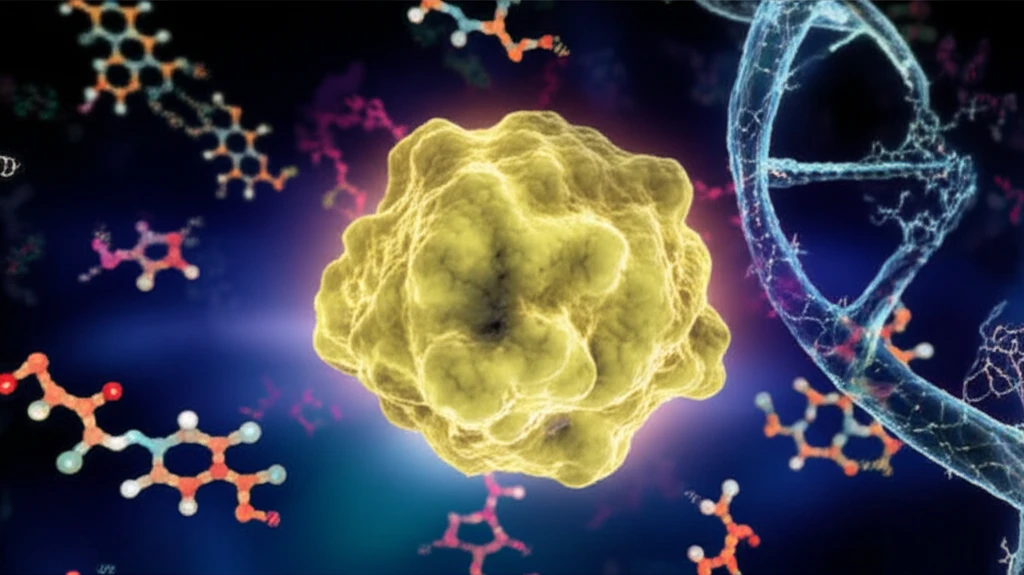
Unlocking Longevity: How Medicinal Chemistry is Revolutionizing SIRT1 Modulation

"Explore the groundbreaking research into SIRT1 modulators and their potential to revolutionize health and aging."
In the relentless pursuit of extending healthy lifespans, scientists are increasingly focusing on a class of proteins known as sirtuins. Among these, SIRT1 has emerged as a pivotal player, garnering significant attention for its role in various cellular processes linked to aging and age-related diseases. Recent findings underscore its importance, sparking a surge of research into molecules that can modulate SIRT1 activity.
Medicinal chemistry, the discipline focused on designing and synthesizing new drug molecules, is at the forefront of this effort. Researchers in this field are diligently exploring and developing compounds that can either activate or inhibit SIRT1, aiming to harness its potential therapeutic benefits. This article delves into the recent advances in understanding SIRT1 modulation and highlights the most promising chemical compounds under investigation.
The modulation of SIRT1 has implications across various conditions, offering potential therapeutic avenues for age-related diseases, metabolic disorders, and even cancer. By understanding the mechanisms through which medicinal chemists are influencing SIRT1, we can gain insights into the future of preventative medicine and therapeutic interventions.
Evidence Still Developing
The current impact of medicinal chemistry on SIRT1 modulation remains difficult to quantify from the available material. No subsection-specific sources were provided to establish reliable statistics, clinical outcomes, or population-level effects. Claims about longevity benefits should therefore be treated as provisional until supported by dedicated biomedical evidence.
Methodological Caution
No subsection-specific sources were provided to identify an accepted standard approach for SIRT1 modulation. As a result, the relative strengths and limitations of medicinal-chemistry methods cannot be assessed here. Any comparison of compounds, assays, or therapeutic strategies would require targeted supporting literature.
A Source Mismatch
The supplied historical sources concern Google Maps features and FiveM custom maps rather than SIRT1 biology or medicinal chemistry. Google provides guidance on using and managing Google Maps, while the FiveM sources describe downloadable map releases, including a dragstrip layout updated in October 2022. These materials do not establish historical milestones or foundational discoveries in SIRT1 modulation.
SIRT1: The Key to Cellular Health and Longevity
SIRT1, a member of the sirtuin family of proteins, acts as a crucial regulator of cellular health, influencing processes such as DNA repair, inflammation, and energy metabolism. This protein's activity is closely tied to the availability of NAD+ (nicotinamide adenine dinucleotide), a coenzyme vital for energy transfer within cells. As we age, NAD+ levels naturally decline, which can reduce SIRT1 activity and compromise its protective functions.
- Resveratrol: A natural compound found in grapes and red wine, resveratrol has been widely studied for its potential to activate SIRT1. While early studies showed promising results, its efficacy in humans has been debated due to its limited bioavailability.
- Synthetic SIRT1 Activators: To overcome the limitations of natural compounds, researchers have developed synthetic SIRT1 activators (STACs). These molecules are designed to bind more effectively to SIRT1, enhancing its activity and leading to more pronounced cellular effects.
- NAD+ Precursors: Given that SIRT1 activity is dependent on NAD+ levels, another approach involves supplementing with NAD+ precursors like nicotinamide riboside (NR) and nicotinamide mononucleotide (NMN). These compounds can boost NAD+ levels in cells, indirectly promoting SIRT1 activity.
Research Evidence Needed
No subsection-specific research papers or reviews were supplied for this topic. The latest findings on SIRT1 modulation therefore cannot be summarized responsibly from the available material. A current biomedical literature search would be needed to distinguish established results from early-stage research.
Limitations Not Documented
No subsection-specific sources were provided on failed SIRT1 programs, adverse findings, reproducibility concerns, or counterarguments. It is therefore not possible to identify a particular failure mechanism or disputed claim without adding unsupported information. Any critical assessment should rely on dedicated pharmacology and clinical evidence.
Comparisons Unrelated to SIRT1
The supplied comparative sources discuss Amazon alternatives, delivery experiences, Amazon Fire TV Stick HDMI issues, and sorting Amazon search results by review count. They do not compare SIRT1 modulators, medicinal-chemistry strategies, or longevity interventions. Consequently, no scientifically meaningful comparison of SIRT1 approaches can be drawn from these materials.
The Future of SIRT1 Modulation: A Promising Path Forward
As research into SIRT1 modulation continues to evolve, the future holds immense promise for the development of targeted therapies that can promote healthy aging and combat age-related diseases. With ongoing advances in medicinal chemistry and a deeper understanding of SIRT1's intricate functions, we are poised to unlock new strategies for enhancing cellular health and extending lifespan. The journey to harness the full potential of SIRT1 is underway, and the possibilities are truly transformative.
Synthesis Requires Evidence
No subsection-specific sources were supplied for expert commentary or synthesis. The available material does not support a grounded conclusion about how medicinal chemistry is revolutionizing SIRT1 modulation. A responsible synthesis would need corroborated findings from biochemical, preclinical, and clinical research.
Future Directions Unresolved
No subsection-specific sources were provided to support projections about the future of SIRT1 modulation. Potential next frontiers cannot be ranked or described without evidence concerning emerging compounds, delivery systems, targets, or clinical development. Forecasts should therefore remain explicitly tentative.
Context Requires Biomedical Sources
No subsection-specific sources were supplied on systemic challenges surrounding SIRT1 research or longevity medicine. Issues such as regulation, access, validation, and translation cannot be evaluated from the available material. Dedicated health-policy and biomedical sources would be necessary for a substantive discussion.
Technology and Human Use
The supplied sources describe Microsoft products and technical support rather than SIRT1 modulation or human health outcomes. Microsoft Ink Canvas is described as an AI-powered, pen-first experience for developing ideas before they become documents, prompts, images, or plans. Other sources address SQL Server migration, Windows driver updates, and the Windows Insider Program, so they do not establish real-world effects of SIRT1-focused interventions.