
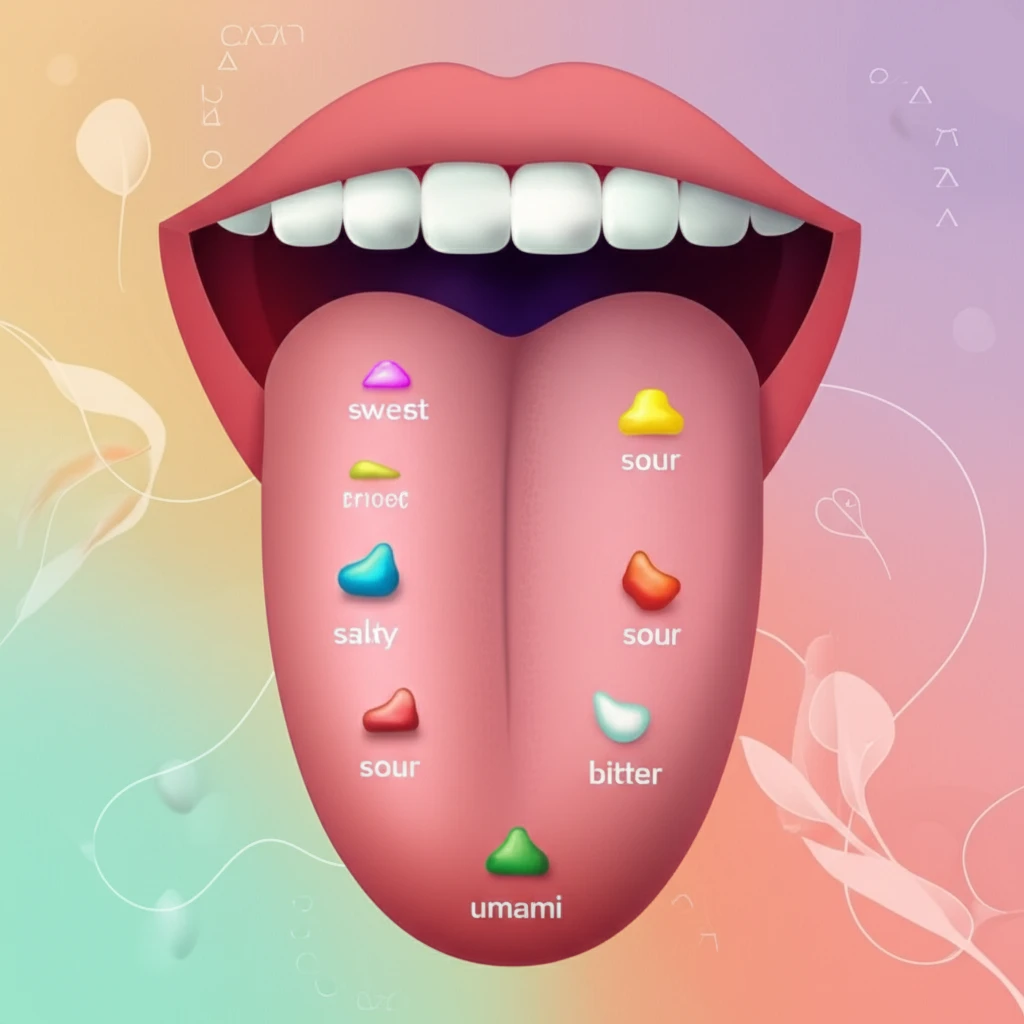
Illustration of a human tongue with taste buds labeled with the five basic tastes: sweet, sour, salty, bitter, and umami.

Unlocking Your Taste: A New Test for a Better Life

"Discovering the groundbreaking gustatory function test that could transform how we understand taste and its impact on overall health."


Imagine a world where a simple test could unlock secrets about your health, revealing potential issues and paving the way for better well-being. This is the promise of a new gustatory function test, developed for clinical applications in Korean subjects. This groundbreaking test doesn't just assess your ability to taste; it delves into the intricate world of flavor, offering insights that could transform how we understand and treat taste-related disorders.

Our sense of taste is far more complex than we often realize, playing a crucial role in our nutrition, food selection, and overall enjoyment of life. Taste helps us appreciate the subtleties of a delicious meal and also alerts us to potential dangers, like spoiled food. However, what happens when our ability to taste is compromised? This is where the innovative gustatory function test steps in.

This article will explore the development and application of this test. From its clinical validation to its potential impact on diagnostics and treatment, this test is designed to provide valuable insights into gustatory function. Join us as we explore the exciting possibilities of this new test and what it means for our health.

The Science Behind the Test: How It Works

Illustration of a human tongue with taste buds labeled with the five basic tastes: sweet, sour, salty, bitter, and umami.

The test itself is designed to be user-friendly, affordable, and efficient, making it accessible for a wide range of individuals. Using liquid solutions, the test assesses the function of taste. It consists of 30 different taste solutions with varying concentrations of five basic tastes: sweet, bitter, salty, sour, and umami. Each participant is asked to identify and recognize these tastes, and their results are combined to form a comprehensive 'taste score'.

The study involved 297 participants, and the results revealed some fascinating insights. It found that men generally had lower detection and recognition thresholds than women, meaning they could detect and identify tastes at lower concentrations. The research also highlighted the test's sensitivity to age, with younger people tending to score higher. Additionally, non-smokers outperformed smokers in both detection and recognition, suggesting that smoking can impair taste sensitivity.

  • The test uses liquid solutions containing different concentrations of five basic tastes: sweet, bitter, salty, sour, and umami.
  • Participants are asked to identify and recognize these tastes.
  • The "taste score" is calculated based on the number of correctly identified tastes.
  • The test is designed to be easy to perform, affordable, and time-saving.
The 10th percentile of taste score for recognition was used as the cut-off value to distinguish between normal taste and hypogeusia (reduced taste sensitivity). The test has the potential to provide valuable clinical data that can be used for better diagnostics and treatment strategies. The comprehensive approach also offers a more nuanced understanding of taste function and how it may vary across different demographics and health conditions.

The Future of Taste and Health

The development of this gustatory function test is a significant step forward in understanding the complexities of taste and its relationship to overall health. As research continues, this test could lead to more accurate diagnoses, personalized treatment plans, and a greater appreciation for the vital role taste plays in our lives. The journey into the world of taste has just begun, and the possibilities are as rich and diverse as the flavors we experience every day.

About this Article -

This article was crafted using a human-AI hybrid and collaborative approach. AI assisted our team with initial drafting, research insights, identifying key questions, and image generation. Our human editors guided topic selection, defined the angle, structured the content, ensured factual accuracy and relevance, refined the tone, and conducted thorough editing to deliver helpful, high-quality information.See our About page for more information.

This article is based on research published under:

DOI-LINK: 10.3349/ymj.2018.59.2.325, Alternate LINK

Title: Development Of A Gustatory Function Test For Clinical Application In Korean Subjects

Subject: General Medicine

Journal: Yonsei Medical Journal

Publisher: Yonsei University College of Medicine

Authors: Chi Sang Hwang, Jin Won Kim, Salma Saud Al Sharhan, Jin Woong Kim, Hyung-Ju Cho, Joo-Heon Yoon, Chang-Hoon Kim

Published: 2018-01-01

Everything You Need To Know

1

What is the purpose of the gustatory function test?

The gustatory function test aims to assess an individual's ability to taste and identify different flavors. It provides insights into the complexities of taste perception and its connection to overall health. By evaluating the recognition and detection of basic tastes like sweet, bitter, salty, sour, and umami, the test helps in diagnosing and understanding taste disorders such as hypogeusia, ultimately paving the way for more effective treatments and a deeper appreciation of taste's role in life.

2

How does the gustatory function test work, and what are the key components?

The gustatory function test employs liquid solutions with varying concentrations of five basic tastes: sweet, bitter, salty, sour, and umami. Participants are asked to identify and recognize these tastes. The test uses 30 different taste solutions. The number of correctly identified tastes determines a comprehensive 'taste score'. This score is used to evaluate a person's taste sensitivity and identify potential taste impairments.

3

What factors were found to influence taste sensitivity in the study involving the gustatory function test?

The study revealed that several factors influence taste sensitivity. Men generally had lower detection and recognition thresholds than women. Younger individuals tended to score higher on the test, indicating better taste sensitivity. Non-smokers outperformed smokers, suggesting that smoking can impair taste perception. These findings highlight the importance of considering demographic and lifestyle factors when assessing taste function.

4

How is the gustatory function test used to diagnose taste impairment, specifically hypogeusia?

The gustatory function test uses the 10th percentile of the taste score for recognition as a cut-off value to distinguish between normal taste and hypogeusia (reduced taste sensitivity). If an individual's taste score falls below this threshold, it indicates a reduced ability to perceive tastes, suggesting a diagnosis of hypogeusia. This objective assessment aids in identifying individuals with taste disorders and guides appropriate interventions.

5

What are the potential long-term implications of using the gustatory function test in clinical settings and for understanding health?

The gustatory function test has several potential long-term implications. It could lead to more accurate and early diagnoses of taste disorders, enabling timely interventions and personalized treatment plans. Understanding the nuances of taste perception could enhance our appreciation of the vital role taste plays in nutrition, food selection, and overall quality of life. Further research using this test may uncover links between taste function and various health conditions, providing valuable insights into preventive care and holistic well-being. This may also assist in the development of targeted therapies that address taste-related issues, improving the lives of individuals with compromised taste abilities.

Newsletter Subscribe

Subscribe to get the latest articles and insights directly in your inbox.