
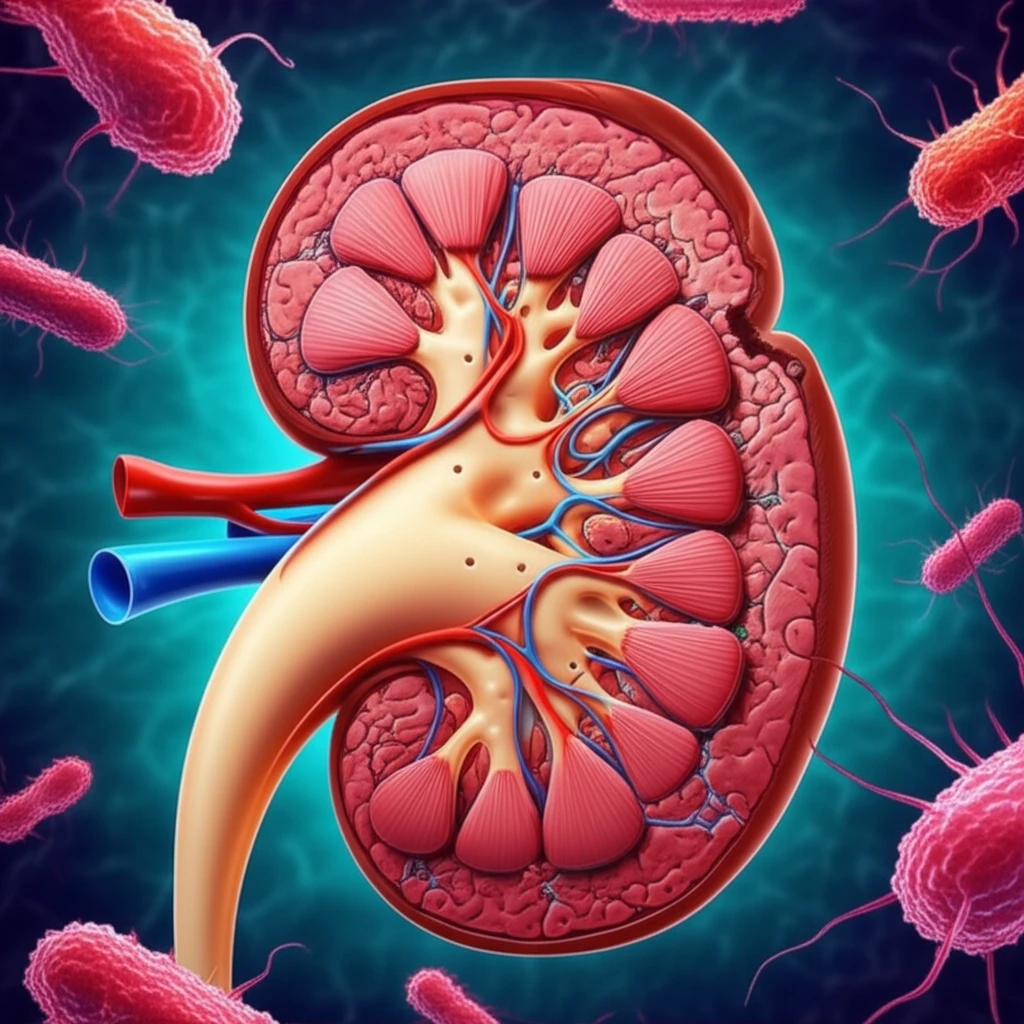
Unlocking the Mystery: How Urinary Stones and Bacteria Team Up

"New research reveals the surprising link between urinary stones, bacterial infections, and your health."
Urinary stones, often a source of excruciating pain, are a common ailment affecting millions worldwide. But what if these stones, which can range in size from a grain of sand to a golf ball, are more than just a physical problem? Recent research has unveiled a surprising link between the formation of these stones and bacterial infections, suggesting that our bodies might be fighting a hidden battle.
This groundbreaking study explores the complex relationship between the chemical composition of urinary stones and a history of bacterial infections. Utilizing advanced techniques, researchers have discovered how certain bacteria can contribute to the development of these painful formations. This new understanding opens doors to more effective prevention and treatment strategies, offering hope for those who suffer from recurrent kidney stones.
This article will delve into the findings of a recent study, exploring the role of bacteria in urinary stone formation. We will examine the types of bacteria involved, how they interact with the body, and what this means for your health. This information is presented in a clear, easy-to-understand manner, suitable for a broad audience seeking to understand and manage their health better.
The Growing Burden of Urinary Stone Disease
Urinary stone disease (USD), also known as nephrolithiasis, is a condition in which stones form in the kidneys and/or bladder, causing symptoms such as pain and hematuria. The prevalence of kidney stones in the USA has risen from 5.2% and continues to grow, making it one of the most common and underestimated conditions in American medicine. While kidney stones are more common in men than women, the gender gap appears to be closing in the past decade. The disease is consistently higher among non-Hispanic white populations and individuals with obesity, and women who have had multiple pregnancies or used female hormone therapy are also at elevated risk.
Guideline-Based Management of Kidney Stones
Evidence-based guidelines are published by major urological organizations for the management of kidney stone disease, including those from the American Urological Association (AUA) and the European Association of Urologists (EAU). These guidelines provide clinical frameworks for diagnosis, treatment, prevention, and follow-up for adult and pediatric patients based on the best available published literature. The AUA's surgical management guidelines cover patients with kidney and/or ureteral stones, while medical management guidelines address conservative and pharmacological approaches. However, comparing these guidelines reveals differences in evidence grading and recommendations, highlighting the complexity of establishing universal standards for kidney stone care.
Early Understanding of Stone Formation
The study of urinary stones has evolved significantly over centuries, from early observations of mineral deposits in the urinary tract to modern understanding of crystallopathy. While specific historical milestones are difficult to pinpoint without comprehensive historical records, foundational discoveries in nephrology and urology have progressively refined our knowledge of how stones form. The recognition that urinary stone disease involves an excess of minerals in the urine relative to liquid volume was a key conceptual advance. These early insights laid the groundwork for contemporary research into the complex interplay between urinary composition, genetics, and environmental factors in stone development.
The Culprits: Unmasking the Bacteria Behind Urinary Stones
The study focused on identifying bacterial species within urinary stones using advanced DNA analysis techniques. These methods allowed researchers to pinpoint the specific types of bacteria present, even if the infection was in the past. The results were striking, revealing that several bacterial species are frequently associated with stone formation. The most common offenders were Proteus spp. and Escherichia coli (E. coli).
- Proteus spp.: Frequently associated with struvite and calcium phosphate stones.
- E. coli: Often found in weddellite stones, with iron detected in the stone matrix.
- Other Bacteria: Klebsiella pneumoniae, Morganella morganii, and others also identified, though less frequently.
Contemporary Insights into Stone Pathophysiology
Recent comprehensive reviews have examined the pathophysiology of kidney stone formation, focusing on the contribution of urinary risk factors and genetic variants. Researchers are investigating the key epidemiological determinants of kidney stone disease while offering updated perspectives on contemporary management approaches. The latest research underscores the multifactorial nature of stone formation, integrating insights from genetics, metabolic studies, and clinical epidemiology. These reviews represent the current state of scientific understanding and inform evidence-based clinical practice for managing this increasingly prevalent condition.
Challenging Traditional Views on Stone Formation
Traditional explanations of kidney stone formation attribute development and growth to the urinary milieu, but emerging research questions whether certain factors like uric acid are truly contributors to calcium oxalate stones. The presence of large kidney stones in patients with alkaline urine and predisposing risk factors—such as female sex, older age, indwelling urinary catheters, or urinary tract abnormalities—suggests more complex mechanisms than simple mineral supersaturation. These observations indicate that our understanding of stone pathophysiology remains incomplete and that some conventional assumptions may require revision. The gap between traditional models and clinical observations highlights the need for continued research into alternative mechanisms of stone formation.
Distinguishing Bladder Stones from Kidney Stones
While bladder stones and kidney stones are both comprised of concentrated minerals, they are distinct conditions located in different parts of the urinary tract. Bladder stones occur in the bladder while kidney stones form in the kidneys, and they often present with different symptoms. The process of stone formation—whether in the kidney, ureter, or bladder—is collectively referred to as urolithiasis, renal lithiasis, or nephrolithiasis. If stones in either location do not pass, they can lead to complications requiring medical intervention. Understanding these distinctions is crucial for proper diagnosis and effective treatment of urinary tract stones.
Empowering Your Health: Taking Action Against Urinary Stones
The research presented provides important insights into the complex interplay between bacteria, urinary stones, and your health. By understanding the role of bacterial infections, you can take proactive steps to reduce your risk. Staying hydrated, maintaining a balanced diet, and seeking prompt medical attention for urinary tract infections are all essential. This new research underscores the importance of early detection and intervention to prevent the formation of painful stones and protect your overall well-being.
Bridging Research and Clinical Practice
The relationship between urinary stones and bacteria represents a complex interplay that continues to evolve with advancing research. While our understanding of stone formation has grown considerably, translating these insights into improved patient outcomes remains an ongoing challenge. The integration of epidemiological data, pathophysiological research, and clinical guidelines is essential for advancing care in this field. As research progresses, the collaboration between researchers and clinicians will be critical in developing more effective prevention and treatment strategies for urinary stone disease.
Predicting Trends and Advancing Awareness
Time series analysis of Google Trends data from 2004 to 2023 reveals increasing online search interest in kidney stones, suggesting growing public awareness of the condition. Researchers are analyzing these trends to predict future patterns in kidney stone awareness and education. The four main types of kidney stones—calcium oxalate, calcium phosphate, uric acid, and struvite—each require different management approaches, with calcium oxalate stones being the most common. Struvite stones are particularly notable for their association with urinary tract infections, underscoring the bacterial component of stone disease. Future research directions will likely focus on personalized prevention strategies and improved understanding of the stone-bacteria relationship.
Urinary Stones Within the Systemic Health Landscape
Urinary stone disease is not isolated but is associated with systemic conditions such as hypertension, diabetes, and other components of metabolic syndrome. Reciprocally, these systemic diseases may be contributing to the rising incidence of urinary stone disease, creating a bidirectional relationship. Understanding the impact of systemic inequities on kidney stone disease requires a multidimensional research approach to determine how race, socioeconomic status, and social factors such as healthcare access interact to influence treatment and outcomes. These broader systemic challenges highlight that addressing urinary stone disease effectively requires considering not just individual risk factors but also societal determinants of health.
Living with Urinary Stone Disease
Beyond the clinical data and research findings, urinary stone disease profoundly affects the daily lives of those who experience it. The pain and discomfort associated with stone formation, along with the need for ongoing management and prevention strategies, represent significant burdens for patients. The psychological impact of recurrent stone episodes and the anxiety about future occurrences add another dimension to the patient experience. While quantitative measures capture prevalence and treatment outcomes, the qualitative aspects of living with this condition—including lifestyle modifications, dietary restrictions, and healthcare navigation—remain essential considerations for comprehensive patient care.