
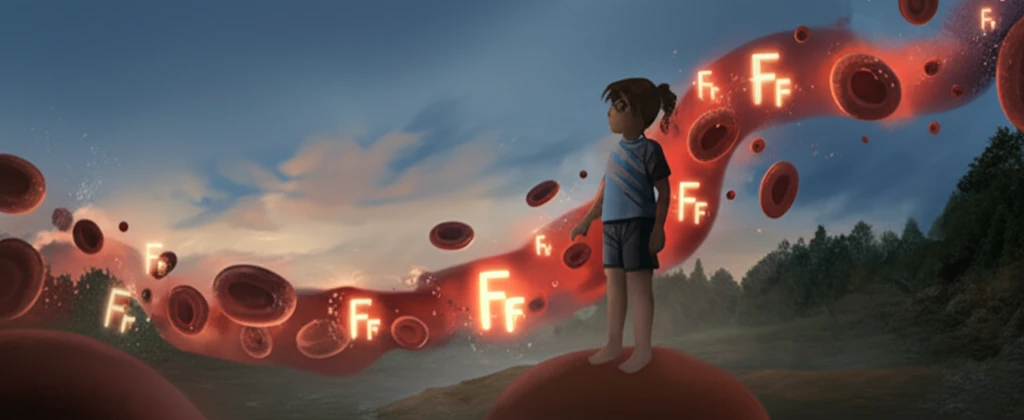
Unlocking Wellness: How Hemoglobin F Levels Impact Quality of Life in Children with Sickle Cell Anemia

"Discover the surprising link between hemoglobin F, sickle cell anemia, and overall well-being in children, empowering parents and caregivers to enhance their quality of life."
For parents and caregivers of children with sickle cell anemia (SCA), ensuring their child’s well-being is a top priority. As medical advancements extend survival rates, the focus has broadened to encompass health-related quality of life (HRQoL). This means understanding and addressing the factors that contribute to a child's overall happiness and functionality, not just their physical health.
A recent study conducted in Oman sheds light on a significant factor influencing HRQoL in children with SCA: hemoglobin F (HbF) levels. While general characteristics of SCA are well-known, the specific elements affecting HRQoL can vary by region and population. This study emphasizes the importance of recognizing these localized factors to develop effective strategies for improving the lives of young patients.
This research dives into how HbF levels, along with other health indicators, can predict HRQoL in children with SCA, offering valuable insights for healthcare professionals and families alike. By understanding these connections, we can work towards creating more effective and personalized care plans.
A Disease Present From Birth
Sickle cell disease is a group of inherited disorders that affect the red blood cells and can cause pain, anemia, and other problems. Because the disease is present at birth, children begin experiencing its effects early in life, including episodes of severe pain with potentially life-threatening crises. Sources report that children with sickle cell disease may face complications such as jaundice and growth issues. One statistics report notes that vaso-occlusive crises occur in 60-80% of children with the disease by age 5, with adults averaging 6-9 crises per year.
Inherited Condition, Managing the Symptoms
Sickle cell disease is the name for a group of inherited health conditions that affect the red blood cells, and the most serious type is called sickle cell anaemia. The condition is hereditary, described by one source as a homozygous genetic blood disorder, and it is particularly common in people with an African or Caribbean family background. Standard care focuses on managing symptoms and preventing complications, but the tools available have limits. Researchers have pointed to the limitations of existing experimental models, noting that an established mouse model was used to develop an unambiguous method for testing new therapies, with survival as an end point.
A Mutation That Shapes a Lifetime
Sickle cell anemia is a hereditary disease caused by a mutation in the hemoglobin beta gene, which is located on chromosome 11, and it causes the body to make abnormally shaped red blood cells. This genetic disorder affects how hemoglobin is made, causing red blood cells to become rigid and crescent-shaped rather than round and flexible. The misshapen cells block blood flow, leading to pain crises and serious complications including organ damage, blood clots, stroke, and infection. As survivor accounts describe, the disease's physical effects are ongoing and shape a lifelong experience of managing complications.
The Link Between Hemoglobin F and Quality of Life
The Omani study utilized the PedsQL™ Sickle Cell Disease Module to evaluate the HRQoL of 123 children with SCA, aged 2 to 16 years. Researchers collected socio-demographic data, clinical information, and treatment outcomes, then employed statistical analyses to identify predictors of HRQoL. The findings revealed a compelling connection: hemoglobin F levels emerged as a primary predictor of overall HRQoL. Higher HbF levels were associated with better HRQoL scores, independent of other factors like age, gender, or spleen status.
- Reduces Sickling: HbF prevents red blood cells from distorting into the characteristic sickle shape.
- Decreases Pain: By reducing sickling, HbF helps lower the occurrence of vaso-occlusive crises.
- Improves Oxygen Delivery: Healthier red blood cells mean better oxygen transport throughout the body.
- Enhances Overall Well-being: All these factors contribute to a higher quality of life for children with SCA.
A Consolidated Research Overview
ScienceDirect Topics offers an overview of sickle-cell disease that serves as a reference hub for peer-reviewed literature on the condition. The topic page aggregates research and clinical material covering how the disease develops, how it affects the body, and how it is managed. For clinicians and researchers, such consolidated overviews help keep current with the breadth of ongoing investigation into sickle-cell disease.
Confusion, Stigma, and the Cost of Misconception
Part of the challenge in addressing sickle cell anemia is that it is sometimes confused with other conditions. Iron deficiency anemia and sickle cell anemia are two distinct conditions that can both lead to fatigue and health issues, but they differ fundamentally: iron deficiency anemia is primarily caused by insufficient iron intake or iron loss from the body, whereas sickle cell disease is inherited. Misconceptions about the disease also cause stigma, discrimination, and emotional distress for patients and families. One report notes that sickle cell disease affects an estimated 300,000 newborns each year, underscoring why awareness and stigma-fighting efforts are considered as important as treatment.
Anemia at the Cellular Level
A visual comparison between anemia and normal blood cells highlights a key distinction: anemia is characterized by a reduced red blood cell count relative to normal blood. Educational diagrams like this one illustrate the difference at the cellular level for medical understanding and diagnostic purposes. Such side-by-side comparisons help clinicians and patients recognize the signs of the condition more readily.
Empowering Families: Taking Action to Improve HRQoL
The findings from the Omani study offer a beacon of hope for families and healthcare providers. By recognizing the significant impact of hemoglobin F on the quality of life for children with sickle cell anemia, we can focus on strategies to boost HbF levels and manage overall health more effectively. While further research is needed to fully understand the interplay of factors influencing HRQoL, these insights provide a valuable starting point for developing comprehensive care plans that prioritize the well-being of young patients.
The Expert View: A Lifelong Burden
Experts describe sickle cell anemia as a genetic blood disease in which red blood cells change shape in a way that limits their ability to carry oxygen around the body. Because the crescent-shaped cells get stuck together and block blood vessels, the disease is severely painful and can lead to organ damage. Commentary on living with the disease emphasizes that these blockages and the resulting pain are central to the everyday experience of patients. The majority of people with sickle cell disease are of African or Caribbean descent, a fact experts note shapes the disease's global distribution and its disproportionate impact.
Prevention Before Birth
Looking ahead, genetic counseling and prenatal testing are described as important components in the comprehensive management of sickle cell anemia. These services influence family planning and disease prevention by helping at-risk families understand their options before a child is born. As testing and screening markets expand in regions such as the Middle East and Africa, such services are expected to play a growing role in reducing the disease's impact.
Biology Meets Everyday Life
Sickle cell anemia is an inherited and sometimes serious condition classified as a type of hemolytic anemia. An unusual hemoglobin forces red blood cells into an unusual crescent shape, called a sickle, and these irregular cells die too soon, causing an ongoing shortage of red blood cells. Beyond the underlying biology, everyday circumstances can trigger painful crises. Reported crisis triggers include dehydration, sudden temperature changes, high altitudes, stress, poor sleep, and infection.
A Case-Study View of a Historic Disease
The human impact of sickle cell disease has been documented through case studies that trace how the condition affects patients' lives. Inherited red blood cell disorders are grouped together and called sickle cell disease, and case-study classifications have been developed to distinguish sickle cell-related disease states from other conditions such as asthmatic, cardiac, and lymphatic ones. Sickle cell anemia also holds a notable place in medical history, as the New York Times reported in 1971 that it was the first disease found to result from derangements of molecular machinery. The same report noted that a laboratory test called hemoglobin electrophoresis can distinguish between the disease's more serious and minor forms.