
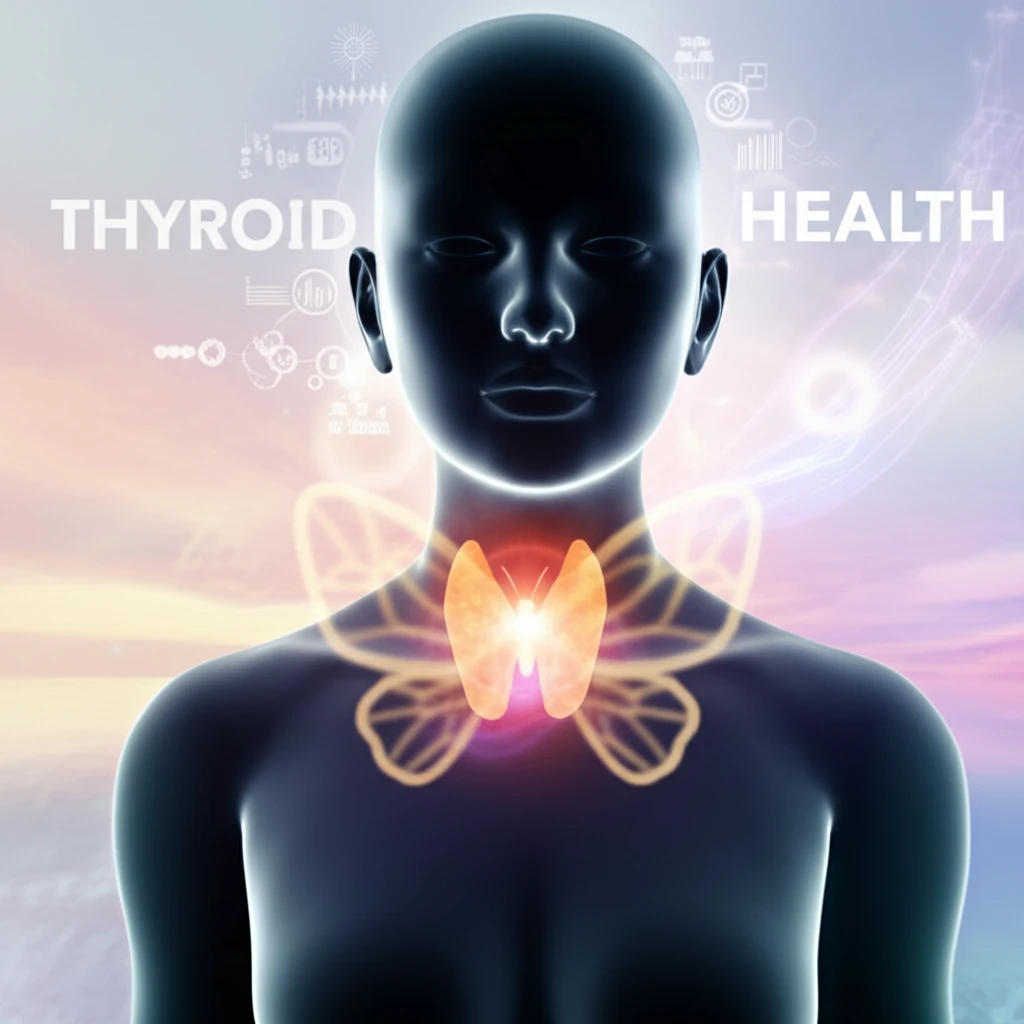
Illustration depicting the thyroid gland's role in overall health, highlighting energy, metabolism, and emotional well-being.

Unlocking Thyroid Health: How a Tiny Gland Impacts Your Energy, Mood, and Metabolism

"Beyond the Butterfly: Discover the crucial role of your thyroid and the surprising factors that influence its function, from iodine to your overall well-being."


Have you ever felt like your body is running on low battery, despite getting enough sleep? Or perhaps you've noticed shifts in your weight, mood swings, or persistent fatigue? These could be subtle whispers from a tiny, butterfly-shaped gland in your neck: your thyroid. Though small, this gland plays a monumental role in your overall health and well-being.

The thyroid is the master regulator of your metabolism, the engine that converts food into energy. It produces hormones that influence nearly every system in your body, from your heart rate and brain function to your weight and skin health. When this gland is out of balance, it can create a cascade of issues that affect your daily life.

This article will explore the intricacies of thyroid function, diving into how this tiny gland works, the common problems that can arise, and the ways you can support your thyroid health through lifestyle choices, dietary adjustments, and informed healthcare decisions.

The Thyroid's Symphony: Understanding the Hormones That Orchestrate Your Body

Illustration depicting the thyroid gland's role in overall health, highlighting energy, metabolism, and emotional well-being.

At the heart of thyroid function are two primary hormones: thyroxine (T4) and triiodothyronine (T3). These hormones regulate metabolism, affecting how quickly your body uses energy, produces heat, and consumes oxygen. T4 is the primary hormone produced by the thyroid, but T3 is the more active form. The body converts T4 to T3 to be utilized.

The production of these hormones is a complex process, meticulously orchestrated by the thyroid-stimulating hormone (TSH), released by the pituitary gland in the brain. TSH acts like a conductor, signaling the thyroid to produce and release T4 and T3. When hormone levels are low, TSH increases, prompting the thyroid to work harder. Conversely, when hormone levels are high, TSH decreases, signaling the thyroid to slow down.

  • Metabolism: Regulates the speed at which your body burns calories and uses energy.
  • Heart Rate: Influences heart rate and blood pressure.
  • Brain Function: Supports cognitive function, mood, and mental clarity.
  • Body Temperature: Helps maintain a stable internal body temperature.
  • Growth and Development: Crucial for growth, especially in children and adolescents.
  • Muscle Strength: Supports the strength and function of your muscles.
The thyroid hormones influence a wide range of bodily functions, from energy levels and weight management to mental clarity and emotional well-being. These are not merely symptoms, but the key functions of thyroid hormones. An imbalance in these hormones can disrupt this delicate balance and lead to various health problems.

Taking Charge of Your Thyroid Health: A Path to Balance and Vitality

Supporting your thyroid health is a proactive step towards improving your overall well-being. By understanding the intricacies of this essential gland and making informed choices, you can take charge of your energy levels, mood, and metabolism. The information in this article is not a substitute for professional medical advice. If you have concerns about your thyroid health, consult a healthcare professional for proper diagnosis and treatment.

About this Article -

This article was crafted using a human-AI hybrid and collaborative approach. AI assisted our team with initial drafting, research insights, identifying key questions, and image generation. Our human editors guided topic selection, defined the angle, structured the content, ensured factual accuracy and relevance, refined the tone, and conducted thorough editing to deliver helpful, high-quality information.See our About page for more information.

This article is based on research published under:

DOI-LINK: 10.1016/j.mce.2018.10.012, Alternate LINK

Title: Participation Of Nadph 4 Oxidase In Thyroid Regulation

Subject: Endocrinology

Journal: Molecular and Cellular Endocrinology

Publisher: Elsevier BV

Authors: Romina Oglio, Leonardo Salvarredi, Luciano Rossich, Silvia Copelli, Mario Pisarev, Guillermo Juvenal, Lisa Thomasz

Published: 2019-01-01

Everything You Need To Know

1

What are the primary hormones produced by the thyroid gland, and what roles do they play?

The thyroid gland primarily produces two hormones: thyroxine (T4) and triiodothyronine (T3). T4 is the main hormone produced, but T3 is the more active form. These hormones are critical for regulating metabolism, which affects how the body uses energy, produces heat, and consumes oxygen. The body converts T4 into T3 for utilization. An imbalance in T3 and T4 can significantly impact various bodily functions, leading to health issues.

2

How does the thyroid gland affect my energy levels and overall metabolism?

The thyroid gland regulates metabolism through the hormones thyroxine (T4) and triiodothyronine (T3). These hormones influence the rate at which your body burns calories and uses energy. An imbalance can lead to fatigue, weight changes, and affect heart rate, brain function, body temperature, muscle strength and growth.

3

What is thyroid-stimulating hormone (TSH), and how does it relate to thyroid hormone production?

Thyroid-stimulating hormone (TSH) is released by the pituitary gland in the brain and acts as a conductor for thyroid hormone production. TSH signals the thyroid to produce and release thyroxine (T4) and triiodothyronine (T3). When T4 and T3 hormone levels are low, TSH increases, prompting the thyroid to work harder. Conversely, when hormone levels are high, TSH decreases, signaling the thyroid to slow down. Monitoring TSH levels is crucial in assessing thyroid function.

4

Besides hormones, what other factors influence the thyroid's function, and how can I support its health for a vibrant life?

Iodine intake is crucial. A balanced diet, stress management, and avoiding excessive exposure to toxins can positively influence thyroid function. Regular check-ups with a healthcare professional can also help in early detection and management of potential thyroid issues. The interplay between thyroxine (T4), triiodothyronine (T3) and thyroid-stimulating hormone (TSH) also need to be properly balanced for optimal function.

5

How does an imbalance in thyroid hormones disrupt bodily functions, and what are the broader implications for overall well-being?

An imbalance in thyroxine (T4) and triiodothyronine (T3) can disrupt various bodily functions, leading to health problems such as affecting energy levels, weight management, mental clarity, and emotional well-being. Specifically, metabolism, heart rate, brain function, body temperature, growth and development and muscle strength. Untreated thyroid imbalances can lead to more severe conditions, affecting cardiovascular health, mental health, and overall quality of life. Therefore, maintaining thyroid health is essential for overall well-being.

Newsletter Subscribe

Subscribe to get the latest articles and insights directly in your inbox.