
Unlocking the Secrets of t(X;2)(q11;p23): A Deep Dive into Leukemia Research

"Explore the groundbreaking research on a rare chromosomal translocation linked to anaplastic large cell lymphoma (ALCL) and its implications for targeted therapies."
The world of cancer research is a constantly evolving landscape, with scientists tirelessly working to unravel the complexities of genetic mutations and their roles in disease development. Among these mutations, chromosomal translocations hold particular significance, as they can lead to the formation of novel fusion genes with oncogenic potential. One such translocation, t(X;2)(q11;p23), represents a rare but intriguing genetic event implicated in certain types of lymphoma.
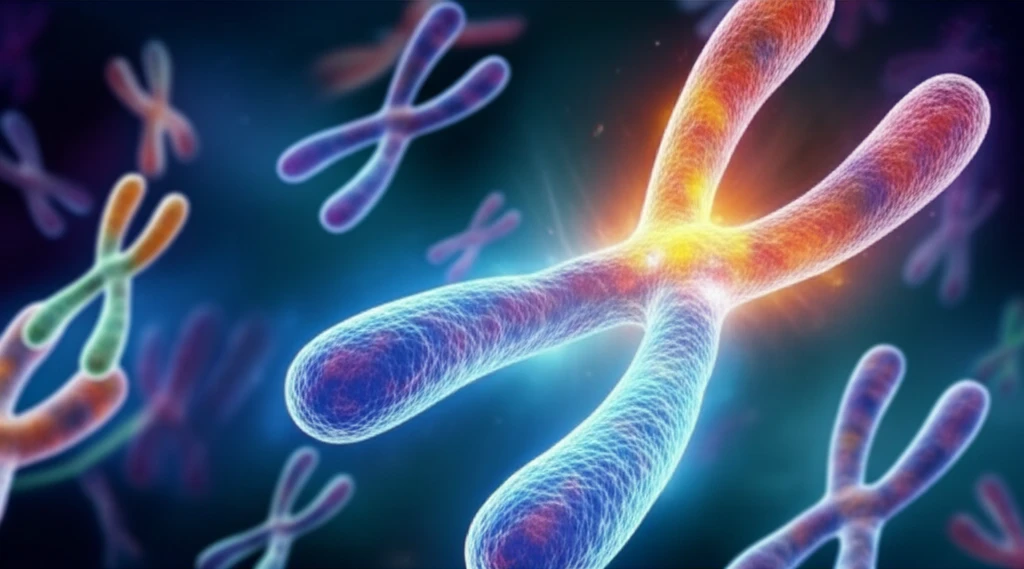
This translocation involves the exchange of genetic material between chromosome X and chromosome 2, specifically at the q11 band on chromosome X and the p23 band on chromosome 2. The result is a fusion between the MSN gene on chromosome X and the ALK gene on chromosome 2, creating a hybrid gene that drives abnormal cell growth and proliferation.
This article will explore the depths of t(X;2)(q11;p23) translocation, drawing upon the foundational research to provide a comprehensive overview of its genetic underpinnings, clinical characteristics, and therapeutic implications. We aim to shed light on this rare genetic event, making it accessible and understandable for a broad audience, while retaining the scientific rigor necessary for accuracy and depth.
Understanding the Genetic Players: MSN and ALK
To fully grasp the significance of the t(X;2)(q11;p23) translocation, it's crucial to understand the roles of the individual genes involved: MSN and ALK. Moesin (MSN), located on the X chromosome at Xq11, encodes a protein that acts as a crucial link between the plasma membrane and the actin cytoskeleton. This protein plays a vital role in cell shape, movement, and adhesion.
- MSN (Moesin): A cytoskeleton protein that connects the plasma membrane to the actin network, influencing cell shape and movement.
- ALK (Anaplastic Lymphoma Kinase): A receptor tyrosine kinase involved in cell growth and survival. When dysregulated, it can drive cancer development.
The Future of ALK-Targeted Therapies
While t(X;2)(q11;p23) is a rare translocation, its study provides valuable insights into the pathogenesis of ALK-positive lymphomas. Further research is needed to fully understand the clinical implications of this translocation and to develop targeted therapies that can effectively inhibit the activity of the MSN-ALK fusion protein. As our understanding of cancer genetics deepens, the potential for personalized and effective treatments for even the rarest of genetic anomalies continues to grow.