
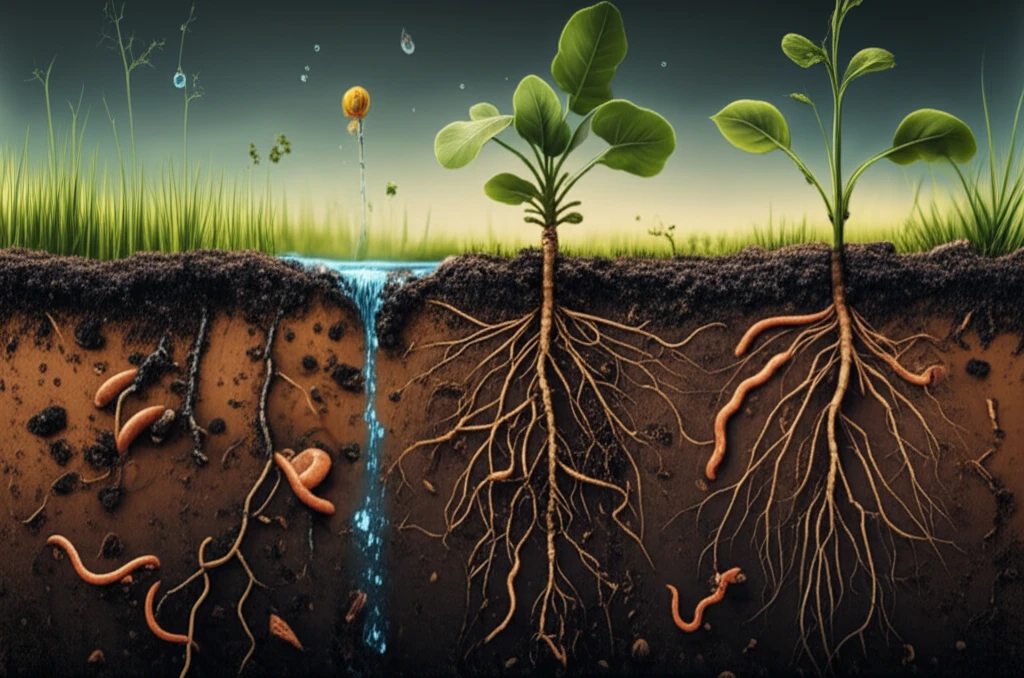
Diverse agricultural landscape showing healthy soil, roots, and water infiltration.

Unlocking the Secrets of Soil: How Land Management Impacts Your Farm's Future

"Dive into the groundbreaking research revealing how different farming practices affect soil health, water infiltration, and carbon storage."


Healthy soil is the backbone of any successful farm. It's not just dirt; it's a complex ecosystem that supports plant life, regulates water flow, and stores carbon. But intensive farming practices can degrade this vital resource, leading to erosion, reduced fertility, and decreased productivity. Understanding how different land management strategies affect soil health is crucial for creating sustainable agricultural systems.

New research from Brazil sheds light on this critical issue. Scientists investigated the impact of various land uses – from untouched native vegetation to eucalyptus plantations and no-till cropping systems – on the hydro-physical properties and organic carbon content of a common soil type called a Yellow Oxysol. Their findings offer valuable insights for farmers looking to improve their soil and build a more resilient operation.

The study focused on the Triângulo Mineiro region, a significant agricultural area in Brazil. By comparing areas under different management systems, the researchers were able to pinpoint specific practices that promote soil health and those that lead to degradation. This research provides a roadmap for farmers seeking to optimize their land management for long-term sustainability.

How Do Different Land Management Systems Impact Soil?

Diverse agricultural landscape showing healthy soil, roots, and water infiltration.

The researchers evaluated four different land management systems:

  • Native Cerrado: A preserved area with typical native vegetation, untouched for over 30 years. This served as the baseline for ideal soil conditions.

  • Eucalyptus Plantation: A 30-year-old eucalyptus forest, unfertilized and uncultivated since planting.
  • No-Till Corn: Corn grown using a no-till system, intercropped with pasture.
  • No-Till Pasture: Brachiaria grass intercropped with corn, managed with cattle, and fertilized annually with turkey litter.
The team analyzed several key soil properties, including:

What Does This Mean for Your Farm?

The study's findings highlight the importance of choosing land management practices that support soil health. No-till systems, particularly when combined with pasture, can help restore organic carbon levels and improve soil structure. While native vegetation provides the best benchmark, incorporating elements of natural systems into your farming practices can lead to significant improvements in soil health and long-term sustainability. Prioritizing practices that minimize soil disturbance, enhance organic matter, and promote water infiltration is key to building a resilient and productive farm.

About this Article -

This article was crafted using a human-AI hybrid and collaborative approach. AI assisted our team with initial drafting, research insights, identifying key questions, and image generation. Our human editors guided topic selection, defined the angle, structured the content, ensured factual accuracy and relevance, refined the tone, and conducted thorough editing to deliver helpful, high-quality information.See our About page for more information.

Everything You Need To Know

1

What are the key soil properties evaluated in the research?

The research team analyzed crucial soil properties to assess the impact of different land management systems. Although the specifics of each property were not listed, the main focus was on the hydro-physical properties and organic carbon content within the Yellow Oxysol soil. This involved assessing how well the soil structure handled water, and the amount of carbon stored within it.

2

What were the different land management systems studied and what did they involve?

The study examined four distinct land management systems. The first was the "Native Cerrado," a preserved area with original vegetation serving as a benchmark for ideal soil conditions. Following this was a "Eucalyptus Plantation," a 30-year-old unfertilized and uncultivated forest. The third system focused on "No-Till Corn," intercropped with pasture, and the final system assessed "No-Till Pasture," Brachiaria grass combined with corn, managed with cattle, and fertilized with turkey litter.

3

How does the research explain the impact of land management choices on a farm's future?

The research underscores that land management decisions directly influence the health and productivity of a farm. The choice of practices, such as the shift from intensive farming to no-till systems or the implementation of intercropping with pasture, impacts soil health. The study specifically points out how these choices affect water infiltration and carbon storage, which are crucial factors in long-term sustainability. By adopting practices that prioritize soil health, farmers can build a more resilient and productive operation, leading to positive implications for the farm's future.

4

Why is healthy soil important, and what are the consequences of its degradation?

Healthy soil is the foundation of a successful farm, serving as a complex ecosystem that supports plant life, regulates water flow, and stores carbon. It is not just dirt; it is a living system. Intensive farming practices can degrade this vital resource, leading to soil erosion, reduced fertility, and decreased overall productivity. Understanding and implementing land management strategies that support soil health is, therefore, crucial for sustainable agriculture, ensuring the long-term viability of the farm.

5

What are the specific benefits of no-till systems, particularly when combined with pasture, according to the study?

According to the research, no-till systems, especially when integrated with pasture, offer significant benefits for soil health. These practices help restore organic carbon levels in the soil and improve its overall structure. While native vegetation provides the ideal benchmark, incorporating elements of natural systems into farming practices can lead to improvements in soil health and long-term sustainability, maximizing water infiltration and soil carbon content. These strategies provide the foundations for a resilient and productive farm.

Newsletter Subscribe

Subscribe to get the latest articles and insights directly in your inbox.