
Unlocking the Secrets of Mold: How Aflatoxins Impact Your Health and Food Safety

"Explore the hidden world of aflatoxins, powerful toxins produced by molds that can contaminate our food supply and pose significant health risks. Learn how these toxins are produced, the foods they affect, and what's being done to protect you."
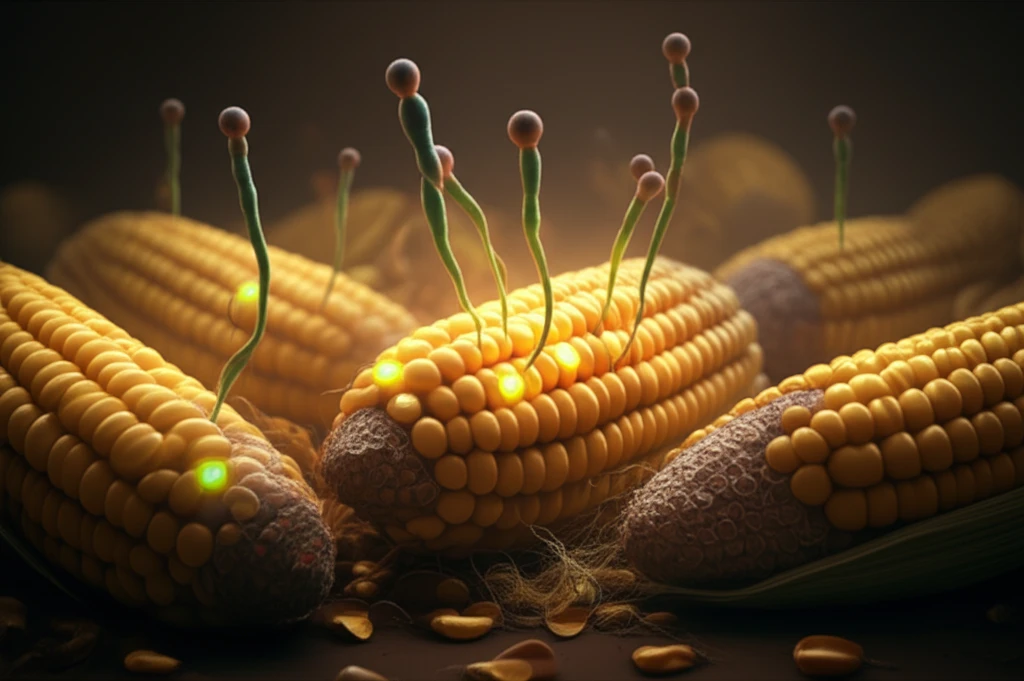
Imagine biting into your favorite snack, unaware that it's harboring a hidden danger. This danger comes in the form of aflatoxins, toxic compounds produced by certain types of molds, primarily Aspergillus flavus and Aspergillus parasiticus. These molds thrive in warm, humid conditions, often contaminating crops like peanuts, corn, and spices.
Aflatoxins aren't just a minor inconvenience; they are potent carcinogens that can have serious health implications for both humans and animals. Understanding where these toxins come from, how they affect our food, and what steps are being taken to mitigate their risk is crucial for protecting public health.
While the complete elimination of aflatoxins from our food supply might be an unrealistic goal, scientists and regulatory bodies around the world are constantly working to minimize their presence and impact. This article will explore the fascinating world of aflatoxins, shedding light on their formation, the foods they target, and the innovative strategies being developed to keep our food safe.
What Makes Aflatoxins So Dangerous?
Aflatoxins stand out due to their significant toxicity and prevalence. These toxins can lead to a range of health issues, including liver damage, immune system suppression, and an increased risk of liver cancer. The severity of these effects depends on the level of exposure, duration, and individual susceptibility.
- Aflatoxin B1 (AFB1): The most toxic and most commonly found aflatoxin.
- Aflatoxin B2 (AFB2): Similar to AFB1 but less potent.
- Aflatoxin G1 (AFG1) and Aflatoxin G2 (AFG2): Also present in contaminated foods, with varying levels of toxicity.
- Aflatoxin M1 (AFM1) and Aflatoxin M2 (AFM2): Found in milk and dairy products when livestock ingest contaminated feed. These are hydroxylated forms of AFB1 and AFB2.
- Aflatoxin GM1 and Aflatoxin GM2: Less common variations, also resulting from mold metabolism.
The Path Forward: Continuous Vigilance and Innovation
The fight against aflatoxins requires a multi-pronged approach, including ongoing research, stringent regulations, and innovative technologies. By continuing to invest in these areas, we can minimize the risk of aflatoxin contamination and protect the health of people and animals worldwide. Continuous monitoring, improved detection methods, and the development of resistant crop varieties are all crucial components of this ongoing effort.