
Unlocking the Secrets of Cancer: How a Tiny RNA Molecule Could Change Everything

"Groundbreaking research reveals how a specific RNA molecule, SNHG5, influences the behavior of colorectal cancer cells, opening new avenues for treatment and understanding."
Cancer, a disease that touches so many lives, continues to challenge scientists and medical professionals worldwide. Despite advancements in treatment and diagnostics, the fight against cancer demands a constant stream of new discoveries. Colorectal cancer, in particular, remains a significant global health concern, highlighting the urgent need for innovative research that can lead to more effective interventions. Recent findings in the realm of RNA research have brought a glimmer of hope, suggesting a potentially pivotal role for a specific molecule in the fight against this disease.
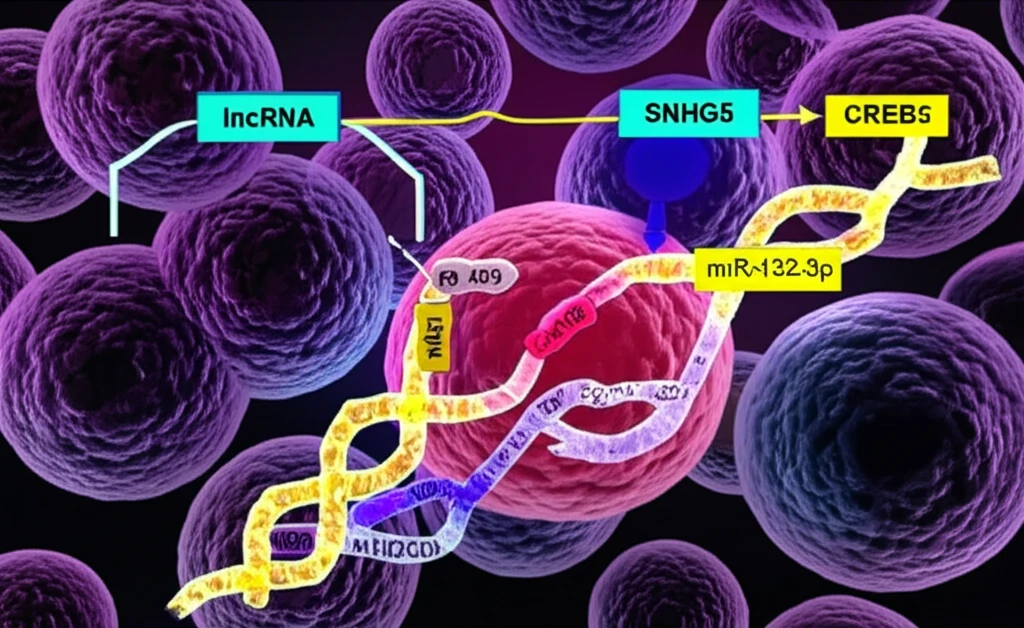
This article will explore the groundbreaking research surrounding a long non-coding RNA (lncRNA) molecule known as SNHG5. Scientists have discovered that SNHG5 significantly impacts the behavior of colorectal cancer cells, influencing their proliferation, metastasis, and migration. Furthermore, the research sheds light on the intricate molecular mechanisms through which SNHG5 exerts its effects, offering a deeper understanding of the disease's progression and potential therapeutic targets.
Join us as we unpack the complexities of this research, examining the key findings, and exploring the potential implications for future cancer treatments. This article aims to break down the science into an accessible format, so you can understand the significance of this research and its implications for the future of cancer care.
The Power of RNA: Unraveling the Role of SNHG5 in Colorectal Cancer
RNA, or ribonucleic acid, has emerged as a critical player in understanding and treating diseases. Unlike DNA, which carries the genetic code, RNA molecules perform various functions within cells, including protein synthesis. Recent research has focused on non-coding RNAs, which do not code for proteins but still play important roles in regulating cellular processes. One such molecule is lncRNA SNHG5, which has been identified as a key player in colorectal cancer development.
- SNHG5 Promotes Cancer Cell Growth: SNHG5 actively contributes to the uncontrolled proliferation of colorectal cancer cells, leading to tumor expansion.
- Enhances Metastasis and Migration: The molecule increases the ability of cancer cells to invade surrounding tissues and migrate to distant sites, increasing the risk of the cancer spreading.
- Inhibits Apoptosis: SNHG5 suppresses the natural process of programmed cell death (apoptosis), allowing cancer cells to survive and evade the body's defenses.
Looking Ahead: The Future of Cancer Treatment
The discovery of SNHG5's role in colorectal cancer offers exciting possibilities for new therapeutic strategies. By understanding how SNHG5 functions, scientists may be able to develop targeted therapies that disrupt its activity, potentially slowing or even stopping the progression of the disease. This research underscores the importance of continued investment in cancer research, as it holds the potential to transform the lives of individuals affected by this devastating illness. As we continue to unravel the complexities of cancer, hope lies in the promise of innovative treatments that can offer a brighter future.