
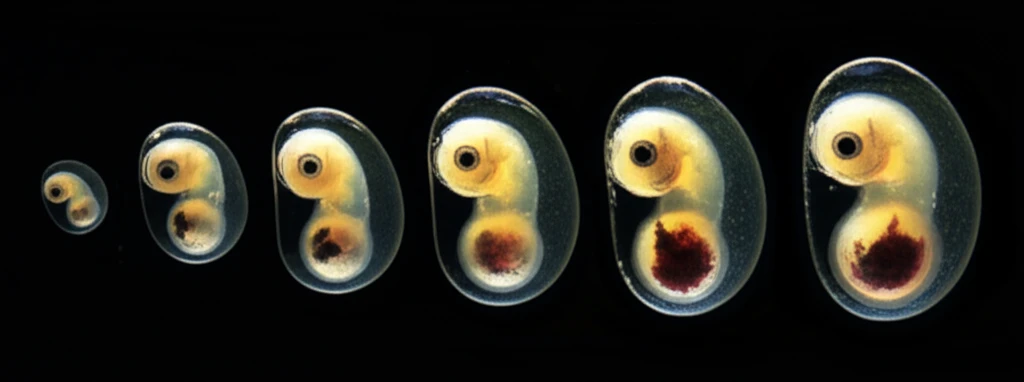
Betta splendens embryonic development stages.

Unlocking the Secrets of Betta Breeding: A Comprehensive Guide to Embryonic Development

"Dive into the fascinating world of Betta splendens and discover the key stages of their embryonic development, essential for successful breeding and conservation."


Aquaculture, especially ornamental fish production, faces high mortality rates, often due to water quality issues. Understanding the morphological development, growth patterns, and behavior of fish species is vital for managing their physiological and ecological needs effectively. Betta splendens, native to Southeast Asia and known for its beauty and hardiness, is a popular ornamental fish. This makes detailed knowledge of its development crucial for breeders and conservation efforts.

In Brazil, Betta production is significant, but comprehensive scientific literature on their embryonic development remains scarce. This study aims to fill this gap by providing a detailed account of Betta splendens embryogenesis, offering valuable insights into the early life stages of these fish. By understanding the ontogeny—the development from fertilization to hatching—breeders can better manage and maximize the yield of viable offspring.

This article will explore the various stages of Betta splendens embryonic development, providing a practical guide for identifying viable eggs and larvae. The findings are based on meticulous observation and documentation, offering breeders and enthusiasts the tools they need to improve their breeding practices.

From Fertilization to Hatching: A Step-by-Step Guide to Betta Embryonic Development

Betta splendens embryonic development stages.

The study meticulously observed the embryonic development of Betta splendens, starting from the moment of fertilization. Eggs were collected from breeding pairs in controlled aquarium settings. The process was carefully monitored under light microscopes to identify and document each developmental stage. Key parameters, such as water temperature and oxygen levels, were maintained to ensure optimal conditions for embryonic development.

The embryonic development of Betta splendens can be divided into five distinct periods, each characterized by specific morphological changes:

  • Cleavage: This initial phase involves the division of the fertilized egg into multiple cells, known as blastomeres. The process begins shortly after fertilization and continues until a cluster of cells is formed.
  • Blastula: As cell division progresses, the blastomeres arrange themselves into a spherical structure called the blastula. This stage marks a significant transition in the embryo's development.
  • Gastrulation: During gastrulation, the cells begin to differentiate and form distinct layers. This process is crucial for establishing the basic body plan of the fish.
  • Organogenesis: In this phase, the major organs and tissues develop. The formation of the eyes, heart, and other vital structures occurs during organogenesis.
  • Pre-hatching: The final stage before hatching involves the maturation of the embryo and preparation for life outside the egg. Key developments include the formation of somites and the development of pigmentation.
The first observable change was the movement of cytoplasm towards the animal pole, leading to the formation of the blastoderm within 30 minutes post-fertilization. Cleavage was meroblastic, meaning that only a portion of the egg divides, typical of teleost fish. The timing of these stages was meticulously recorded in hours post-fertilization (HPF) and hours-degrees post-fertilization (HDPF), providing a precise timeline for embryonic development.

Breeding Success: Applying Embryonic Development Knowledge

Understanding the embryonic development of Betta splendens is crucial for improving breeding outcomes. By carefully monitoring water conditions and recognizing the key developmental stages, breeders can enhance the survival rates of their fish. This knowledge contributes not only to commercial success but also to the conservation of this beautiful species.

About this Article -

This article was crafted using a human-AI hybrid and collaborative approach. AI assisted our team with initial drafting, research insights, identifying key questions, and image generation. Our human editors guided topic selection, defined the angle, structured the content, ensured factual accuracy and relevance, refined the tone, and conducted thorough editing to deliver helpful, high-quality information.See our About page for more information.

This article is based on research published under:

DOI-LINK: 10.1590/s1519-99402012000300025, Alternate LINK

Title: Ontogeny And Embryonic Description Of Betta Splendens, Perciformes (Regan, 1910)

Subject: Animal Science and Zoology

Journal: Revista Brasileira de Saúde e Produção Animal

Publisher: FapUNIFESP (SciELO)

Authors: Shaytner Campos Duarte, Breno De Faria E Vasconcellos, Manuel Vazquez Vidal Júnior, Andre Veloso Ferreira, Douglas Da Cruz Mattos, Allex Trindade Branco

Published: 2012-09-01

Everything You Need To Know

1

What are the key stages of embryonic development in Betta splendens?

The embryonic development of Betta splendens begins with fertilization, followed by a series of distinct periods: Cleavage, Blastula, Gastrulation, Organogenesis, and Pre-hatching. These stages involve the division of the fertilized egg into blastomeres, forming a blastula, cell differentiation, the development of organs, and finally, preparation for hatching. Understanding these stages allows breeders to monitor and support the fish's early development, significantly increasing survival rates and contributing to successful breeding outcomes.

2

What happens during the Cleavage stage in the embryonic development of Betta splendens?

The Cleavage stage involves the initial division of the fertilized egg into multiple cells called blastomeres. This process is the very first step after fertilization in the embryonic development of Betta splendens. It leads to the formation of a cluster of cells and lays the foundation for subsequent developmental stages. Understanding the Cleavage stage is crucial as it sets the stage for the rest of the fish's development, indicating the viability of the egg and the potential for a successful outcome. The nature of the Cleavage, specifically being meroblastic in Betta splendens, is characteristic of teleost fish, highlighting the significance of the process in understanding the species' developmental biology.

3

What is Gastrulation and why is it important in the development of Betta splendens?

Gastrulation is the stage where cells of the Betta splendens embryo begin to differentiate and form distinct layers, a critical process for establishing the fish's basic body plan. This involves the movement of cells and the formation of structures that define the future body of the Betta splendens. Successful gastrulation is vital for the fish's proper development. Failure to do so can lead to developmental defects, so careful management of conditions during this period is necessary. It's a period of high sensitivity where the embryo's fate is largely determined, and it is necessary for successful breeding.

4

What occurs during Organogenesis in the development of Betta splendens?

Organogenesis in Betta splendens is when the major organs and tissues develop, including the formation of the eyes, heart, and other vital structures. This is a critical phase where the basic functionalities of the fish are established. The development of these organs directly influences the health and viability of the Betta splendens. Monitoring the progression of Organogenesis provides insight into the health of the embryo, enabling breeders to assess the effectiveness of their breeding practices. The successful completion of this stage is essential for the fish's survival and long-term health, and also indicates if the breeding practices are optimal.

5

Why is understanding the embryonic development of Betta splendens important?

Understanding the embryonic development of Betta splendens is important for improving breeding outcomes, conservation, and the aquaculture of this fish. By carefully monitoring water conditions and recognizing developmental stages like Cleavage, Blastula, Gastrulation, Organogenesis, and Pre-hatching, breeders can enhance the survival rates of their fish. This knowledge contributes not only to commercial success but also to the preservation of Betta splendens, particularly in regions like Brazil, where production is significant. Knowledge of each phase, from the earliest changes to the eventual hatching, offers a practical guide for identifying viable eggs and larvae, increasing the chances of success.

Newsletter Subscribe

Subscribe to get the latest articles and insights directly in your inbox.