
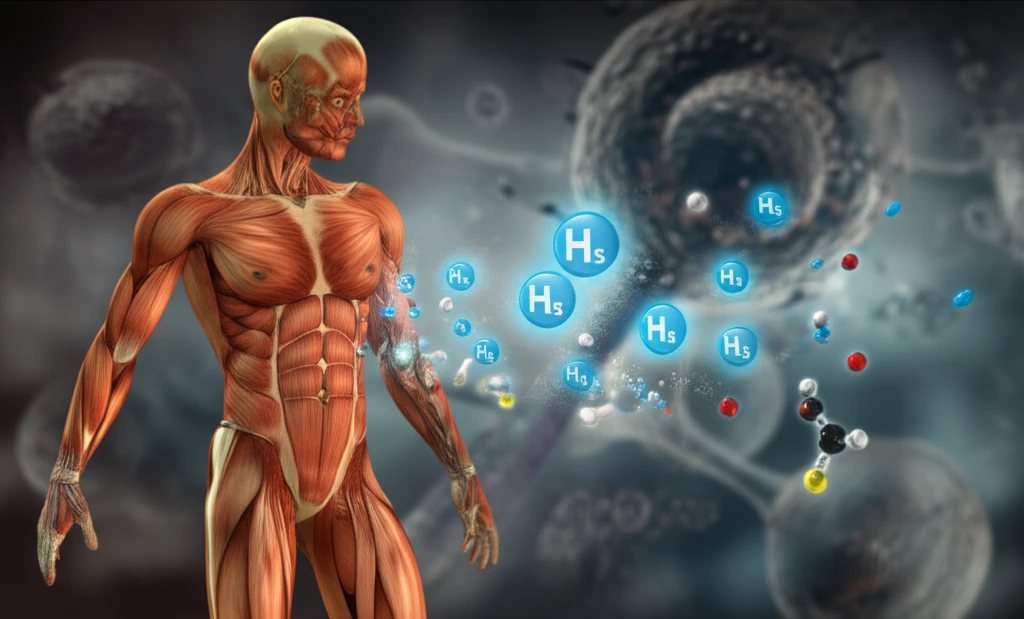
Unlocking the Power of Hydrogen Sulfide: A New Hope for Muscle Health?

"Could this simple molecule be the key to combating muscle wasting and dysfunction caused by a common metabolic issue?"
In today's fast-paced world, maintaining muscle health is crucial for overall well-being. However, a growing number of individuals face muscle dysfunction due to elevated levels of homocysteine, a condition known as hyperhomocysteinemia (HHcy). This metabolic imbalance can lead to oxidative stress and endoplasmic reticulum (ER) stress, ultimately causing muscle wasting and impaired function.
While scientists have long recognized the link between HHcy and muscle problems, effective treatment options have remained elusive. Existing strategies often fall short of addressing the root causes and fail to provide long-term relief. This is where the promising potential of hydrogen sulfide (H2S) comes into play.
Emerging research suggests that H2S, a naturally occurring gasotransmitter, may hold the key to restoring muscle homeostasis in individuals with HHcy. This article delves into the intricate mechanisms by which H2S combats oxidative stress, reduces ER stress, and promotes muscle regeneration, offering a glimmer of hope for those seeking innovative solutions to muscle dysfunction.
How Does Hyperhomocysteinemia Wreak Havoc on Muscles?
To understand how H2S can help, it's essential to grasp the damaging effects of HHcy on skeletal muscle. Think of your muscles as finely tuned engines that require a delicate balance of fuel and maintenance. HHcy throws this balance off, leading to:
- ER Stress Buildup: The endoplasmic reticulum, responsible for protein folding, becomes overwhelmed, leading to a buildup of misfolded proteins.
- Impaired Angiogenesis: HHcy hinders the formation of new blood vessels, depriving muscles of vital oxygen and nutrients.
- Cellular Housekeeping Disrupted: Apoptosis, a normal process for removing damaged cells, goes awry, leading to excessive muscle cell death.
The Future of Muscle Health: Harnessing the Power of H2S
The research discussed illuminates the potential of H2S as a therapeutic agent for combating HHcy-mediated muscle dysfunction. By targeting multiple pathways involved in muscle damage, H2S offers a multi-pronged approach to restore muscle homeostasis.
However, further research is necessary to fully unlock the therapeutic potential of H2S. Key areas for future investigation include: Developing animal models that closely mimic the conditions observed in HHcy patients; Identifying optimal H2S delivery methods; and Further elucidating the intricate molecular mechanisms involved in H2S-mediated muscle protection.
Despite the remaining questions, the findings suggest that H2S represents a promising avenue for developing novel treatments for muscle wasting and dysfunction associated with HHcy. By continuing to explore the potential of this remarkable molecule, scientists may pave the way for a future where muscle health is within reach for all.