
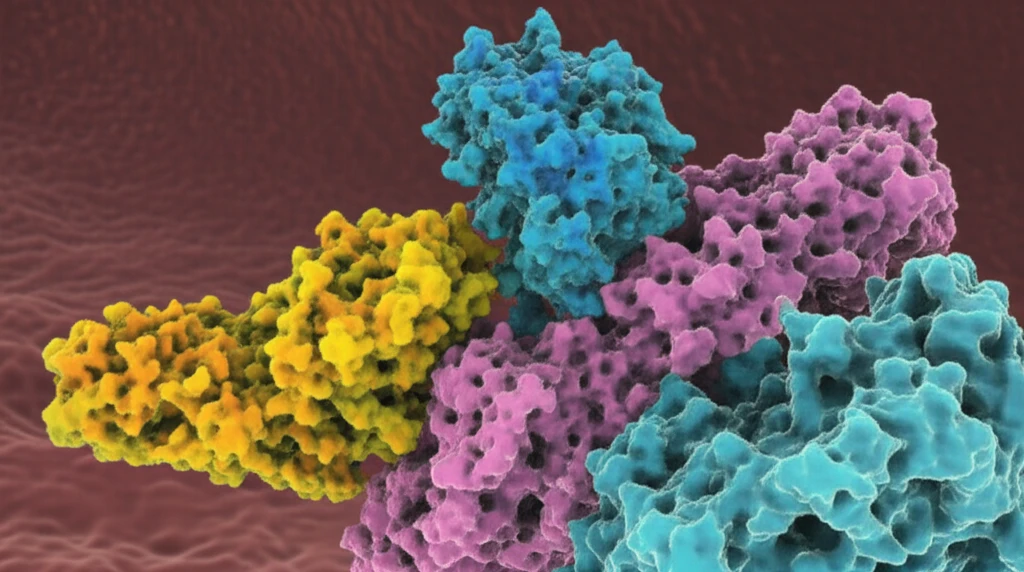
Microscopic view of MIF and D-DT proteins in a human lung.

Unlocking the Potential: How MIF and D-DT Could Revolutionize Treatment for Immune and Respiratory Diseases

"Targeting these key proteins may offer new hope for autoimmune conditions and chronic respiratory illnesses."


Macrophage migration inhibitory factor (MIF) and D-dopachrome tautomerase (D-DT) are drawing increasing attention in the world of medical research. These proteins, involved in a wide array of bodily functions, are now considered potential therapeutic targets, especially for immune-inflammatory and chronic respiratory diseases. But what exactly are MIF and D-DT, and why are they so important?

MIF is a protein that functions as a cytokine, enzyme, endocrine regulator, and chaperone molecule. It binds to the cell-surface receptor CD74, which, in association with CD44, triggers a cascade of signals inside the cell. MIF also acts as a ligand for chemokine receptors like CXCR2, CXCR4, and CXCR7. Complementing MIF is D-DT, a more recently identified member of the MIF superfamily.

The combined pharmacological and clinical properties of MIF and D-DT suggest that inhibiting them simultaneously could yield synergistic benefits. This article will focus on the roles these proteins play in human immune-inflammatory, autoimmune, and chronic respiratory diseases, providing an updated look at the progress in identifying specific small-molecule inhibitors targeting these proteins.

Decoding MIF and D-DT: What You Need to Know

Microscopic view of MIF and D-DT proteins in a human lung.

MIF, first identified in the late 1960s, gets its name from its ability to inhibit macrophage migration. This multifaceted protein exhibits properties of a cytokine, endocrine molecule, chaperone-like protein, and enzyme [1,2]. Beyond its role in inflammation and immunity, MIF is also a hormone released by the pituitary and adrenal glands during hypothalamic-pituitary-adrenal (HPA) axis activation. It also serves as a cytosolic chaperone and displays intrinsic enzymatic activities, such as D-dopachrome, phenylpyruvate tautomerase, and thiol-protein oxidoreductase activities.

When MIF binds to its cell membrane receptor, CD74, it recruits the glycoprotein CD44, initiating intracellular signaling through pathways like MAPK/ERK, Src, PI3K/Akt, and NF-κB [2,3]. Additionally, MIF acts as a ligand for chemokine receptors CXCR2, CXCR4, and CXCR7. D-DT, the second member of the MIF family, was recently characterized [4]. Both similarities and differences between MIF and D-DT have been reported.

  • Similarities: Both catalyze tautomerization, with D-DT producing 5,6-dihydroxyindole from keto-enol tautomerization and decarboxylation.
  • Differences: D-DT is less enzymatically active than MIF, engages the CD74 receptor differently, and lacks the pseudo-(E)LR motif for CXCR2 and CXCR4 binding [4,5].
These structural differences could explain why MIF and D-DT sometimes have synergistic actions and other times display opposite effects. For example, while both are present in similar concentrations in plasma, LPS-stimulated macrophages produce 20-fold more MIF than D-DT [4]. Further research is essential to fully understand D-DT’s biological activity and develop therapeutic strategies that target the MIF superfamily signaling pathway.

The Future of MIF and D-DT in Therapy

MIF and D-DT are multifunctional proteins with a range of functions, including immunomodulatory properties, and their expressions are often upregulated in several diseases. In addition, these two proteins could be effective biomarkers or promising therapeutic target candidates in several human disorders.

Whether high levels of these cytokines represent a cause or an effect of the inflammatory milieu associated with disease pathogenesis remains unknown. Current efforts aim to develop specific strategies to restore the expression of MIF and/or D-DT and a better understanding of the overall risk:benefit ratio of these different approaches.

Despite the report of different classes of potent and selective small-molecule MIF inhibitor directed against the MIF tautomerase active site, none have been approved for clinical use. One of the current challenges is to design such inhibitors with optimized drug-like properties for clinical trials. To date, the most advanced anti-MIF therapy is imalumab, an anti-MIF antibody currently in a clinical trial for cancer treatment.

About this Article -

This article was crafted using a human-AI hybrid and collaborative approach. AI assisted our team with initial drafting, research insights, identifying key questions, and image generation. Our human editors guided topic selection, defined the angle, structured the content, ensured factual accuracy and relevance, refined the tone, and conducted thorough editing to deliver helpful, high-quality information.See our About page for more information.

This article is based on research published under:

DOI-LINK: 10.1016/j.drudis.2018.11.003, Alternate LINK

Title: Role Of Mif And D-Dt In Immune-Inflammatory, Autoimmune, And Chronic Respiratory Diseases: From Pathogenic Factors To Therapeutic Targets

Subject: Drug Discovery

Journal: Drug Discovery Today

Publisher: Elsevier BV

Authors: Sven Günther, Paolo Fagone, Gaël Jalce, Atanas G. Atanasov, Christophe Guignabert, Ferdinando Nicoletti

Published: 2019-02-01

Everything You Need To Know

1

What is MIF, and what are its primary functions in the body?

MIF, or Macrophage Migration Inhibitory Factor, is a protein that acts as a cytokine, enzyme, endocrine regulator, and chaperone molecule. It's named for its ability to inhibit macrophage migration. MIF binds to the CD74 receptor on cells, which then interacts with CD44 to trigger intracellular signaling pathways. It also acts as a ligand for chemokine receptors like CXCR2, CXCR4, and CXCR7, influencing inflammatory and immune responses. Its diverse functions mean it plays a role far beyond just inhibiting macrophage migration.

2

What is D-DT, and how does it compare to MIF in terms of function and structure?

D-DT, or D-dopachrome tautomerase, is a member of the MIF superfamily. Like MIF, D-DT catalyzes tautomerization, specifically producing 5,6-dihydroxyindole. While similar to MIF, D-DT is less enzymatically active, engages the CD74 receptor differently, and does not have the pseudo-(E)LR motif required for CXCR2 and CXCR4 binding. These differences suggest that while both proteins can work together, they may also have opposing effects depending on the specific biological context.

3

In what key ways do MIF and D-DT differ from each other, and how do these differences impact their combined effects?

MIF and D-DT share the ability to catalyze tautomerization reactions; D-DT produces 5,6-dihydroxyindole, whereas MIF is less specific. However, they differ in enzymatic activity, receptor interaction with CD74, and chemokine receptor binding. MIF engages with CXCR2 and CXCR4, which D-DT doesn't. The structural differences are important because they affect how the proteins function individually and together in immune and inflammatory responses, contributing to the potential for synergistic or opposing effects.

4

How could targeting MIF and D-DT potentially change the landscape of treatments for immune and respiratory diseases?

Targeting MIF and D-DT could revolutionize the treatment of immune and respiratory diseases because these proteins are upregulated in several diseases and they possess immunomodulatory properties. The combined pharmacological and clinical properties of MIF and D-DT suggest that inhibiting them simultaneously could yield synergistic benefits. By inhibiting MIF and D-DT, it may be possible to modulate the immune response and reduce inflammation in autoimmune conditions and chronic respiratory illnesses. Developing small-molecule inhibitors that specifically target these proteins could lead to novel therapeutic strategies with fewer side effects than current treatments.

5

What is the focus of current research regarding MIF and D-DT, and what are the potential therapeutic strategies being explored?

Current research focuses on identifying small-molecule inhibitors that specifically target MIF and D-DT. The goal is to develop pharmacological strategies that can selectively inhibit their activity, either individually or in combination, to treat immune-inflammatory and chronic respiratory diseases. Understanding the structural differences between MIF and D-DT is essential for designing specific inhibitors that can effectively modulate their activity without affecting other proteins. Further research is needed to fully understand the biological activity of D-DT and its interaction with MIF to develop effective therapeutic strategies.

Newsletter Subscribe

Subscribe to get the latest articles and insights directly in your inbox.