
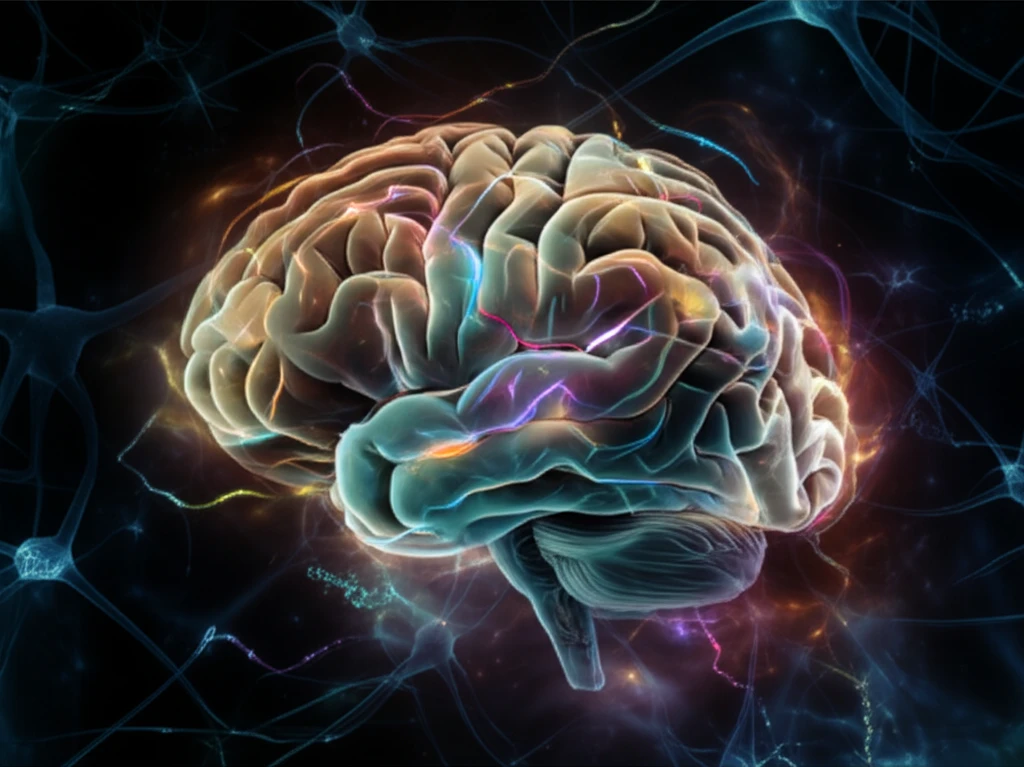
Illustration of a brain with glowing pathways interwoven with colorful microRNAs, symbolizing the role of these tiny molecules in memory and learning.

Unlocking the Mind: How MicroRNAs Could Revolutionize Memory and Learning

"Dive into the groundbreaking research that's revealing the powerful role of microRNAs in shaping our memories and cognitive abilities."


Our brains are incredible, complex networks constantly adapting and evolving. At the heart of this intricate system lies the ability to learn and remember – the very essence of who we are. For a long time, scientists have been trying to figure out what the exact process is that allow us to make memories and learn, but recent research has shown that some tiny molecules called microRNAs might be the key.

MicroRNAs, or miRNAs, are small, non-coding RNA molecules that play a crucial role in regulating gene expression. They act as master controllers, fine-tuning the activity of genes involved in various biological processes, including the formation and storage of memories. As we learn more about these tiny regulators, we begin to understand just how much influence they have.

In this article, we'll dive into the fascinating world of microRNAs and their impact on learning and memory. We'll explore the latest scientific findings, examine the implications for treating memory-related disorders, and ponder the potential for enhancing cognitive function. Get ready to unlock the secrets of your mind!

The MicroRNA Marvel: Tiny Molecules, Huge Impact

Illustration of a brain with glowing pathways interwoven with colorful microRNAs, symbolizing the role of these tiny molecules in memory and learning.

MicroRNAs, or miRNAs, are like tiny, yet powerful, conductors of the genetic orchestra within our brain cells. These small molecules, typically around 22 nucleotides long, don't directly code for proteins. Instead, they fine-tune gene expression by targeting messenger RNAs (mRNAs), which are the blueprints for protein production.

The process of how miRNAs work is pretty fascinating. They attach themselves to specific mRNA molecules, either blocking their ability to be translated into proteins or marking them for degradation. This delicate balance allows miRNAs to regulate a wide range of biological processes, including synaptic plasticity, the brain's ability to change and adapt at the connections between neurons.

  • Gene Silencing: MicroRNAs silence genes by binding to messenger RNA (mRNA).
  • mRNA Degradation: Bound mRNA can be broken down, reducing protein production.
  • Translation Inhibition: miRNAs can block the mRNA's ability to be translated into proteins.
  • Brain-Specific Expression: Many miRNAs are highly expressed in the central nervous system.
  • Regulation of Synaptic Plasticity: miRNAs play important roles in synaptic plasticity, learning, and memory.
The discovery of miRNAs has opened up new avenues for understanding how our brains function, how memories are formed, and how we can potentially treat disorders affecting memory and cognition. These microRNAs also have some great potential, making them a great area of focus for research.

The Future of Memory: A New Frontier

The study of microRNAs and their role in memory and learning is a rapidly evolving field. As researchers continue to unlock the secrets of these tiny molecules, we can expect exciting discoveries that will transform our understanding of the brain and pave the way for new treatments for memory disorders. From understanding the mechanisms of memory formation to developing therapies for cognitive impairment, the potential of microRNAs is truly remarkable.

About this Article -

This article was crafted using a human-AI hybrid and collaborative approach. AI assisted our team with initial drafting, research insights, identifying key questions, and image generation. Our human editors guided topic selection, defined the angle, structured the content, ensured factual accuracy and relevance, refined the tone, and conducted thorough editing to deliver helpful, high-quality information.See our About page for more information.

This article is based on research published under:

DOI-LINK: 10.1016/j.lfs.2017.08.033, Alternate LINK

Title: Research Progress On The Roles Of Micrornas In Governing Synaptic Plasticity, Learning And Memory

Subject: General Pharmacology, Toxicology and Pharmaceutics

Journal: Life Sciences

Publisher: Elsevier BV

Authors: Chang-Wei Wei, Ting Luo, Shan-Shan Zou, An-Shi Wu

Published: 2017-11-01

Everything You Need To Know

1

What exactly are microRNAs (miRNAs) and what is their primary function in the brain?

MicroRNAs (miRNAs) are small, non-coding RNA molecules, approximately 22 nucleotides long, that act as regulators of gene expression within brain cells. Instead of coding for proteins directly, microRNAs fine-tune which proteins are produced by binding to messenger RNAs (mRNAs). This binding can either block the mRNA's ability to be translated into proteins or mark the mRNA for degradation, effectively silencing the gene. They play a critical role in processes like synaptic plasticity, which is vital for learning and memory. Researching their potential is currently a hot topic.

2

How do microRNAs (miRNAs) influence synaptic plasticity, and why is this significant for memory and learning?

MicroRNAs (miRNAs) influence synaptic plasticity by regulating the expression of genes involved in the changes that occur at the synapses, the connections between neurons. Synaptic plasticity refers to the brain's ability to strengthen or weaken these connections over time in response to experience. By controlling the production of proteins involved in these synaptic changes, microRNAs play a critical role in the brain's ability to learn and form memories. Without appropriate microRNA function, synaptic plasticity could be impaired, leading to deficits in learning and memory capabilities.

3

In what specific ways can microRNAs (miRNAs) silence genes and affect protein production?

MicroRNAs (miRNAs) silence genes through two primary mechanisms. First, they can bind directly to messenger RNA (mRNA) molecules, physically blocking the ribosome from translating the mRNA into a protein; this is called translation inhibition. Second, microRNAs can mark the mRNA for degradation. The degradation leads to the mRNA being broken down, which prevents it from being translated into a protein. Both mechanisms effectively reduce the amount of protein produced from a specific gene, giving microRNAs precise control over cellular functions.

4

What are the potential implications of microRNA (miRNA) research for treating memory-related disorders, such as Alzheimer's disease?

Because microRNAs (miRNAs) play a significant role in regulating gene expression related to learning and memory, they represent a promising avenue for developing new treatments for memory-related disorders. For example, in Alzheimer's disease, certain microRNAs might be dysregulated, contributing to the cognitive decline. By identifying these specific microRNAs, researchers could potentially develop therapies to restore their normal function, either by increasing the levels of microRNAs that are downregulated or by blocking the activity of microRNAs that are upregulated. This could help improve synaptic function, reduce neuronal damage, and enhance memory and cognitive abilities in patients with such disorders. Further studies are needed to explore this fully.

5

Given that microRNAs (miRNAs) don't code for proteins, how were they discovered to have such a significant impact on brain function and cognitive abilities?

The discovery that microRNAs (miRNAs) have a significant impact on brain function and cognitive abilities emerged from advances in molecular biology and genomics. While microRNAs don't code for proteins, researchers found that they regulate gene expression by binding to messenger RNAs (mRNAs). These mRNAs are the templates for protein synthesis. Through careful experimentation, scientists observed that manipulating microRNA levels could alter the production of specific proteins involved in synaptic plasticity, neuronal development, and other critical brain functions. These changes subsequently affected cognitive processes like learning and memory. The realization that these tiny, non-coding molecules could exert such powerful control over gene expression revolutionized our understanding of gene regulation and opened up new avenues for exploring the complexity of brain function.

Newsletter Subscribe

Subscribe to get the latest articles and insights directly in your inbox.