
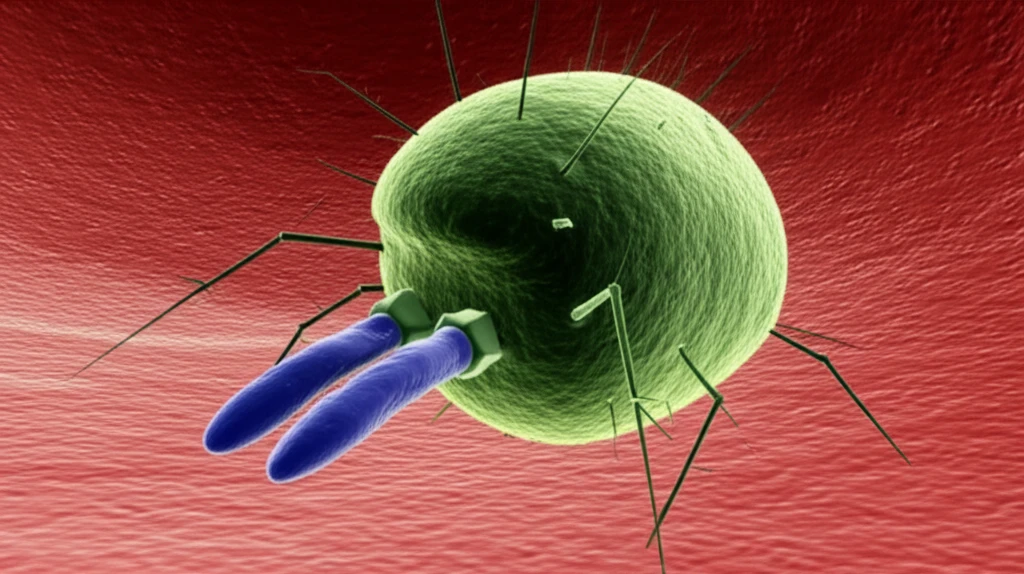
Unlocking the Malaria Mystery: How a Tiny Protein Could Revolutionize Treatment

"New research reveals how a specific protein helps malaria parasites invade our cells, paving the way for new treatments."
Malaria, a disease that continues to impact millions globally, has long plagued humanity. Despite advancements in treatment, drug resistance and the absence of a universally effective vaccine highlight the urgent need for innovative solutions. A recent scientific breakthrough offers a promising new avenue in the fight against this devastating disease, focusing on the intricate workings of the malaria parasite itself.
At the heart of this new research lies a tiny protein, PfSortilin, which plays a crucial role in how the malaria parasite invades human red blood cells. This protein is responsible for escorting vital proteins to the rhoptries, a critical component of the parasite's invasion machinery. Understanding PfSortilin's function offers new insight into the complex processes that allow malaria parasites to thrive in our bodies.
This article delves into this exciting discovery, unpacking the science behind PfSortilin and its potential implications for malaria treatment. We'll explore the parasite's life cycle, the rhoptries' role, and how targeting PfSortilin could lead to more effective and sustainable ways to combat malaria.
The Parasite's Playbook: Understanding Malaria's Invasion Tactics
Malaria, caused by parasites of the genus Plasmodium, is transmitted to humans through the bites of infected mosquitoes. Once inside the human body, the parasites target red blood cells, where they multiply and cause the symptoms of malaria, including fever, chills, and fatigue. The parasite's lifecycle is a complex interplay of stages, each with its unique strategies for survival and propagation.
- The Rhoptries: Specialized organelles in the parasite, crucial for invading red blood cells.
- Invasion Process: A complex, multistep process involving the sequential release of organelles.
- Protein Trafficking: The intricate process of transporting proteins within the parasite to their specific destinations.
A Brighter Future for Malaria Treatment
The discovery of PfSortilin's role in malaria parasite invasion represents a significant step forward in the fight against this disease. By understanding the intricate mechanisms that enable the parasite to thrive, scientists can develop targeted therapies that disrupt these processes. This research offers hope for a future where malaria is more effectively controlled and ultimately eradicated, providing relief to millions worldwide.