
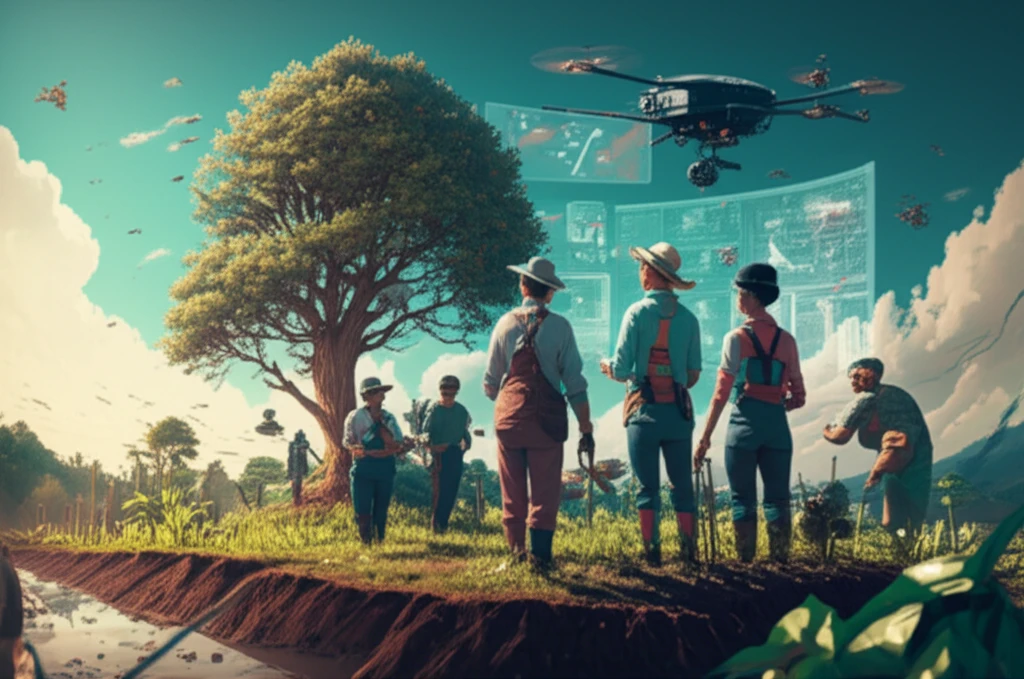
Unlocking the Future of Food: How Organic Farming is Revolutionizing Agriculture Across Europe

"From farm to fork, organic farming is not just a trend; it's a vital shift towards sustainable practices, knowledge sharing, and a healthier planet. Discover how European farmers are leading the charge in this agricultural revolution."
Organic farming, once a niche practice, is rapidly gaining momentum as a key player in the future of food production. Driven by increasing consumer demand for healthier, more sustainable food, and a growing awareness of the environmental impact of conventional agriculture, farmers across Europe are embracing organic methods. This isn't just about avoiding pesticides; it's a holistic approach that prioritizes soil health, biodiversity, and a deep understanding of the complex ecosystems that sustain our food.
At the heart of this agricultural revolution lies knowledge – how it's shared, how it's adapted, and how it's put into practice. Farmers are no longer isolated; they're part of a vibrant community, exchanging ideas, successes, and failures to continuously improve their methods. The internet and new technologies have opened up unprecedented opportunities for knowledge exchange, connecting farmers, researchers, advisors, and other practitioners in ways never before imagined.
This article explores how this knowledge sharing is unfolding, focusing on the experiences of organic farmers across Europe. We'll examine the tools and techniques they're using, the challenges they face, and the innovative ways they're building a more sustainable and resilient food system. From technical guides to online platforms, we'll uncover the key elements driving this transformation and how they are shaping the future of food production.
The Power of Shared Knowledge: How Farmers are Exchanging Expertise
The transition to organic farming is a journey of continuous learning. Unlike conventional farming, which often relies on standardized practices, organic agriculture demands a deep understanding of local conditions, soil health, and complex ecological interactions. This is where knowledge sharing becomes invaluable. Farmers are learning from each other, adapting practices to suit their specific environments, and constantly refining their methods.
- Workshops and Farm Visits: These face-to-face interactions provide opportunities for visual observation and in-depth discussions, allowing farmers to understand the context behind successful practices.
- Online Platforms and Tools: Websites, videos, and decision-support tools offer accessible ways for farmers and researchers to share experiences and practical implications.
- Focus on Context: The most effective tools emphasize the importance of understanding the specific conditions in which a practice is being implemented.
A Sustainable Future: The Road Ahead for Organic Farming
The organic farming movement is not just about producing food; it's about building a more resilient and sustainable future. By prioritizing knowledge sharing, embracing innovation, and putting farmers' experiences at the forefront, European agriculture is charting a course towards a healthier planet and a more secure food supply. As the demand for organic products continues to grow, the practices outlined in this article will be critical for the agricultural industry to thrive for years to come.