
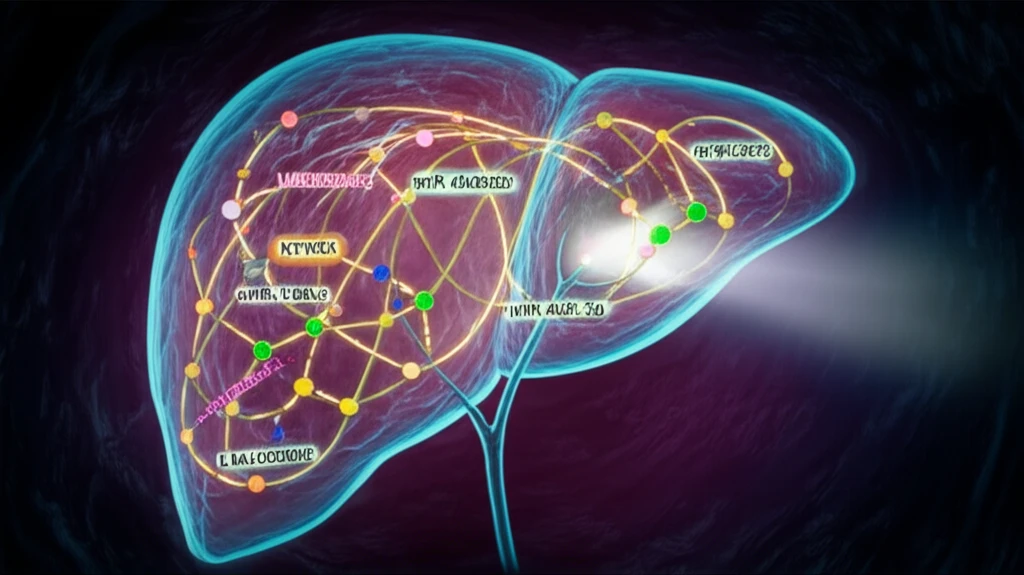
Surreal illustration of molecular network influencing liver cell, representing potential for therapeutic intervention.

Unlocking the Code: How LINC00052, miR-128, and miR-485-3p Impact Liver Cancer

"A new study reveals a novel mechanism by which these molecules regulate NTRK3 expression, influencing the invasion and migration of hepatocellular carcinoma cells."


Hepatocellular carcinoma (HCC), a common and deadly cancer, poses a significant challenge due to its high recurrence rate and poor prognosis, even with advances in surgical and medical treatments. Understanding the complex mechanisms driving HCC progression is crucial for developing more effective therapies.

One critical aspect of cancer progression is invasion and metastasis—the ability of cancer cells to spread from the primary tumor to other parts of the body. This intricate process involves multiple steps, including the breakdown of the extracellular matrix and basement membrane, allowing tumor cells to migrate and invade new tissues.

Recent research has highlighted the role of long non-coding RNAs (LncRNAs) in various types of cancer. This article delves into a new study that uncovers how a specific LncRNA, LINC00052, along with microRNAs miR-128 and miR-485-3p, regulates the expression of NTRK3, a gene influencing the invasion and migration of HCC cells. This discovery sheds light on potential new therapeutic targets for liver cancer.

How LINC00052, miR-128, and miR-485-3p Cooperate to Control Cancer Cell Behavior

Surreal illustration of molecular network influencing liver cell, representing potential for therapeutic intervention.

The study reveals a novel regulatory mechanism involving LINC00052, miR-128, miR-485-3p, and NTRK3. LINC00052, an LncRNA, inhibits the invasion and migration of hepatocarcinoma cells. Researchers found that when LINC00052 expression is increased in SMMC7721 cells, their ability to invade, migrate, and proliferate is significantly reduced.

Further investigation identified NTRK3 as a direct target gene of LINC00052. Lowering NTRK3 expression led to an increase in SMMC7721 cell invasion, migration, and proliferation, highlighting NTRK3's role in suppressing these aggressive behaviors. The study goes on to explain how LINC00052 regulates NTRK3 expression:

  • Complementary Base Pairing: LINC00052 interacts with miR-128 and miR-485-3p through complementary base pairing.
  • Reduced Luciferase Activity: This interaction reduces the luciferase activity of NTRK3 3'UTR, indicating a decrease in NTRK3 expression.
In essence, LINC00052 acts as a regulator by interacting with specific microRNAs (miR-128 and miR-485-3p) to fine-tune the expression of NTRK3, a gene that plays a crucial role in controlling the invasive and migratory capabilities of liver cancer cells. This intricate interplay reveals a new mechanism for understanding hepatocarcinoma cell behavior.

The Therapeutic Potential of Targeting LINC00052 and NTRK3

This research suggests that LINC00052 may act as a tumor suppressor in HCC, opening new avenues for potential therapeutic interventions. By understanding how LINC00052 and its associated microRNAs regulate NTRK3 expression, researchers can explore strategies to restore NTRK3 function in HCC cells, potentially inhibiting their ability to invade and metastasize.

The study also demonstrated that manipulating LINC00052 levels in vivo influenced tumor growth. Tumors formed by LINC00052-depleted cells were larger and showed increased expression of proliferation markers, while tumors formed by LINC00052-overexpressing cells were smaller and exhibited decreased proliferation. These findings further support the role of LINC00052 in controlling HCC progression.

In conclusion, this study provides valuable insights into the complex molecular mechanisms driving HCC progression and identifies LINC00052, miR-128, miR-485-3p, and NTRK3 as potential therapeutic targets. Further research is warranted to explore the clinical implications of these findings and develop novel strategies to combat liver cancer.

About this Article -

This article was crafted using a human-AI hybrid and collaborative approach. AI assisted our team with initial drafting, research insights, identifying key questions, and image generation. Our human editors guided topic selection, defined the angle, structured the content, ensured factual accuracy and relevance, refined the tone, and conducted thorough editing to deliver helpful, high-quality information.See our About page for more information.

This article is based on research published under:

DOI-LINK: 10.18632/oncotarget.10250, Alternate LINK

Title: Linc00052 Regulates The Expression Of Ntrk3 By Mir-128 And Mir-485-3P To Strengthen Hcc Cells Invasion And Migration

Subject: Oncology

Journal: Oncotarget

Publisher: Impact Journals, LLC

Authors: Dongmei Xiong, Yanrui Sheng, Shijia Ding, Juan Chen, Xixi Tan, Tao Zeng, Dongdong Qin, Liying Zhu, Ailong Huang, Hua Tang

Published: 2016-06-23

Everything You Need To Know

1

What is hepatocellular carcinoma and why is it a significant concern?

Hepatocellular carcinoma (HCC) is a common and deadly form of liver cancer, often characterized by a high recurrence rate and a poor prognosis. The invasive and migratory properties of HCC cells are critical factors in the disease's progression and the development of metastasis. The study focuses on how certain molecules impact these characteristics and offers potential insights for new therapeutic targets.

2

What role does LINC00052 play in the context of liver cancer?

LINC00052 is a long non-coding RNA (lncRNA) that, in this context, acts as a tumor suppressor in hepatocellular carcinoma (HCC). It achieves this by regulating the expression of NTRK3. When the expression of LINC00052 is increased, it inhibits the invasion, migration, and proliferation of HCC cells. This suggests that increasing LINC00052 expression could potentially be a therapeutic strategy to combat liver cancer.

3

What is the function of NTRK3, and how does it relate to cancer cell behavior?

NTRK3 is a gene whose expression is influenced by LINC00052 and the microRNAs miR-128 and miR-485-3p. The research indicates that NTRK3 plays a role in suppressing the aggressive behavior of hepatocellular carcinoma (HCC) cells. Decreased NTRK3 expression leads to increased cell invasion, migration, and proliferation. Understanding and modulating NTRK3 expression, therefore, could be key to controlling the spread of HCC.

4

How do miR-128 and miR-485-3p influence liver cancer cell behavior?

miR-128 and miR-485-3p are microRNAs that interact with LINC00052. The interaction between LINC00052, miR-128, and miR-485-3p regulates the expression of NTRK3. The interaction of LINC00052 with the microRNAs leads to a decrease in NTRK3 expression. This complex interplay impacts the invasive and migratory capabilities of liver cancer cells.

5

What are the potential implications of this research for treating liver cancer?

The study suggests that targeting LINC00052 and NTRK3 could be a new approach to treating liver cancer. Researchers can explore strategies to restore NTRK3 function in hepatocellular carcinoma (HCC) cells. This could potentially inhibit the cancer cells' ability to invade and metastasize. The intricate interplay of LINC00052, miR-128, miR-485-3p, and NTRK3 offers potential new therapeutic targets for liver cancer treatment.

Newsletter Subscribe

Subscribe to get the latest articles and insights directly in your inbox.