
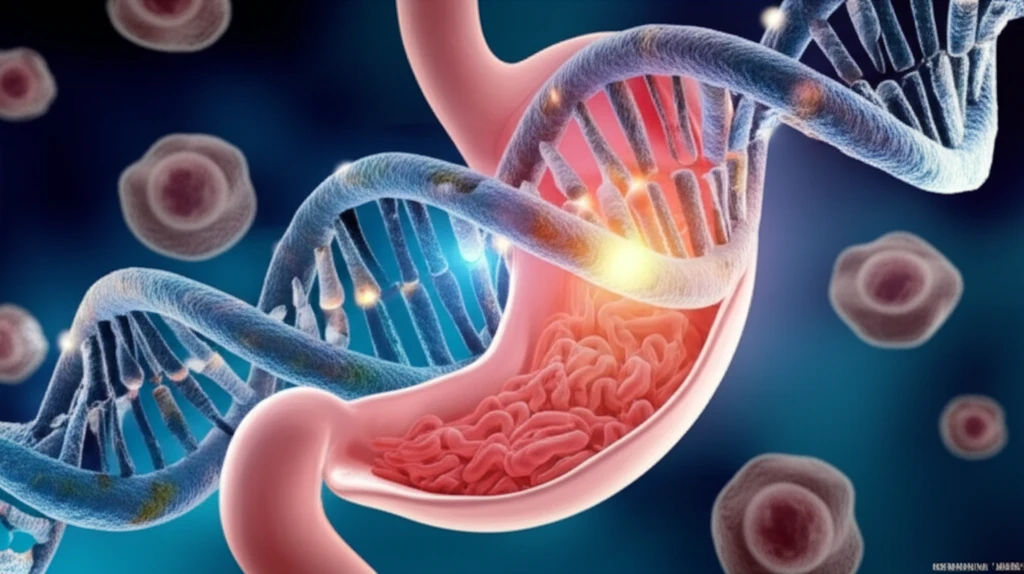
Unlocking the Code: How DNA Methylation Predicts Gastric Cancer Risk

"New research reveals the crucial role of MGMT and hMLH1 genes in early detection and personalized treatment strategies for gastric cancer."
Gastric cancer remains a significant global health challenge, ranking among the most common cancers worldwide. While factors like Helicobacter pylori infection are well-established contributors, the influence of genetic variations is increasingly recognized. Understanding the interplay between these factors is crucial for developing effective prevention and treatment strategies.
One key area of investigation is DNA methylation, an epigenetic process that can alter gene expression without changing the underlying DNA sequence. Aberrant DNA methylation, particularly in genes like MGMT (O(6)-methylguanine-DNA methyltransferase) and hMLH1 (human mutL homolog 1), has been implicated in various cancers. These genes play critical roles in DNA repair and maintaining genomic stability, making their disruption a potential driver of cancer development.
Recent research has focused on the potential of MGMT and hMLH1 methylation as predictive biomarkers for gastric cancer. By examining the methylation status of these genes in gastric tissue samples, scientists aim to identify individuals at higher risk and tailor treatment approaches accordingly. This article explores the latest findings in this field, highlighting the potential clinical implications of DNA methylation analysis in gastric cancer management.
MGMT and hMLH1: Key Players in Gastric Cancer Prediction
A recent study published in Genetics and Molecular Research investigated the association between aberrant DNA methylation of the MGMT and hMLH1 genes and gastric cancer. The researchers analyzed tissue samples from 283 gastric cancer patients, assessing the methylation status of these genes and correlating it with clinical characteristics and outcomes.
- Elevated Methylation: Cancer tissues showed significantly higher proportions of DNA hypermethylation in both MGMT and hMLH1 compared to normal tissues.
- Tumor Stage Correlation: Hypermethylation of MGMT was linked to the tumor-necrosis-metastasis (TNM) stage of gastric cancer, indicating a potential role in cancer progression.
- Risk Assessment: Individuals with gastric cancer in advanced stages (N1 and M1) had a significantly higher risk of MGMT hypermethylation. For those in the N1 stage, the odds ratio (OR) was 1.97 (95% CI: 1.15-3.37), while for the M1 stage, the OR was 5.39 (95% CI: 2.08-14.98).
The Future of Gastric Cancer Detection
The identification of MGMT and hMLH1 methylation as potential biomarkers represents a significant step forward in gastric cancer detection and risk assessment. By incorporating these markers into diagnostic strategies, clinicians may be able to identify high-risk individuals earlier, leading to more timely interventions and improved outcomes. While further research is essential to refine these approaches, the promise of personalized medicine in gastric cancer is becoming increasingly tangible. This research paves the way for innovative diagnostic tools and therapeutic strategies that target specific epigenetic alterations, ultimately improving the lives of those affected by this challenging disease.