
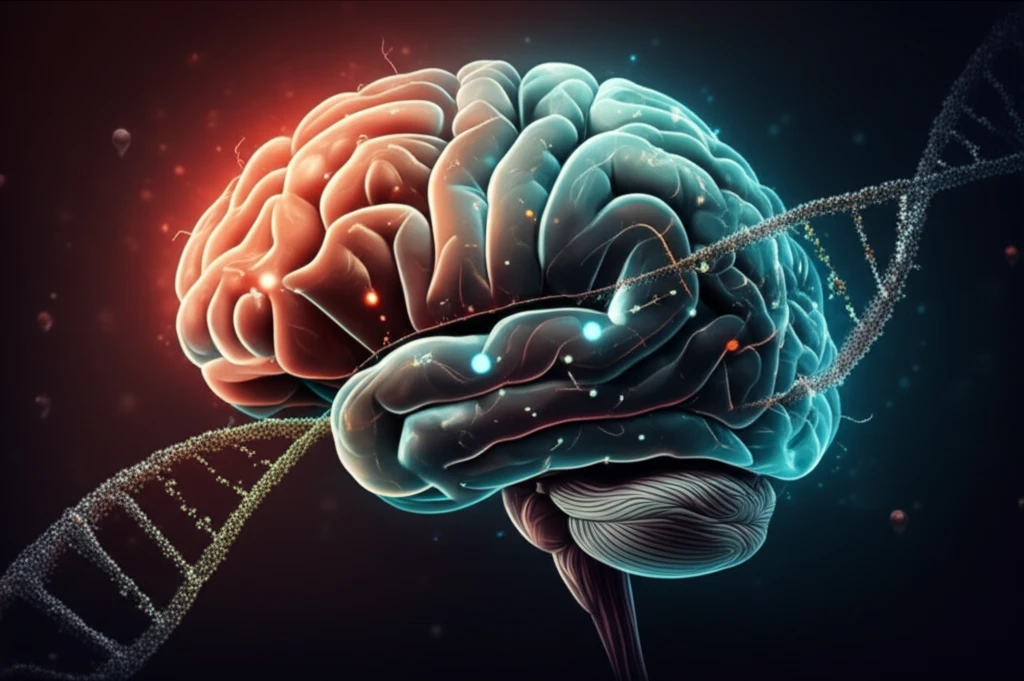
Decoding Bipolar Disorder: How Genes and Environment Interact

"New research sheds light on the intricate relationship between genetics, environmental factors, and DNA methylation in bipolar disorder, offering potential paths for targeted treatments."
Bipolar disorder (BD) is a complex mental health condition characterized by extreme shifts in mood, energy, and activity levels. These shifts range from periods of intense elation, irritability, or energized behavior (manic episodes) to periods of profound sadness, hopelessness, or loss of interest in activities (depressive episodes). Understanding the underlying causes of BD is crucial for developing effective treatments and improving the lives of those affected.
While the exact causes of bipolar disorder remain elusive, research suggests that a combination of genetic predisposition and environmental factors plays a significant role. Epigenetics, the study of how your behaviors and environment can cause changes that affect the way your genes work, offers a crucial lens through which to understand this interaction. One key epigenetic mechanism is DNA methylation, a process that can alter gene expression without changing the underlying DNA sequence.
Recent studies have focused on how DNA methylation patterns might contribute to the development and progression of bipolar disorder. By examining specific genes involved in brain function and mood regulation, researchers are beginning to unravel the complex interplay between our genes and our experiences. This article explores a recent study that investigates the role of DNA methylation in the relationship between two important molecules in the brain: prodynorphin and brain-derived neurotrophic factor (BDNF), offering insights into potential therapeutic targets for BD.
Prevalence and Daily Impact
The National Institute of Mental Health describes bipolar disorder, also called manic-depressive disorder, as involving dramatic shifts in mood, energy, and activity that can impair day-to-day functioning. Current statistical summaries examine prevalence, treatment, demographics, onset, diagnostic delay, physical health, work, and costs in the United States and globally. Worldmetrics reports an estimate of about 2.4% of adults worldwide annually, or around 58 million adults, while noting that bipolar disorder may involve mixed episodes and comorbidities.
Care Gaps and Diagnostic Limits
Primary-care patients often seek help for bipolar symptoms but are frequently misdiagnosed, despite the condition's association with early mortality, cardiovascular comorbidity, disability, and substantial societal costs. A 2025 scoping review reports that fewer than 50% of people with bipolar disorder receive best-practice care. The review identifies consensus methods as one way to involve people with relevant knowledge in setting priorities and developing actionable solutions.
Unraveling the Genetic and Environmental Puzzle of Bipolar Disorder
A recent study published in 'Progress in Neuro-Psychopharmacology & Biological Psychiatry' delved into the role of DNA methylation in bipolar disorder. The research team, led by Claudio D'Addario, Maria Carlotta Palazzo, and Bernardo Dell'Osso, investigated the relationship between prodynorphin (PDYN) and brain-derived neurotrophic factor (BDNF), two molecules vital for brain function and mood regulation. The study aimed to understand how DNA methylation influences the expression of these genes in individuals with bipolar disorder.
- PDYN Expression: Prodynorphin (PDYN) mRNA levels were significantly reduced in subjects with BD-II but not in those with BD-I, when compared to healthy controls.
- DNA Methylation: An increase in DNA methylation at the PDYN gene promoter was observed in BD-II patients compared to controls.
- Pharmacotherapy Impact: Patients on mood stabilizers (lithium and anticonvulsants) showed lower DNA methylation at the PDYN promoter.
- Correlation between PDYN and BDNF: A significant positive correlation was found between DNA methylation of the PDYN promoter and brain-derived neurotrophic factor (BDNF).
- DNMTs and MeCP2: Upregulation of DNA Methyl Transferases 3b (DNMT3b) and methyl binding protein MeCP2 mRNA levels was observed in BD-II subjects.
Genes, Environment, and Brain Dynamics
A review of epigenetics and gut microbiota describes bipolar disorder as a multifactorial disease shaped by complex interactions between genetic and environmental factors, with an adult prevalence of 1-5%. Nature characterizes bipolar disorder as a mood disorder that includes at least one manic episode, often involving elevated or agitated mood and reduced need for sleep, alongside major depressive episodes. A 2026 study of bipolar disorder staging reports a non-linear trajectory in whole-brain connection density, which decreased across stages 0 to 3 but was unexpectedly higher at stage 4.
Diagnostic Delay and Methodological Problems
Bipolar disorder research has been described as methodologically challenging because the condition involves frequent recurrence, complex comorbidity, and higher mortality than major depressive disorder. One review reports that only 20% of patients experiencing a depressive episode are diagnosed with bipolar disorder within the first year of seeking treatment, with a mean delay of 5-10 years between illness onset and diagnosis. A central difficulty is distinguishing bipolar disorder type I or II from other presentations, particularly when depressive symptoms dominate.
Support and Diagnostic Comparison
A comparison of bipolar disorder support approaches identifies meaningful differences in methodology, philosophy, and outcomes. Diagnostic comparison is complicated because most patients present for care during depressive episodes, which are more frequent than hypomanic or manic episodes. Another comparison describes bipolar disorder as involving mania, anxiety, and depression that can impair emotional control, quality of life, and social functioning.
Implications and Future Directions
This research provides valuable insights into the epigenetic mechanisms underlying bipolar disorder, particularly the role of DNA methylation in regulating the expression of PDYN and its relationship with BDNF. The findings suggest that targeting DNA methylation processes could offer a novel approach to treating BD, especially BD-II. Further research is needed to explore the potential of DNMT inhibitors and other epigenetic interventions to improve outcomes for individuals with bipolar disorder. Understanding these complex interactions opens the door to more personalized and effective treatments, ultimately improving the quality of life for those living with this challenging condition.
Digital Research and Emerging Trends
A 2026 mapping study describes bipolar disorder as severe, chronic, and recurrent, with alternating manic and depressive episodes that substantially affect functioning and quality of life. It also highlights the burden imposed on patients, families, and healthcare systems and examines scientific trends involving digital approaches. MentalHealth.com similarly reports that expanding public awareness and research efforts are shaping current understandings of bipolar disorder trends.
Diagnosis, Care, and Patient Journeys
Case-study sources present bipolar disorder through symptoms, treatment experiences, and patient outcomes rather than abstract diagnostic descriptions. Reported real-world themes include misdiagnosis, treatment challenges, improved outcomes, stigma reduction, crisis intervention, and connection with professional care. One fictional case study follows a patient named Susan through diagnosis, manic and depressive episodes, and treatment to illustrate how bipolar disorder can affect daily life.