
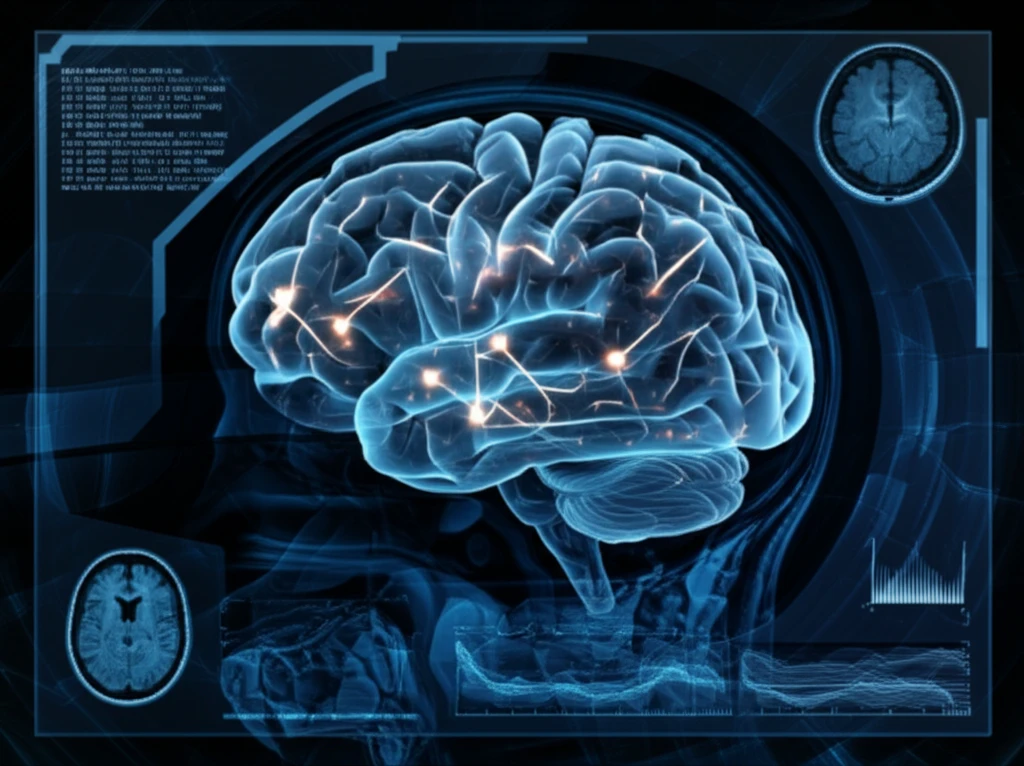
Brain with glowing neural pathways overlaid with an MRI scan interface, symbolizing the fusion of technology and neuroscience in understanding traumatic brain injury.

Unlocking the Brain's Secrets: How New MRI Techniques Are Revolutionizing Traumatic Brain Injury Treatment

"Cutting-edge diffusion MRI studies reveal the hidden spatiotemporal dynamics of grey matter damage, paving the way for targeted therapies and improved patient outcomes."


Traumatic brain injury (TBI) represents a significant global health challenge, contributing to disability and mortality worldwide. The consequences of TBI extend beyond the immediate physical trauma, often leading to long-term cognitive, behavioral, and motor impairments that profoundly impact an individual's quality of life. Traditional methods of assessing TBI have primarily focused on white matter damage, leaving the complexities of grey matter changes relatively unexplored.

However, groundbreaking research is now shedding light on the crucial role that grey matter plays in the aftermath of TBI. This new understanding is largely thanks to advances in magnetic resonance imaging (MRI) techniques, specifically diffusion MRI (dMRI). These innovative imaging methods are enabling scientists to visualize and quantify the spatiotemporal microstructural changes occurring in grey matter following injury, offering unprecedented insights into the brain's response to trauma.

By revealing the dynamic nature of grey matter damage and recovery, dMRI is poised to revolutionize the diagnosis, treatment, and management of TBI. This article delves into the exciting world of dMRI and explores its potential to unlock the brain's secrets, ultimately leading to better outcomes for individuals affected by TBI.

Diffusion MRI: A New Window into Brain Injury Dynamics

Brain with glowing neural pathways overlaid with an MRI scan interface, symbolizing the fusion of technology and neuroscience in understanding traumatic brain injury.

Diffusion MRI represents a paradigm shift in our ability to assess brain injuries. Unlike conventional MRI, which primarily captures structural images, dMRI provides a unique window into the microscopic world of water diffusion within brain tissue. By tracking the movement of water molecules, dMRI can reveal subtle changes in tissue microstructure that are indicative of injury, inflammation, and repair processes.

Two key dMRI techniques, Diffusion Tensor Imaging (DTI) and Diffusion Kurtosis Imaging (DKI), have emerged as powerful tools for investigating TBI. DTI, the more established technique, measures the directionality and magnitude of water diffusion, providing insights into the integrity of white matter tracts. DKI, an advanced extension of DTI, goes a step further by capturing non-Gaussian water diffusion patterns, offering enhanced sensitivity to microstructural complexity, particularly in grey matter.

  • Fractional Anisotropy (FA): Measures the directionality of water diffusion, reflecting the integrity of white matter tracts. Higher FA values indicate more intact tissue structure.
  • Mean Diffusivity (MD): Quantifies the overall magnitude of water diffusion, providing information about tissue density and edema.
  • Mean Kurtosis (MK): Assesses the non-Gaussian nature of water diffusion, offering sensitivity to microstructural complexity in grey matter.
Recent studies utilizing DTI and DKI have demonstrated the ability to detect subtle grey matter changes following TBI that were previously undetectable with conventional MRI. These changes include alterations in FA, MD, and MK values, which correlate with specific pathological processes such as axonal injury, demyelination, edema, and gliosis (scarring). Furthermore, dMRI can capture the dynamic evolution of these changes over time, providing a comprehensive picture of the brain's response to injury.

Looking Ahead: The Future of TBI Diagnosis and Treatment

Diffusion MRI holds immense promise for improving the lives of individuals affected by TBI. By providing a more detailed and dynamic assessment of brain injury, dMRI can facilitate earlier and more accurate diagnosis, enabling timely intervention and personalized treatment strategies. Furthermore, dMRI can be used to monitor treatment response and track recovery progress, providing valuable feedback to clinicians and patients alike. As research in this area continues to advance, we can expect to see even more sophisticated dMRI techniques emerge, further enhancing our understanding of TBI and paving the way for innovative therapies that promote brain repair and functional recovery. The journey to unlock the brain's secrets following TBI is just beginning, but with the power of diffusion MRI, we are well on our way to transforming the landscape of TBI care.

About this Article -

This article was crafted using a human-AI hybrid and collaborative approach. AI assisted our team with initial drafting, research insights, identifying key questions, and image generation. Our human editors guided topic selection, defined the angle, structured the content, ensured factual accuracy and relevance, refined the tone, and conducted thorough editing to deliver helpful, high-quality information.See our About page for more information.

Everything You Need To Know

1

What is the primary advantage of using Diffusion MRI (dMRI) over conventional MRI in assessing Traumatic Brain Injury (TBI)?

The main advantage of Diffusion MRI (dMRI) lies in its ability to detect subtle microstructural changes within brain tissue, particularly in grey matter, that are often missed by conventional MRI. dMRI tracks water diffusion to reveal damage, inflammation, and repair processes, offering a more detailed and dynamic assessment of the brain's response to Traumatic Brain Injury (TBI).

2

How do Diffusion Tensor Imaging (DTI) and Diffusion Kurtosis Imaging (DKI) contribute to understanding Traumatic Brain Injury (TBI)?

Diffusion Tensor Imaging (DTI) measures the directionality and magnitude of water diffusion, providing insights into the integrity of white matter tracts, with Fractional Anisotropy (FA) being a key measurement. Diffusion Kurtosis Imaging (DKI) goes further by capturing non-Gaussian water diffusion patterns, offering enhanced sensitivity to microstructural complexity, particularly in grey matter, allowing for a more in-depth analysis of the impact of Traumatic Brain Injury (TBI). DKI can detect changes that DTI alone might miss.

3

What specific metrics derived from Diffusion MRI (dMRI) are used to assess the impact of Traumatic Brain Injury (TBI) on brain tissue?

Diffusion MRI (dMRI) utilizes several metrics to assess Traumatic Brain Injury (TBI). These include Fractional Anisotropy (FA), which reflects the integrity of white matter tracts; Mean Diffusivity (MD), which provides information about tissue density and edema; and Mean Kurtosis (MK), which offers sensitivity to microstructural complexity in grey matter. Alterations in these metrics, as measured by DTI and DKI, correlate with specific pathological processes such as axonal injury, demyelination, edema, and gliosis following Traumatic Brain Injury (TBI).

4

Can Diffusion MRI (dMRI) help in diagnosing Traumatic Brain Injury (TBI) earlier and more effectively?

Yes, Diffusion MRI (dMRI) has the potential to facilitate earlier and more accurate diagnoses of Traumatic Brain Injury (TBI). By revealing subtle changes in grey matter and white matter that are undetectable with conventional methods, dMRI can enable timely intervention and personalized treatment strategies. This allows clinicians to act sooner, potentially improving patient outcomes and recovery from Traumatic Brain Injury (TBI).

5

How can Diffusion MRI (dMRI) be used to monitor treatment and recovery in Traumatic Brain Injury (TBI) patients?

Diffusion MRI (dMRI) can be used to monitor treatment response and track recovery progress in Traumatic Brain Injury (TBI) patients by repeatedly assessing the brain's microstructure over time. By tracking changes in Fractional Anisotropy (FA), Mean Diffusivity (MD), and Mean Kurtosis (MK) values, clinicians can assess the effectiveness of therapies, observe the brain's response to injury, and provide valuable feedback to both clinicians and patients. This dynamic assessment allows for adjustments to treatment plans, potentially improving outcomes and promoting functional recovery from Traumatic Brain Injury (TBI).

Newsletter Subscribe

Subscribe to get the latest articles and insights directly in your inbox.