
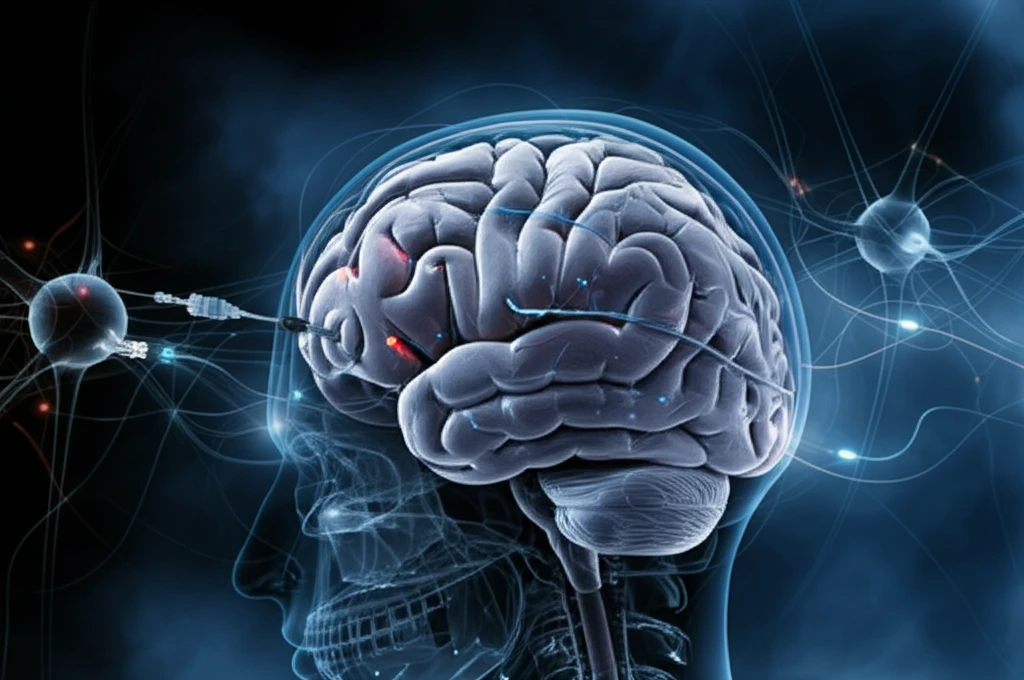
Futuristic illustration of brain with catheters and stents, symbolizing stroke treatment innovation.

Unlocking the Brain: Innovations in Stroke Treatment and Prevention

"A Deep Dive into Cutting-Edge Research on Intracranial Support, Stenting, and Reocclusion"


Stroke remains a leading cause of disability and mortality worldwide, necessitating continuous advancements in treatment and prevention strategies. Recent research has focused on refining techniques for intracranial support, emergency stenting, and managing the complexities of reocclusion after mechanical thrombectomy. These innovations hold promise for improving patient outcomes and reducing the long-term impact of stroke.

The field of neurointervention is rapidly evolving, with new devices and techniques emerging to address the challenges of acute stroke management. Understanding these advancements is crucial for healthcare professionals, patients, and caregivers alike. This article delves into the latest findings presented at the SNIS 12th Annual Meeting, providing a comprehensive overview of the cutting-edge research shaping the future of stroke care.

From quantifying the stiffness of intracranial support catheters to exploring the efficacy of emergency stenting and addressing the issue of delayed reocclusion, this article aims to break down the complexities of these studies into accessible insights. By examining the methodologies, results, and conclusions of these investigations, we can better appreciate the potential impact on clinical practice and patient well-being.

Innovations in Intracranial Support Catheters

Futuristic illustration of brain with catheters and stents, symbolizing stroke treatment innovation.

One critical aspect of neurointerventional procedures is the use of intracranial support catheters, which facilitate the navigation of microcatheters through the intricate cerebral vasculature. Researchers have sought to quantify the stiffness of these catheters to better understand their impact on the risk of arterial dissection. A study presented at the SNIS 12th Annual Meeting (E-001) focused on quantifying the tip stiffness of various intracranial support catheters, hypothesizing that catheter tip stiffness is a significant factor in the risk of arterial wall damage during navigation.

The study involved a novel testing apparatus designed to measure the force required to bend the catheter tips at specific angles. Different catheters, including the Sofia distal access catheter, 044 DAC, 053 Neuron, 058 Navien, 5MAX distal delivery catheter and 070 Neuron, were tested under controlled conditions. The results revealed notable differences in stiffness among the catheters, with the Sofia distal access catheter requiring the least amount of force to bend.

  • Sofia distal access catheter: Least force required to bend.
  • 044 DAC, 053 Neuron, 058 Navien, 5MAX: Similar forces required.
  • DAC: Most force required among intermediate-sized catheters.
  • 070 Neuron: Largest force required overall, almost twice as much to deflect 45 degrees over a 2 cm bend.
These findings have important implications for device selection in neuroendovascular procedures. By understanding the stiffness profiles of different catheters, clinicians can make more informed decisions to minimize the risk of arterial dissection and improve patient safety. Further research is needed to correlate these in vitro measurements with clinical outcomes, but this study represents a valuable first step in quantifying the mechanical properties of intracranial support catheters.

Looking Ahead: The Future of Stroke Intervention

The advancements discussed in these abstracts represent a significant step forward in the ongoing effort to improve stroke treatment and outcomes. By continuing to refine our understanding of catheter mechanics, stenting techniques, and the factors contributing to reocclusion, we can pave the way for more effective and personalized interventions. As research progresses, it is essential to translate these findings into clinical practice, ensuring that patients receive the best possible care in the fight against stroke. Further studies should focus on long-term outcomes and the broader application of these techniques across diverse patient populations to validate their efficacy and safety.

About this Article -

This article was crafted using a human-AI hybrid and collaborative approach. AI assisted our team with initial drafting, research insights, identifying key questions, and image generation. Our human editors guided topic selection, defined the angle, structured the content, ensured factual accuracy and relevance, refined the tone, and conducted thorough editing to deliver helpful, high-quality information.See our About page for more information.

Everything You Need To Know

1

What is the role of intracranial support catheters, such as the Sofia distal access catheter and 070 Neuron, in stroke treatment, and how are they being improved?

Intracranial support catheters, like the Sofia distal access catheter, 044 DAC, 053 Neuron, 058 Navien, 5MAX distal delivery catheter and 070 Neuron, are crucial for navigating microcatheters during neurointerventional procedures. Research quantifies the stiffness of these catheters to minimize the risk of arterial dissection. A study showed that the Sofia distal access catheter required the least force to bend, while the 070 Neuron required the most, influencing device selection and patient safety.

2

How does the stiffness of intracranial support catheters, like the Sofia distal access catheter versus the 070 Neuron, impact the risk of arterial dissection during neurointerventional procedures?

The stiffness of intracranial support catheters influences the risk of arterial dissection during neurointerventional procedures. Stiffer catheters, like the 070 Neuron, may pose a higher risk of damaging the arterial wall compared to more flexible ones like the Sofia distal access catheter. Understanding these mechanical properties enables clinicians to select the most appropriate catheter, enhancing patient safety and outcomes. However, in-vitro measurements need to be correlated to real world studies.

3

How is emergency stenting used in stroke treatment, and what are the ongoing efforts to improve stenting techniques?

Emergency stenting is a critical intervention for acute stroke management. While the text does not delve into specific details about stenting techniques, it emphasizes the importance of refining these techniques to improve patient outcomes. Further research is needed to optimize stenting procedures and address potential complications such as reocclusion. The type of stent (e.g. Enterprise stent) is also key to discuss for the future and is missing from this discussion.

4

What is reocclusion, and why is it important to address it in stroke management?

Reocclusion refers to the recurrence of vessel blockage after initial successful treatment, such as mechanical thrombectomy. Addressing reocclusion is vital for improving long-term outcomes in stroke patients. The text highlights the ongoing efforts to understand and manage the factors contributing to reocclusion, paving the way for more effective and personalized interventions. However, it doesn't explain the physiological mechanisms involved such as platelet aggregation or thrombus formation.

5

What are the potential long-term implications of advancements in intracranial support catheters and stenting techniques for stroke treatment and patient outcomes?

Advancements in stroke treatment, including refined intracranial support catheters like the Sofia distal access catheter and optimized stenting techniques, are paving the way for more effective and personalized interventions. Translating research findings into clinical practice is essential to ensure that patients receive the best possible care. Future studies should focus on long-term outcomes and the broader application of these techniques across diverse patient populations to validate their efficacy and safety.

Newsletter Subscribe

Subscribe to get the latest articles and insights directly in your inbox.