
Stroke Alert: Are New Carotid Stents Safe or Risky?

"A closer look at the Casper-RX stent and its potential complications in acute ischemic stroke treatment."
When it comes to stroke treatment, every second counts. Doctors are constantly looking for better ways to clear blocked arteries and restore blood flow to the brain as quickly as possible. One approach involves using stents—tiny mesh tubes—to open up narrowed carotid arteries in the neck, especially when there's a blockage in both the neck and brain.
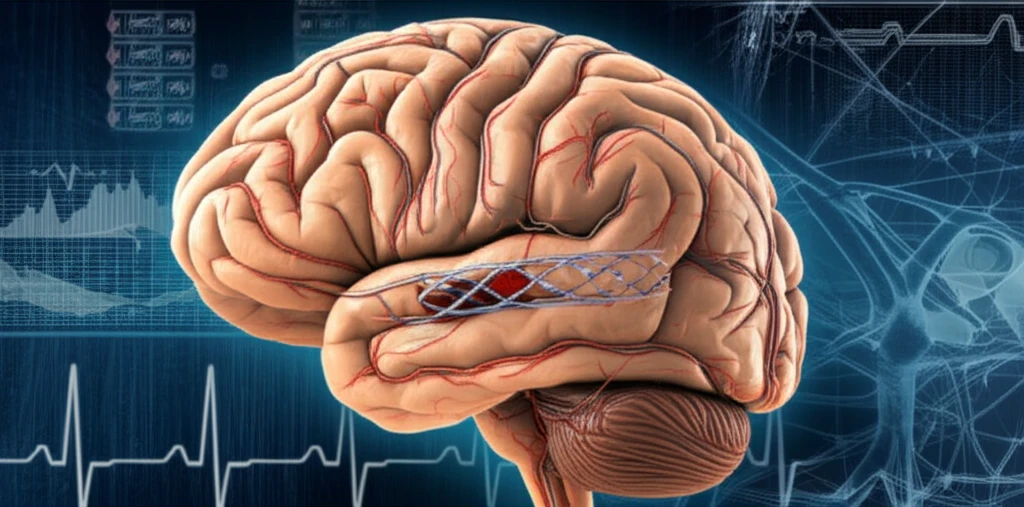
Recently, a new type of carotid stent, the Casper-RX, hit the market. It features a double layer of micromesh designed to trap debris and prevent it from traveling to the brain, potentially reducing the risk of new strokes during the procedure. But real-world results have been mixed, and some doctors are starting to question whether the benefits outweigh the risks.
This article dives into a study that investigated the use of the Casper-RX stent in patients experiencing acute ischemic stroke with tandem lesions—blockages in both the carotid artery and a major vessel in the brain. The study aimed to evaluate how well the stent worked and whether it led to any unexpected complications, shedding light on an ongoing debate in the world of stroke intervention.
The Continuing Stroke Burden
Stroke remains a major health concern, but its effects vary by stroke type, timing of treatment, and access to specialized care. The potential benefits and risks of newer interventions such as carotid stenting must therefore be understood in the context of individual patient factors. Available evidence supports cautious interpretation rather than a single universal conclusion about safety.
Established Treatment, Real Limits
Standard stroke care generally depends on rapid diagnosis, medical management, and selected use of procedures for eligible patients. These approaches can be effective, but treatment windows, patient eligibility, procedural risks, and unequal access limit their usefulness in every case. Decisions about carotid stenting similarly require balancing possible benefits against complications and the quality of available evidence.
From Supportive Care to Intervention
Stroke care has developed from bedside assessment and supportive treatment into a field using thrombolytics, neuroimaging-guided intervention, and early mobilization. The history of endovascular treatment progressed from intra-arterial tPA to mechanical thrombectomy, driven partly by the goal of extending treatment beyond the 4.5-hour window for systemic thrombolysis. This progress was not linear: the development of effective endovascular therapy involved a difficult series of setbacks and milestones, while recent reviews describe stroke as having moved from largely untreatable to treatable and preventable in important respects.
Casper-RX Stent: Promising Tech or Risky Procedure?
The study, conducted by researchers in Switzerland and France, retrospectively analyzed data from 21 patients who underwent treatment with the Casper-RX stent for acute ischemic stroke between November 2014 and August 2017. All patients had a large vessel occlusion in the brain combined with either a severe narrowing or complete blockage of the carotid artery.
- Acute thrombus formation within the stent itself.
- Stent occlusion (blockage) before the patient was discharged from the hospital.
- Modified Rankin Scale (mRS) score at 3 months—a measure of overall disability.
- Symptomatic intracranial hemorrhage (bleeding in the brain).
An Evidence Base Still Evolving
Current research continues to evaluate how newer stroke interventions perform across different patients and clinical settings. Reviews generally emphasize that treatment decisions depend on anatomy, timing, imaging, and procedural expertise rather than on the device name alone. For newer carotid stents, ongoing evidence is therefore important for clarifying which patients are most likely to benefit and which risks remain most significant.
Where Stroke Innovation Falls Short
Recent reviews emphasize that ischemic stroke treatment remains limited by complex anatomy, cerebral hypoperfusion, collateral circulation, and the uneven effectiveness of available therapies. The review literature also notes that potential treatments may have both advantages and disadvantages, with clinical-trial evidence still improving. Stem cell therapy for stroke recovery is specifically described as being in its infancy and requiring further study and clinical trials, while changing treatment options can complicate the design and interpretation of randomized trials.
Comparing Benefits and Risks
Comparisons among stroke treatments should account for differences in patient selection, timing, anatomy, operator experience, and outcome measurement. A procedure that performs well in a carefully selected trial population may produce different results in routine practice. For carotid stents, the most meaningful comparison is therefore not simply whether one device is newer, but whether its benefits outweigh its risks for a particular patient.
The Verdict: Proceed with Caution
While the Casper-RX stent aims to reduce the risk of stroke during carotid angioplasty, this study suggests that it may come with its own set of challenges. The high incidence of thrombus formation within the stent raises concerns about the stent's safety profile in acute stroke settings. The researchers themselves have stopped using this type of stent for acute stroke interventions, pending further research. If you or a loved one are facing a stroke, it's crucial to discuss all available treatment options with your medical team, weighing the potential benefits and risks of each approach.
The Need for Better Evidence
The recent expansion of acute ischemic stroke treatment has been led by endovascular thrombectomy, advances in medical therapy, imaging, and broader stroke-care improvements. However, reperfusion treatments are offered to only a minority of acute ischemic stroke patients, according to a recent narrative review. Experts studying prehospital stroke trials stress that ultraearly treatment research faces distinctive challenges involving patient identification, consent, randomization, endpoint selection, and statistical analysis.
Toward More Tailored Treatment
Future stroke care is likely to focus on matching interventions more precisely to patient characteristics, imaging findings, timing, and vascular anatomy. Research will need to determine whether newer devices improve outcomes across broader populations rather than only in selected trial participants. Progress will depend on continued clinical trials and careful monitoring of both benefit and harm.
Evidence Meets Health-Care Reality
The safety of a stroke intervention cannot be separated from the systems needed to deliver it quickly and consistently. Differences in emergency response, imaging availability, specialist expertise, hospital resources, and follow-up care may affect outcomes. These systemic factors make it important to interpret results from specialized centers cautiously when considering broader adoption.
Outcomes Beyond the Trial
Real-world studies are important because patients treated outside randomized trials may have more varied anatomies, health conditions, and levels of access to care. A 2026 RESTORE analysis describes mechanical thrombectomy as a cornerstone for acute ischemic stroke caused by large-vessel occlusion and emphasizes the need to assess device performance across heterogeneous populations and procedures. An NHMRC-funded case study also reports that nurse-led protocols for monitoring and treating common post-stroke symptoms improved survival and independence in Australia and internationally.