
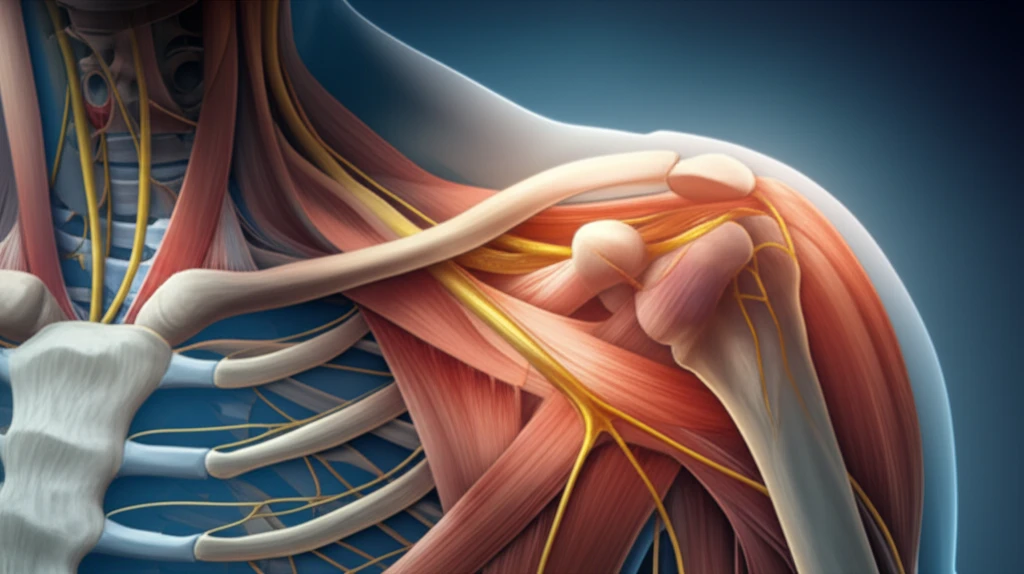
Unlocking Shoulder Pain Mysteries: How to Identify Hidden Conditions

"From subtle sprains to rare congenital issues, understanding the root cause of shoulder pain is crucial for effective treatment."
Shoulder pain is a common ailment that can significantly impact daily life. While many cases stem from well-known issues like rotator cuff tears or arthritis, sometimes the source of discomfort is more elusive. Identifying these hidden conditions is the first step toward effective treatment and lasting relief.
Recent research and case studies highlight the importance of thorough examination and advanced diagnostic techniques to uncover the underlying causes of shoulder pain. These insights reveal that seemingly straightforward symptoms can be linked to unexpected conditions.
This article explores several less-common causes of shoulder pain, offering a comprehensive guide to understanding these conditions and navigating the path to diagnosis and recovery.
Shoulder Pain Prevalence
Shoulder pain is a common musculoskeletal complaint, affecting a significant portion of the adult population. It frequently presents in primary care settings and can substantially impact daily functioning and quality of life. While exact figures vary by region and population studied, shoulder pain remains one of the most prevalent musculoskeletal conditions encountered in clinical practice.
Traditional Diagnostic Framework
Clinicians have traditionally relied on pathoanatomic labels such as rotator cuff tendinopathy, impingement, and bursitis to classify and treat shoulder pain. These labels assume a direct link between structural findings and symptoms. However, structural findings on imaging often correlate poorly with actual symptoms, prompting calls for a shift toward more umbrella diagnostic terms that account for this disconnect.
The Thoracolumbar Fascia Foundation
The thoracolumbar fascia (TLF) is a complex, multilayer arrangement of fascial and aponeurotic tissue that forms a separation between the paraspinal muscles and the muscles of the posterior abdominal wall. It spans the length of the back and has been recognized for its anatomical and functional significance. Early research established that the TLF plays a role in force transfer between the upper and lower limbs, though its clinical relevance to distant regions like the shoulder is still being explored.
Distal Thoracolumbar Fascia Sprain: An Overlooked Cause of Referred Pain
The thoracolumbar fascia is a large, diamond-shaped area of connective tissue in the lower back. While it's primarily associated with back pain, injuries to this area can sometimes manifest as referred pain in the shoulder region.
- Symptoms: Pain may manifest as stabbing pain, particularly when sitting or engaging in activities.
- Diagnosis: Diagnostic ultrasound can reveal a hypoechoic, thickened fascia near its insertion on the iliac crest.
- Treatment: Autologous Conditioned Plasma (ACP) injections, guided by ultrasound, can provide significant and lasting pain relief.
Fascial Research and Shoulder Pain Evidence
Recent evidence suggests the thoracolumbar fascia plays both mechanical and nociceptive roles, with researchers investigating its involvement in low back pain and shoulder conditions. Fascial manipulation (FM) has emerged as a manual therapy approach aiming to restore fascial gliding and reduce pain. A JAMA review reframes shoulder pain diagnosis by moving away from pathoanatomic labels toward the umbrella term subacromial pain, since structural findings on imaging correlate poorly with symptoms.
Limitations in Current Understanding
Despite growing research on fascial manipulation and thoracolumbar fascia involvement in shoulder pain, evidence gaps remain. The field continues to debate whether fascial interventions provide lasting benefits beyond placebo effects. Long-term outcome data and standardized assessment methods are still needed to establish definitive treatment protocols.
Fascial Flexibility in Shoulder Pain Populations
Research comparing individuals with and without subacromial impingement syndrome has revealed differences in thoracolumbar fascia flexibility. These findings suggest the TLF may play a role in shoulder pathomechanics beyond the local shoulder region. New methods for measuring TLF flexibility have been developed to quantify these differences between symptomatic and asymptomatic individuals.
Empowering Your Shoulder Health Journey
Navigating the complexities of shoulder pain requires a collaborative effort between patients and healthcare professionals. By staying informed, advocating for thorough evaluations, and exploring a range of treatment options, individuals can take control of their shoulder health and find lasting relief. Whether it's addressing a distal thoracolumbar fascia sprain, managing a brachial plexus injury, or understanding the implications of Sprengel's deformity, knowledge is the key to a healthier, pain-free future.
Thoracolumbar Fascia Release for Shoulder Pain
Research on thoracolumbar fascia release (TLFR) has investigated its effects on pain and disability in shoulder pain patients. Randomized controlled trials have examined the clinical efficacy of TLFR as a treatment approach. Shear wave elastography studies are providing quantitative assessments of fascial stiffness changes, offering objective measures to evaluate treatment response in patients with musculoskeletal pain.
Advancing Imaging and Treatment Approaches
Shoulder pain imaging is evolving with new narrative reviews examining various conditions including rotator cuff tendinosis, calcific tendinopathy, and labral injuries. The future of fascia research focuses on its role in movement organization and chronic pain, particularly in older adults. Modern imaging techniques and integrated therapeutic approaches combining manual therapy with movement-based interventions may significantly impact diagnosis and treatment of fascial disorders.
Thoracolumbar Fascia in Clinical Assessment
Physical examination findings suggesting thoracolumbar fascia issues include contralateral arm-leg swing during walking, limited or uneven trunk rotation, and altered movement sequencing during lumbopelvic flexion and extension. Positive findings during palpation, muscle activation testing, and myofascial shear testing may indicate TLF involvement. These assessment methods help clinicians identify fascial contributions to musculoskeletal complaints.
Clinical Outcomes and Patient Cases
Clinical case studies demonstrate the real-world application of thoracolumbar fascia assessment in shoulder pain management. A 58-year-old male patient with a two-month history of shoulder pain was treated with interventions targeting periscapular musculature strengthening, rotator cuff rehabilitation, and cervicothoracic junction manipulation. These cases highlight how fascial considerations integrate into comprehensive rehabilitation approaches to restore function and reduce pain.