
Unraveling the 'Feather Pattern': What It Reveals About Your Muscles

"Discover how this unique muscle imaging sign can be a crucial indicator of underlying muscle diseases and conditions."
Imagine looking at an image of your muscles and seeing a pattern resembling a feather. This isn't a trick of the light but a real phenomenon known as the 'feather pattern' in muscle imaging. While it might sound unusual, this pattern can be a significant indicator of various muscle diseases and conditions.
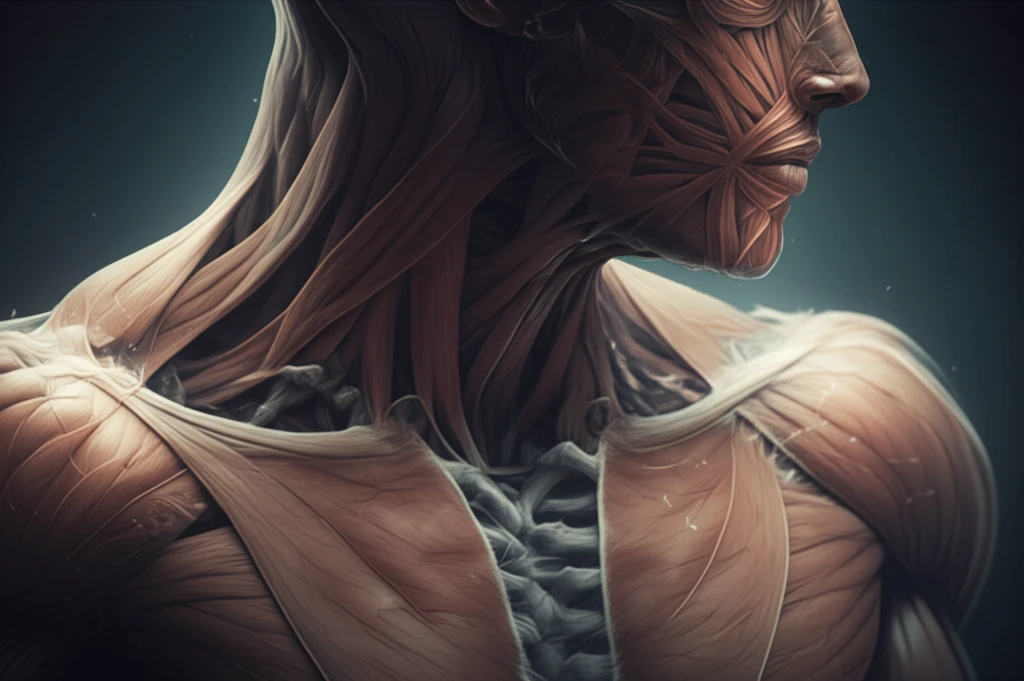
The term 'pinnate,' derived from the Latin 'pinnatus,' meaning feathered, describes muscles with fascicles attaching obliquely to a tendon, naturally resembling a feather. However, the 'feather pattern' we're discussing here arises when this arrangement becomes accentuated due to specific pathological changes within the muscle.
In this article, we will explore what the 'feather pattern' signifies, how it is identified through different imaging techniques, and what conditions can cause it. Understanding this sign can lead to earlier and more accurate diagnoses, ultimately improving patient care.
Why Muscle Matters
The feather pattern is one visible feature of muscle structure, but its meaning should be interpreted cautiously. Muscle tissue supports movement and other bodily functions, while individual appearance can vary. A visible pattern alone is not enough to establish muscle health or diagnose a condition.
Interpreting Muscle Patterns
Muscle appearance is generally considered alongside movement, function, and other relevant observations. No single visual feature should be treated as a complete assessment of muscle condition. Because the feather pattern can have different explanations, interpretation without professional context may be limited.
Foundations of Muscle Science
Muscle is specialized soft tissue and one of the four basic types of animal tissue. Vertebrates have three muscle tissue types: skeletal, cardiac, and smooth muscle. Muscle tissue enables contraction and relaxation, while skeletal muscles support movement and are generally under voluntary control, contributing to movement, posture, and balance.
Decoding the Feather Pattern: What Does It Mean?
The 'feather pattern' becomes prominent when the muscle's usual structure is altered, causing the fascicles (muscle fibers) to separate. This separation can be due to several reasons, each detectable through different imaging modalities.
- X-rays: In cases of subcutaneous emphysema, where gas dissects between muscle fascicles, an X-ray can reveal the feather pattern. This typically occurs when air gets trapped under the skin, separating the muscle fibers.
- MRI (Magnetic Resonance Imaging): MRI is particularly effective in visualizing the feather pattern. Muscle atrophy, or the wasting away of muscle tissue, leads to an increase in fat between the fascicles. On T1-weighted MR images, this appears as a distinct feather pattern. Additionally, in grade 1 muscle tears, oedema (swelling) accentuates the pattern on water-weighted/T2 sequences. However, more severe muscle tears will disrupt this pattern.
- Ultrasound: Even with early ultrasound machines, the muscle fascicles can be depicted, revealing a feather-like appearance. This makes ultrasound a readily accessible tool for initial assessments.
Muscles as Whole-Body Support
The Cleveland Clinic describes muscles as soft tissue distributed throughout the body. Muscles help people remain still and perform activities ranging from standing to running a marathon. They also move and support organs, and the heart is a muscle that beats thousands of times each day to sustain life.
Limits of Visual Interpretation
A feather-like appearance should not automatically be treated as evidence of either exceptional strength or a medical problem. Visual observations can be incomplete and may not capture muscle function. Any interpretation should therefore remain cautious unless supported by a broader assessment.
Comparing Muscle Features
Muscle features can differ across individuals and across body regions. Comparing appearances alone may overlook differences in function, posture, and underlying structure. The feather pattern is best considered one observation rather than a standalone basis for ranking or diagnosing muscles.
The Broader Implications of the Feather Pattern
The identification of the 'feather pattern' is more than just an interesting observation; it's a crucial diagnostic clue. Recognizing this pattern enables healthcare professionals to identify early-stage muscle damage, differentiate between various muscle conditions, and tailor treatment plans more effectively. As imaging technology advances, our ability to detect and interpret these subtle signs will undoubtedly improve, leading to better outcomes for patients with muscle disorders. Staying informed about such diagnostic markers empowers individuals to engage more proactively in their healthcare, leading to earlier detection and management of potential issues.
Reading the Pattern Carefully
The feather pattern may offer a visual starting point for discussing muscle structure. Its significance depends on context, including how the muscle functions and whether other findings are present. A balanced interpretation avoids treating appearance as definitive evidence.
Toward Better Muscle Assessment
Future discussion of muscle patterns may benefit from combining visual observations with functional assessment. More complete evaluation could help distinguish ordinary variation from changes that warrant attention. Until stronger evidence is available, claims about what the feather pattern predicts should remain appropriately limited.
Muscle in the Larger System
Muscles operate as part of a broader system involved in movement and bodily support. Focusing on one visible pattern can obscure the roles of posture, balance, activity, and overall function. Understanding muscle therefore requires attention to the whole body rather than appearance in isolation.
What the Pattern Means in Practice
For individuals, noticing a feather pattern may prompt questions about how their muscles are structured or functioning. That observation can be useful as a starting point, but it should not replace professional evaluation when symptoms or functional changes are present. The practical importance lies in connecting appearance with movement, comfort, and everyday ability.