
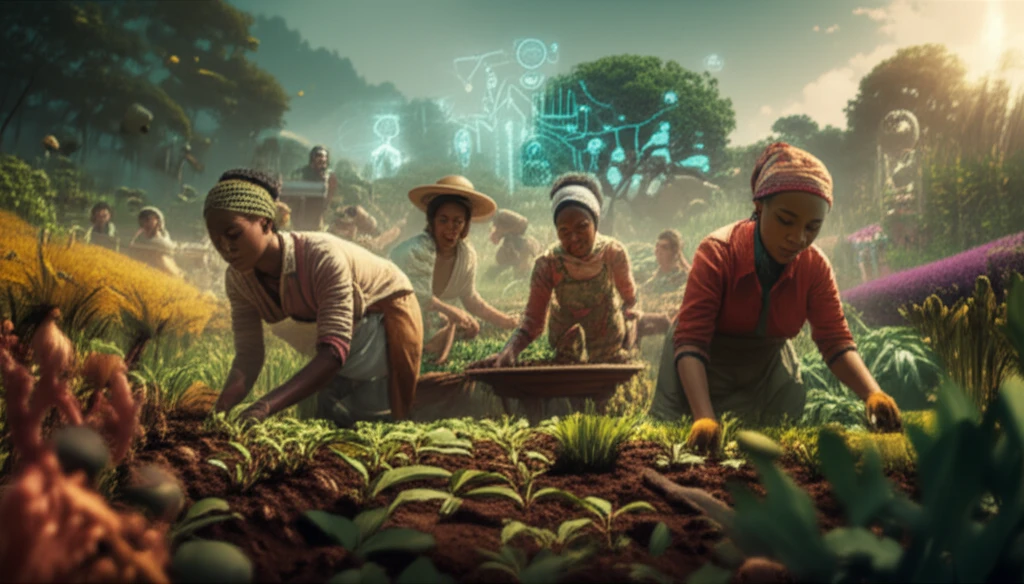
Empowered women farmers working together in a vibrant, sustainable agricultural landscape.

Unlocking Potential: How Investing in Women Farmers Can Transform Communities

"A deep dive into how empowering women in agriculture boosts food security and economic growth."


Women are the backbone of agriculture worldwide, playing a pivotal role in food production and rural economies. Despite their significant contributions, women often face systemic barriers that limit their productivity and potential. These barriers range from unequal access to resources like land, credit, and training to cultural norms that undervalue their work.

Recognizing and addressing these inequalities is not just a matter of fairness; it’s a strategic imperative for achieving global food security and sustainable development. When women are empowered in agriculture, the benefits ripple through their families, communities, and nations.

This article delves into the multifaceted impact of women's participation in agriculture, examining the challenges they face and the strategies that can effectively empower them. By focusing on research and practical solutions, we aim to highlight the transformative potential of investing in women farmers.

The Untapped Potential: Why Women in Agriculture Matter

Empowered women farmers working together in a vibrant, sustainable agricultural landscape.

Empowering women in agriculture has a profound impact on multiple levels. When women have access to the same resources and opportunities as men, they increase their agricultural output, reduce poverty, and improve household nutrition. Studies have consistently shown that investing in women farmers leads to higher yields and more sustainable farming practices.

One compelling statistic highlights the extent of this potential: closing the gender gap in agriculture could increase global agricultural output by as much as 4%. This increase would not only feed more people but also boost economic growth in rural areas, creating more resilient and prosperous communities.

  • Increased Productivity: Equal access to resources leads to higher yields.
  • Poverty Reduction: Empowered women lift their families out of poverty.
  • Improved Nutrition: Women invest in their families' health and well-being.
  • Sustainable Practices: Women often adopt eco-friendly farming methods.
Beyond the direct economic benefits, empowering women in agriculture fosters social and environmental sustainability. Women are often at the forefront of adopting sustainable farming practices, such as crop diversification and conservation tillage, which protect the environment and enhance resilience to climate change. Additionally, when women have more control over resources, they are more likely to invest in their children's education and health, creating a positive cycle of development.

A Call to Action: Investing in Women for a Sustainable Future

Empowering women in agriculture is not just a matter of gender equality; it is a strategic imperative for achieving global food security, economic growth, and environmental sustainability. By dismantling the barriers that limit women's potential and investing in their success, we can unlock transformative change and build a more equitable and sustainable future for all.

About this Article -

This article was crafted using a human-AI hybrid and collaborative approach. AI assisted our team with initial drafting, research insights, identifying key questions, and image generation. Our human editors guided topic selection, defined the angle, structured the content, ensured factual accuracy and relevance, refined the tone, and conducted thorough editing to deliver helpful, high-quality information.See our About page for more information.

Everything You Need To Know

1

What role do women play in agriculture, and what challenges do they face?

Women in agriculture are essential to food production and rural economies worldwide. They contribute significantly, yet they encounter obstacles like unequal access to land, credit, and training, and their work is often undervalued due to cultural norms. Addressing these inequalities is crucial for achieving global food security and sustainable development.

2

What are the primary benefits of empowering women in agriculture?

Empowering women in agriculture has multiple benefits: it increases agricultural output, reduces poverty, and improves household nutrition. Investing in women farmers leads to higher yields and more sustainable farming practices. Closing the gender gap in agriculture could significantly increase global agricultural output and boost economic growth in rural areas.

3

In what specific ways does empowering women improve agriculture and communities?

When women have equal access to resources and opportunities in agriculture, it results in increased productivity, where yields are higher. It leads to poverty reduction because empowered women lift their families out of poverty. There is improved nutrition because women tend to invest more in their families' health and well-being. It also fosters sustainable practices since women often adopt eco-friendly farming methods.

4

What does it mean to empower women in agriculture, and why is it important?

Empowering women in agriculture means dismantling barriers that limit their potential and investing in their success. This involves providing equal access to resources, opportunities, and decision-making power. By doing so, we can unlock transformative change and build a more equitable and sustainable future. This also means overcoming cultural norms.

5

How do women contribute to sustainable farming and environmental protection?

Women often adopt sustainable farming practices like crop diversification and conservation tillage. These practices protect the environment and enhance resilience to climate change. Additionally, when women have more control over resources, they are more likely to invest in their children's education and health, creating a positive cycle of development and furthering environmental sustainability.

Newsletter Subscribe

Subscribe to get the latest articles and insights directly in your inbox.