
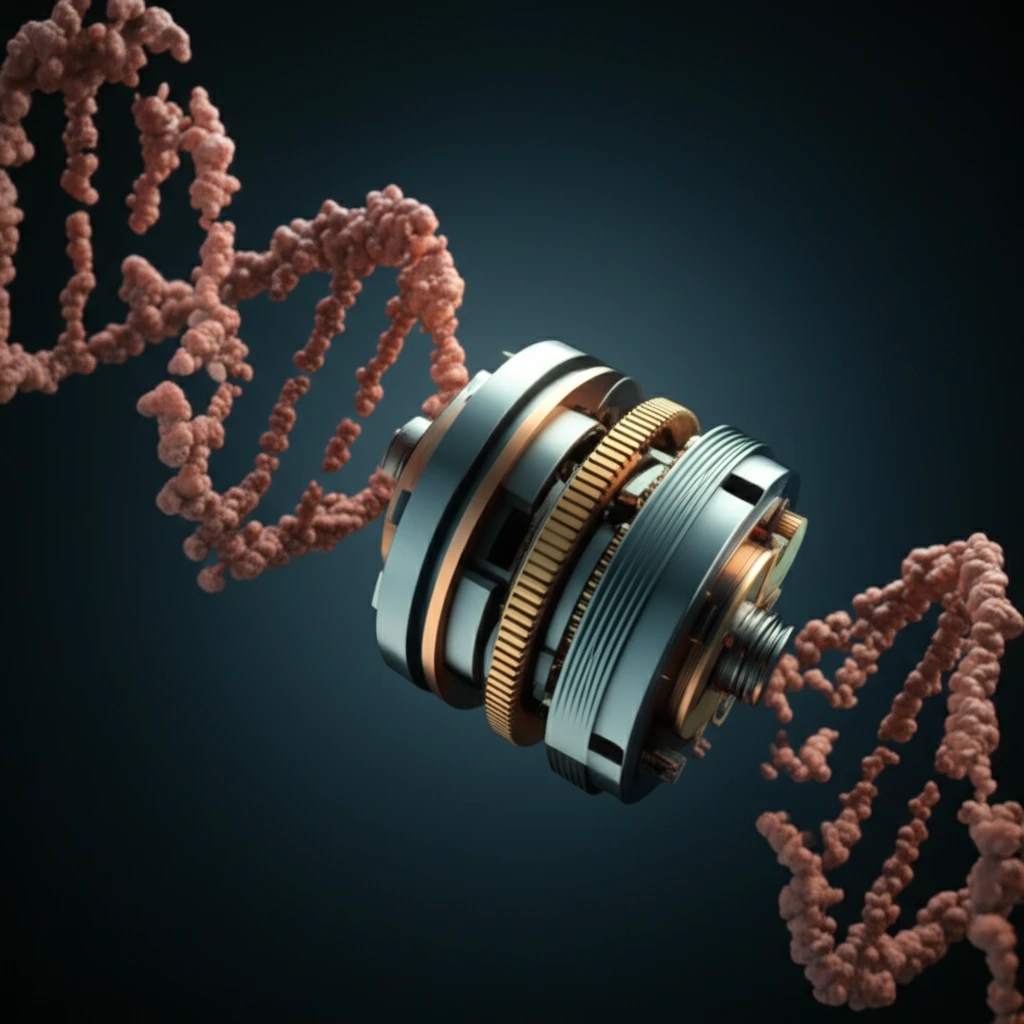
Digital illustration of a DNA motor

Unlocking Nature's Secrets: Breakthroughs That Could Change Your Life

"From DNA motors to generosity hormones and mother's milk, explore the latest discoveries shaping science and health."


The world of scientific research is constantly evolving, bringing forth new discoveries that have the potential to reshape our lives. From microscopic motors built from DNA to the surprising ways hormones influence behavior, recent breakthroughs are offering fresh perspectives on everything from disease treatment to our understanding of the natural world.

This article delves into a selection of compelling research highlights, spanning nanotechnology, zoology, virology, physics, and animal behavior. We'll explore how these advancements could pave the way for innovative solutions and a deeper understanding of ourselves and the world around us.

Whether you're a science enthusiast, a healthcare professional, or simply curious about the latest developments, this overview provides an accessible entry point into some of today's most fascinating research.

DNA Motor Walks a Fine Line: The Nanotechnology Revolution

Digital illustration of a DNA motor

Nanotechnology is pushing the boundaries of what's possible at the microscopic level, and one recent breakthrough is particularly exciting: the development of a DNA motor. Researchers have created a minuscule motor with a DNA rotor, hailed as one of the fastest and most controllable 'walking' molecules ever created.

These nanometre-scale engines are crucial for building nanorobots, but controlling their movement has always been a major hurdle. Now, a team led by Michael Famulok at the University of Bonn in Germany has designed a molecular motor that cleverly interlocks DNA with an enzyme that synthesizes RNA. As the rotor spins, it directs the enzymes to produce RNA transcripts, effectively creating a self-propelled engine.

  • Key takeaway: DNA motor is one of the fastest and most controllable 'walking' molecules ever created, paving the way for more sophisticated nanorobots.
  • Implication: Such devices could power sophisticated nanorobots, the authors write.
  • Source: Nature Nanotechnology. http://doi.org/cnbz (2018)
Imagine tiny robots navigating through the human body to deliver drugs directly to cancer cells or repairing damaged tissues at the molecular level. This DNA motor breakthrough brings us closer to that reality.

The Future is Now: Embrace the Power of Scientific Discovery

These research highlights represent just a small fraction of the incredible work happening across the scientific community. As we continue to push the boundaries of knowledge, we can expect even more groundbreaking discoveries that will shape our world in profound ways. Stay curious, stay informed, and embrace the power of scientific discovery to improve our lives and build a better future.

About this Article -

This article was crafted using a human-AI hybrid and collaborative approach. AI assisted our team with initial drafting, research insights, identifying key questions, and image generation. Our human editors guided topic selection, defined the angle, structured the content, ensured factual accuracy and relevance, refined the tone, and conducted thorough editing to deliver helpful, high-quality information.See our About page for more information.

Everything You Need To Know

1

What is a DNA motor and why is its development considered a breakthrough?

A DNA motor is a minuscule motor built using DNA components, operating at the nanometer scale. Its development is a breakthrough because researchers, such as those led by Michael Famulok at the University of Bonn, have created a DNA rotor that is one of the fastest and most controllable 'walking' molecules ever created. This is significant because controlling the movement of nanomotors has been a major hurdle in building nanorobots, and this DNA motor effectively interlocks DNA with an enzyme that synthesizes RNA, creating a self-propelled engine.

2

How could DNA motors be used in medicine, according to the article?

The article suggests that DNA motors could power sophisticated nanorobots that could navigate through the human body to deliver drugs directly to cancer cells or repair damaged tissues at the molecular level. This implies a targeted approach to treatment, reducing side effects and increasing the effectiveness of therapies.

3

What fields of study are producing discoveries mentioned in the article?

The article highlights breakthroughs from nanotechnology, zoology, virology, physics, and animal behavior. The specific example discussed in detail is the DNA motor, which falls under nanotechnology.

4

What is the implication of creating controllable DNA motors?

The implication of creating controllable DNA motors is the potential to construct sophisticated nanorobots. These nanorobots could perform tasks at the molecular level, such as targeted drug delivery or tissue repair. This could revolutionize medicine and other fields by allowing for precise and efficient interventions.

5

How does the DNA motor operate according to the article?

The DNA motor operates by interlocking DNA with an enzyme that synthesizes RNA. As the rotor spins, it directs the enzymes to produce RNA transcripts. This process effectively creates a self-propelled engine at the nanoscale. This clever design allows for controlled and directed movement, overcoming previous challenges in controlling nanomotors.

Newsletter Subscribe

Subscribe to get the latest articles and insights directly in your inbox.