
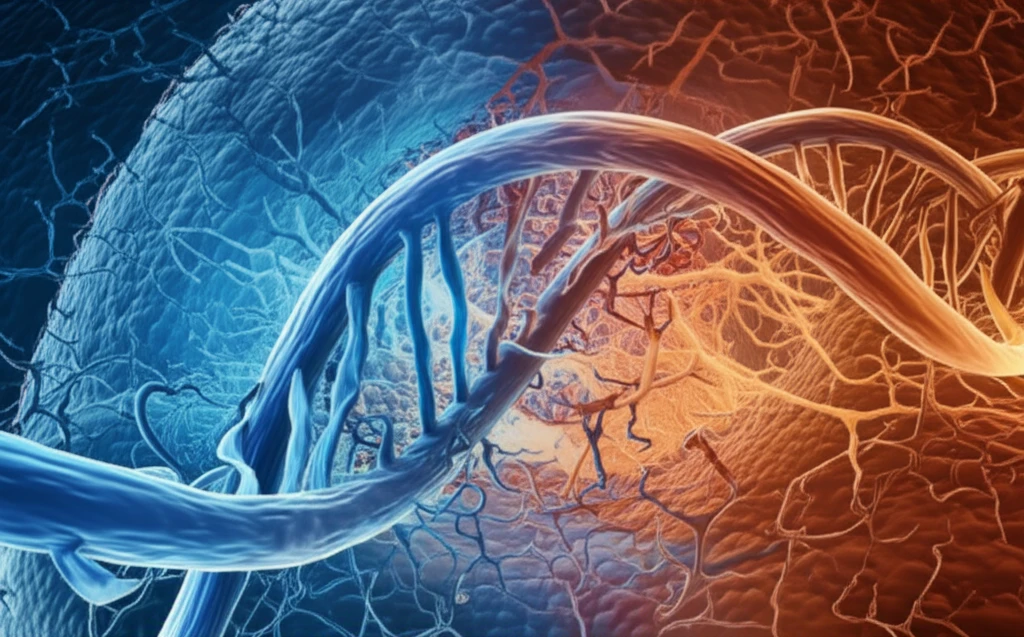
Illustration of muscle fiber with DNA and endoplasmic reticulum, showing redox imbalance.

Unlocking Muscle Weakness: How a Gene Mutation Impacts Cellular Health

"New Research Reveals a Key Link Between GNE Myopathy, Peroxiredoxin IV, and ER Redox Homeostasis, Offering Hope for Future Treatments"


GNE myopathy, a rare and debilitating neuromuscular disorder, casts a shadow over the lives of those it affects. Characterized by the gradual onset of muscle weakness in early adulthood, this genetic condition stems from mutations within the GNE (UDP-N-acetylglucosamine 2-epimerase/N-acetylmannosamine kinase) gene, a vital player in sialic acid biosynthesis. The mystery surrounding GNE myopathy's precise mechanisms has fueled extensive research efforts aimed at unraveling its complexities and discovering effective treatments.

While the hyposialylation of glycoproteins has long been suspected as a central culprit, the deeper cellular processes leading to muscle loss remain elusive. Beyond its role in sialic acid production, GNE influences various cellular functions, including cell adhesion and programmed cell death (apoptosis). Understanding these diverse effects is crucial for developing targeted therapies that address the multifaceted nature of GNE myopathy.

A recent study published in Neuromolecular Medicine sheds new light on this intricate disease. Researchers delved into the proteomic profiles of HEK293 cells, a human embryonic kidney cell line, engineered to overexpress mutant GNE proteins associated with GNE myopathy. By comparing these cells to those expressing normal GNE, the scientists uncovered significant alterations in cellular function, particularly concerning a protein called Peroxiredoxin IV (PrdxIV) and the endoplasmic reticulum (ER) redox balance.

Decoding the Role of Peroxiredoxin IV (PrdxIV) in GNE Myopathy

Illustration of muscle fiber with DNA and endoplasmic reticulum, showing redox imbalance.

The study's core involved a meticulous analysis of HEK293 cells, comparing cells expressing mutant GNE proteins (specifically, D207V and V603L, two mutations linked to GNE myopathy) with those expressing normal, wild-type GNE. Differential proteome analysis through two-dimensional gel electrophoresis coupled with mass spectrometry (MALDI-TOF/TOF MS/MS) identified ten proteins with altered expression levels.

One protein stood out: Peroxiredoxin IV (PrdxIV). The study revealed a significant downregulation of PrdxIV in cells harboring mutant GNE. PrdxIV is an important protein residing in the endoplasmic reticulum (ER), acting as a sensor for hydrogen peroxide (H2O2) and playing a key role in regulating neurogenesis. Its reduction in GNE mutant cells sparked further investigation into its broader implications.

  • Downregulation Confirmed: Both mRNA and protein levels of PrdxIV were significantly reduced in GNE mutant cell lines compared to control cells.
  • ROS Levels Unchanged: Despite the reduction in PrdxIV, total reactive oxygen species (ROS) and H2O2 accumulation were not significantly altered in GNE mutant cells, suggesting compensatory mechanisms were at play.
  • ER Redox Imbalance: The most striking finding was a significant disturbance in the ER redox state within GNE mutant cells, likely due to the reduced normal activity of the GNE enzyme.
These findings suggest that the downregulation of PrdxIV directly impacts the ER redox state, potentially contributing to the misfolding and aggregation of proteins within the ER. This protein aggregation is a hallmark of GNE myopathy, providing a crucial link between the GNE mutation and cellular dysfunction. The normal function of PrdxIV in cells is to keep the redox state in balance, and the mutated cells are unable to do so leading to more misfolded proteins.

Implications and Future Directions

This research highlights the critical role of PrdxIV in maintaining ER redox balance and protein folding, offering a new target for therapeutic intervention in GNE myopathy. By understanding how GNE mutations disrupt PrdxIV function and ER homeostasis, researchers can explore novel strategies to prevent protein misfolding and alleviate muscle weakness. Further research into compounds that restore PrdxIV levels or correct ER redox imbalance may hold promise for treating this debilitating condition.

About this Article -

This article was crafted using a human-AI hybrid and collaborative approach. AI assisted our team with initial drafting, research insights, identifying key questions, and image generation. Our human editors guided topic selection, defined the angle, structured the content, ensured factual accuracy and relevance, refined the tone, and conducted thorough editing to deliver helpful, high-quality information.See our About page for more information.

Everything You Need To Know

1

What is GNE myopathy, and what gene is involved in this condition?

GNE myopathy is a rare neuromuscular disorder characterized by progressive muscle weakness, typically starting in early adulthood. The condition arises from mutations in the GNE gene, which encodes the enzyme UDP-N-acetylglucosamine 2-epimerase/N-acetylmannosamine kinase, crucial for sialic acid biosynthesis. While hyposialylation of glycoproteins has been implicated, the precise cellular mechanisms leading to muscle loss remain under investigation. The GNE gene also plays a role in other cellular functions, such as cell adhesion and apoptosis, making GNE myopathy a multifaceted condition. Further research aims to fully elucidate these mechanisms and develop targeted therapies.

2

How does Peroxiredoxin IV (PrdxIV) relate to GNE myopathy, according to the recent study?

A recent study found that Peroxiredoxin IV (PrdxIV) is significantly downregulated in cells expressing mutant GNE proteins associated with GNE myopathy. PrdxIV, located in the endoplasmic reticulum (ER), functions as a sensor for hydrogen peroxide and regulates neurogenesis. Its downregulation in GNE mutant cells contributes to an imbalance in the ER redox state, potentially leading to protein misfolding and aggregation, which is a hallmark of GNE myopathy. This suggests that PrdxIV plays a critical role in maintaining ER homeostasis and that its dysfunction, caused by GNE mutations, contributes to the disease.

3

What are the implications of the study's findings regarding ER redox homeostasis in GNE myopathy?

The study's findings highlight that GNE mutations disrupt ER redox homeostasis, primarily through the downregulation of Peroxiredoxin IV (PrdxIV). This disruption leads to an imbalance in the endoplasmic reticulum's (ER) redox state, which is critical for proper protein folding. As a result, proteins are more likely to misfold and aggregate within the ER. This protein misfolding and aggregation is a characteristic feature of GNE myopathy, linking the GNE mutation directly to cellular dysfunction. The research suggests that maintaining ER redox balance and preventing protein misfolding could be therapeutic targets for treating GNE myopathy. Future research may focus on identifying compounds that restore PrdxIV levels or correct the ER redox imbalance.

4

The study mentions using HEK293 cells. Why were these cells used, and what did the researchers compare in these cells?

HEK293 cells, a human embryonic kidney cell line, were used in the study because they are easily manipulated and widely used in research to study cellular processes. Researchers engineered these cells to overexpress mutant GNE proteins, specifically D207V and V603L, which are associated with GNE myopathy. They then compared these cells to HEK293 cells expressing normal, wild-type GNE. By comparing the proteomic profiles of these two groups, the scientists identified significant alterations in cellular function, particularly those concerning Peroxiredoxin IV (PrdxIV) and the endoplasmic reticulum (ER) redox balance. This comparison allowed them to pinpoint the specific effects of mutant GNE on cellular processes.

5

If total reactive oxygen species (ROS) and H2O2 accumulation were not significantly altered in GNE mutant cells, why is the downregulation of Peroxiredoxin IV (PrdxIV) still important in understanding GNE myopathy?

Even though total reactive oxygen species (ROS) and H2O2 accumulation were not significantly altered in GNE mutant cells, the downregulation of Peroxiredoxin IV (PrdxIV) remains crucial because PrdxIV plays a specialized role within the endoplasmic reticulum (ER) in maintaining redox balance. The unchanged total ROS levels suggest that compensatory mechanisms might be at play to regulate overall oxidative stress. However, the reduction in PrdxIV specifically disrupts the ER redox state, leading to protein misfolding and aggregation, which are hallmarks of GNE myopathy. Thus, PrdxIV's localized function in the ER is critical for proper protein folding, and its downregulation has significant consequences for cellular health in the context of GNE myopathy, independent of overall ROS levels. This highlights the importance of compartment-specific redox regulation.

Newsletter Subscribe

Subscribe to get the latest articles and insights directly in your inbox.