
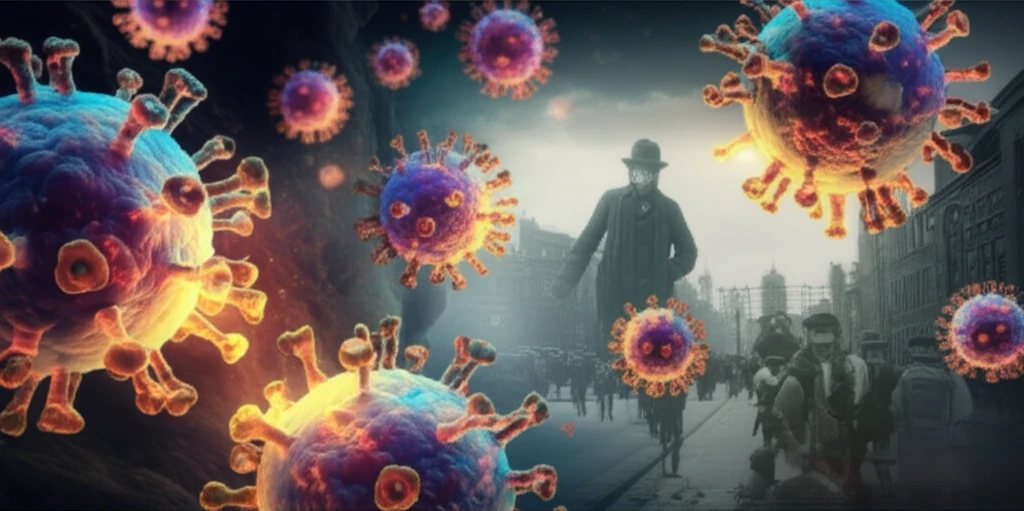
Unlocking Immunity's Secrets: How the 1918 Pandemic Shaped Our Understanding of T Cells

"A century after the deadly 1918 influenza pandemic, discover how the fight against this virus revolutionized our knowledge of T cells and the human immune response."
The 1918 influenza pandemic, a tragedy that claimed millions of lives worldwide, inadvertently became a catalyst for groundbreaking research in immunology. Driven by the urgent need to understand and combat this deadly virus, scientists embarked on a quest that would fundamentally reshape our understanding of the human immune system.
Among the most significant discoveries arising from this research was the pivotal role of T lymphocytes, or T cells, in fighting viral infections. These specialized immune cells were found to be essential for clearing the influenza virus from the body and providing long-lasting immunity.
This article delves into the legacy of the 1918 pandemic, exploring how the intensive study of influenza virus unlocked key insights into T cell function and paved the way for innovative vaccine strategies.
CD8 T Cells: Unveiling the Mechanics of Cellular Immunity
In the early 1970s, researchers began to unravel the complex mechanisms by which CD8 T cells, also known as cytotoxic T lymphocytes (CTLs), recognize and eliminate virus-infected cells. A crucial breakthrough came with the discovery of major histocompatibility complex (MHC) restriction.
- MHC Restriction: CD8 T cells recognize viral peptides presented by specific MHC molecules on infected cells.
- Fine Specificity: CD8 T cells exhibit exquisite specificity for self MHC, tolerating only slight variations.
- Cross-Reactivity: These same T cells can cross-react with different subtypes of the influenza A virus.
The Ongoing Quest for Universal Influenza Protection
The knowledge gained from studying influenza virus and T cell responses has fueled the pursuit of a universal influenza vaccine – one that provides broad protection against all subtypes of the virus. Such a vaccine would be a game-changer, eliminating the need for annual vaccinations and offering crucial protection against emerging pandemic strains. While challenges remain, the legacy of the 1918 pandemic continues to inspire and guide researchers in their quest to develop more effective and long-lasting influenza vaccines.